How Did Connor Vibe Code Payout, a $20K/Month Mobile App, in 14 Days With AI?
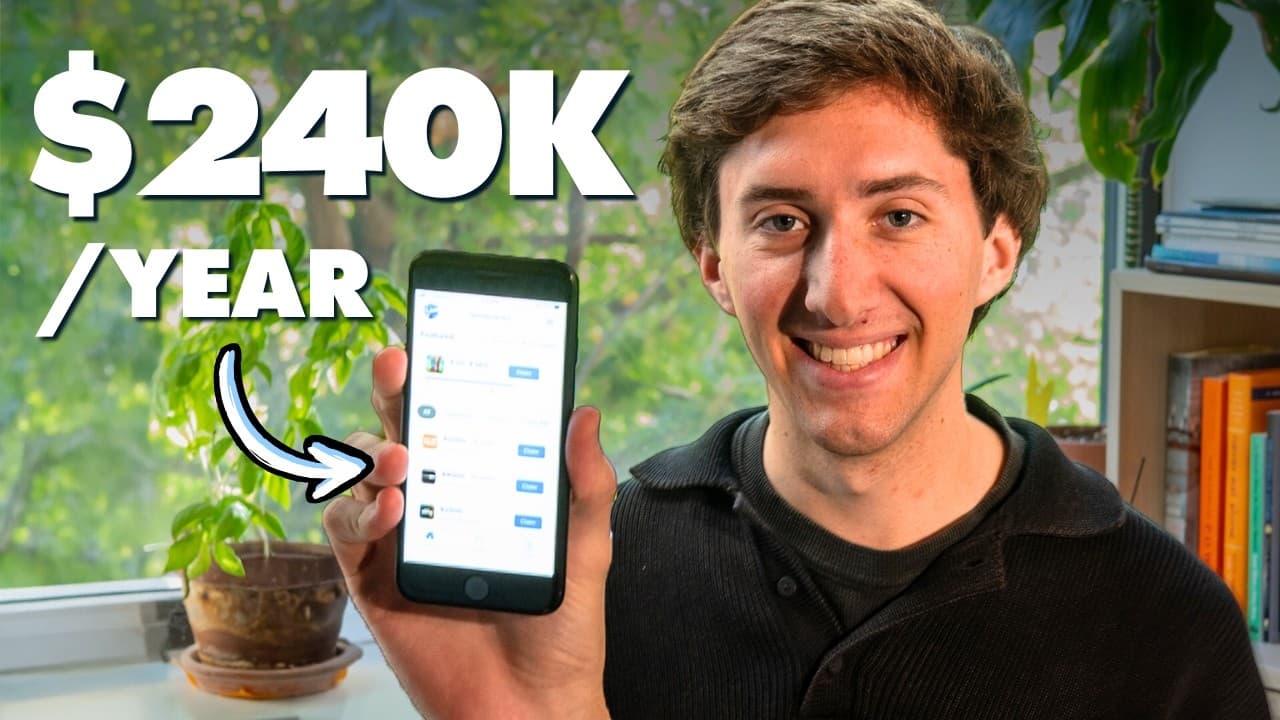
TL;DR
Connor built Payout in less than two weeks with AI by researching proven apps, designing onboarding around conversion, documenting the data structure, and prioritizing core functionality over perfection. The app surpassed 12,000 downloads, gained over 300 new subscriptions, and reached $20,000 in monthly revenue. Read on for his complete research, design, validation, and AI coding workflow.
Transcript
I'm 23 years old and my apps do over a million dollars in sales a year. This is Connor, a 23-year-old kid who cracked the code on building apps that actually make money. I built my latest app in less than 2 weeks, 100% with AI. To prove it, he joined a hackathon of over 55,000 people, built an app from scratch, grew it to $20,000 a month, and won t... Read More
Key Insights
- Failure clarified the market: Hotspot Events required six to eight months of work but ultimately failed. Connor did not treat that effort as wasted because it revealed how difficult social products were for a solo founder to scale. That lesson directed him toward utilities and tools, which he found more manageable for one person to develop and grow.
- Constraints did not prevent entry: Connor began without coding experience, a computer science background, or a suitable computer for iOS development. He learned from YouTube and Stack Overflow, completed miscellaneous tasks, and sold belongings until he could obtain an old MacBook. His starting process depended on persistence and accessible learning materials, not specialized credentials or expensive tools.
- Revenue shaped the build process: Connor says his apps are designed to make money from day one. His workflow therefore considers conversion, sales, and retention before implementation begins. Research, onboarding, personalization, benefits, and the paywall experience are not secondary marketing additions. They influence what he studies and designs before asking AI to produce the application.
- Payout demonstrated rapid execution: Connor says Payout was built in less than two weeks and entirely with AI. After launching at the beginning of August, it scaled to $20,000 in monthly revenue. The case connects development speed with a structured process that still includes competitor research, visual planning, data modeling, onboarding design, and repeated refinement.
- Competition supplied measurable validation: Payout participated in RevenueCat's hackathon alongside more than 55,000 entrants. It won first place in the Build and Grow category, which evaluated growth across a two-month period and carried a $65,000 grand prize. This result supplemented Connor's reported download, subscription, and monthly revenue figures with a competition outcome.
- The portfolio reduced dependence: Connor has built around six mobile apps, and the portfolio has produced more than $1 million in subscription revenue over several years. That history matters because Payout was not presented as his first experiment. Its workflow emerged after multiple products, including the unsuccessful Hotspot Events social app and the later move into utilities and tools.
- Visual research becomes structured: Connor does not rely on memory while comparing products. He captures every page and onboarding screen, then arranges the screenshots together in Figma. The shared canvas makes questions, graphs, visual patterns, and conversion choices directly comparable. It also gives him concrete references that can later be redesigned and supplied to an AI coding tool.
- Inspiration crosses category boundaries: The roughly 20 downloaded apps are not limited to direct competitors. Connor also includes products he considers beautiful so he can study design ideas outside the target niche. He combines selected elements from several sources, then gives the resulting experience his own theme and aesthetic. This broadens the reference set while preserving a distinct presentation.
- Onboarding deserves equal attention: Connor may allocate as much design time to onboarding as to the application's actual functionality. His reasoning is that, with a paywall, an estimated 90% of users may never move beyond the onboarding experience. That makes the opening flow responsible for explaining value, creating motivation, and supporting a purchase before much of the product is visible.
- Emotion supports the purchase: Connor emphasizes making users feel strongly while they progress through onboarding because he views many consumer purchases as emotional rather than logical. The flow should connect that emotion to the app's strongest incentives and show how the product can improve the user's life. The purchase should then feel simple rather than confusing or burdensome.
- Personalization differentiates the offer: With many competing apps available, Connor wants users to feel that the product is intended specifically for them. His onboarding therefore aims to create an individualized experience instead of presenting only a generally applicable pitch. Charts and graphs can reinforce that presentation by making the experience feel more scientific, legitimate, and connected to successful use.
- Documentation reduces AI guesswork: Connor writes down the intended data model before asking AI to implement the application. The document includes a plain-language explanation, sample JSON, and descriptions of individual attributes. When paired with screen images, this material gives Claude or Cursor clearer guidance about both appearance and underlying information, supporting faster iteration on the core functionality.
Install to Summarize YouTube Videos and Get Transcripts
Explore YouTube Video Summarizer or Get YouTube Transcript Extractor
Questions & Answers
Q: How can a solo founder build a mobile app quickly with AI?
Start by downloading around 20 relevant or visually appealing apps and capturing every page and onboarding screen. Arrange those images in Figma, compare their questions, graphs, and design choices, then redesign selected elements with one theme and aesthetic. Define the data structures in a document with explanations, sample JSON, and attribute details before coding. Build the core functionality first, provide the screens and documentation to Claude, and iterate toward a usable release instead of waiting for perfection.
Q: How did Connor build Payout into a $20K-per-month app in less than two weeks?
Connor says he built Payout in less than two weeks and used AI for the entire build. His broader process starts with studying validated apps, designing a conversion-focused onboarding flow, and documenting the application's data model. He then concentrates on core functionality and gives screenshots and planning materials to Claude for implementation and iteration. Payout launched at the beginning of August, surpassed 12,000 downloads, gained over 300 new subscriptions, and reached $20,000 in monthly revenue.
Q: How should onboarding be designed for a paywalled mobile app?
Connor recommends treating onboarding as a major part of the product because he estimates that 90% of users may see only that flow. It should evoke emotion, show the app's strongest incentives, and explain how the product can improve the user's life. The experience should feel personalized and make the purchasing decision simple. He also uses charts and graphs to make the presentation feel more scientific, credible, and supported by successful use.
Q: Why define an app's data structures before vibe coding?
A written data model tells the AI what information the application needs and how that information should be organized. Connor includes explanations, sample JSON, and details about every attribute in his planning document. This reduces ambiguity and limits the amount of guessing required from the coding tool. Combined with screenshots, the document gives Claude or Cursor concrete guidance about both the interface and the underlying application structure.
Q: How does Connor research competing mobile apps?
Connor downloads around 20 apps from the target niche and also includes unrelated apps whose visual design he admires. He screenshots every page and onboarding flow, then places all of the images in one long line in Figma. This format lets him compare questions, graphs, layouts, and conversion approaches side by side. He selects effective elements from several products and redesigns them around his own consistent theme and aesthetic.
Q: How can a founder validate an existing mobile app idea?
Connor treats existing products in a category as evidence that people have already built and used that kind of app. He studies those products to identify useful features, onboarding choices, designs, and conversion patterns. He then combines selected ideas from multiple references and makes meaningful changes through a distinct theme and aesthetic. This approach uses demonstrated category activity while ensuring the result feels like its own product rather than an unchanged copy.
Q: How can a founder validate a completely new app idea?
Connor searches TikTok and Instagram for people discussing the problem that the proposed app would solve. He reads the comments to determine whether users are asking how to address that problem. Those discussions provide both evidence of interest and a possible route for marketing the finished product. Because AI has made development much faster for him, he says he skips creating a waitlist and starts building when those signals look promising.
Q: What results did Connor and Payout achieve?
Connor says his portfolio of around six mobile apps has generated more than $1 million in subscription revenue over several years. Payout launched at the beginning of August and grew to $20,000 in monthly revenue, with more than 12,000 downloads and over 300 new subscriptions. It entered a RevenueCat hackathon with over 55,000 participants and won first place in the Build and Grow category. The category recognized growth during a two-month period and carried a $65,000 grand prize.
Summary & Key Takeaways
-
Starting without coding experience: Connor entered app development about three years ago with no computer science background, no MacBook, and little money. After writing an app idea in his notes, he learned through YouTube and Stack Overflow, sold items from his room to obtain an old MacBook, and spent six to eight months creating Hotspot Events. The social app failed, but the experience taught him that utilities and tools were easier for one person to scale.
-
Proving the Payout concept: Connor eventually built a portfolio of around six mobile apps that generated more than $1 million in subscription revenue. His latest app, Payout, launched at the beginning of August and reached $20,000 in monthly revenue. It surpassed 12,000 downloads and gained over 300 new subscriptions. Payout also won first place in the Build and Grow category of RevenueCat's competition, which had over 55,000 entrants and offered a $65,000 grand prize.
-
Researching successful app patterns: Connor begins a project by downloading around 20 apps from the intended niche, along with attractive apps from other categories. He screenshots every page and onboarding flow, then places the images in a long line inside Figma. This lets him compare each question, graph, screen, and design choice. He selects useful elements from different products and redesigns them with a consistent theme and aesthetic instead of reproducing one app unchanged.
-
Designing onboarding for revenue: Connor treats onboarding as a central product surface because he estimates that 90% of users may see only that flow when the app includes a paywall. He may spend as much time designing onboarding as the app's main functionality. The flow should evoke emotion, clearly show the strongest benefits, simplify the purchasing decision, and make the experience feel personalized. Charts and graphs can also help the presentation feel scientific, credible, and supported.
-
Preparing AI-assisted development: Before coding, Connor defines the app's data structures in a text document containing explanations, sample JSON, and details for every attribute. He builds the core functionality first, then provides screenshots and documentation to Claude and iterates until the result is usable. He currently identifies Claude as his only AI coding tool, while also noting that planning materials can be supplied to Claude or Cursor. His process favors rapid release and improvement over waiting for visual or technical perfection.
Read in Other Languages (beta)
Share This Summary 📚
Summarize YouTube Videos and Get Video Transcripts with 1-Click
Try YouTube Summary with ChatGPT & Claude or YouTube Transcript Generator
Explore More Summaries from Starter Story 📚




Summarize YouTube Videos and Get Video Transcripts with 1-Click
Try YouTube Summary with ChatGPT & Claude or YouTube Transcript Generator