How AI and Brain Recovery Are Shaping Investments
TL;DR
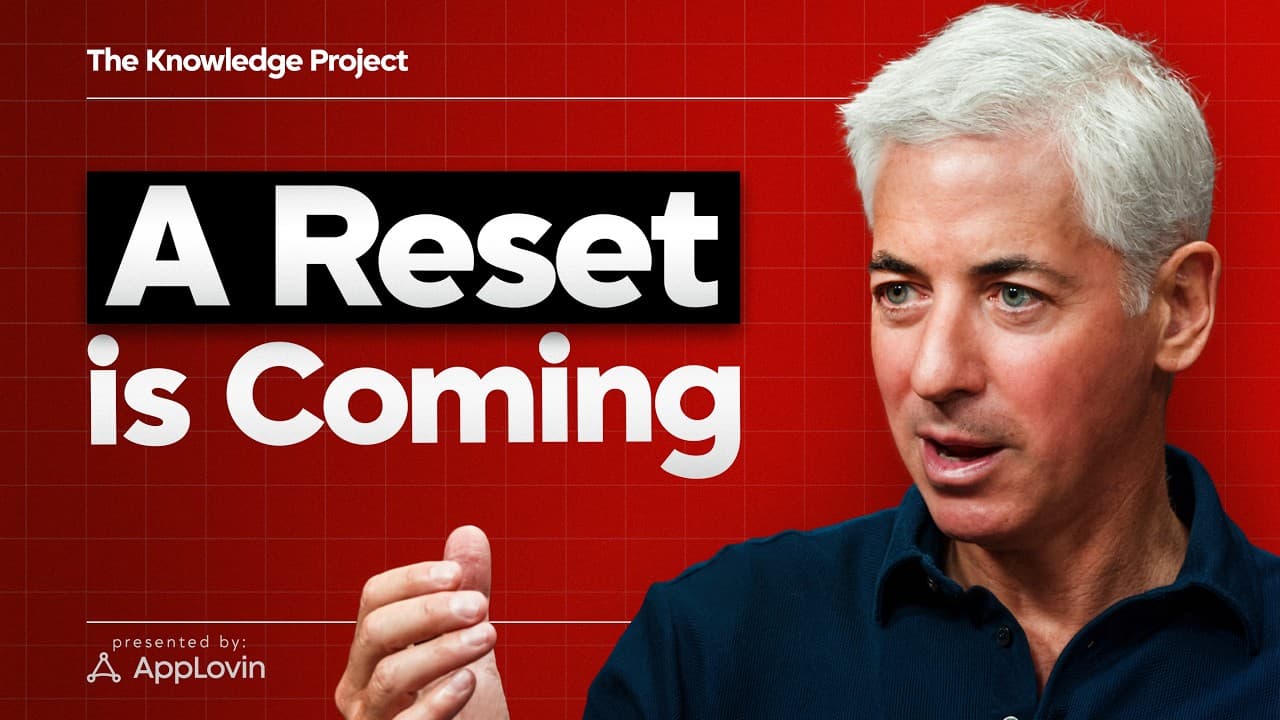
Bill Ackman discusses the transformative impact of AI on investments and the economy, emphasizing the increased risk of disruption it brings. He shares insights into his investment strategies, the importance of long-term thinking, and his personal journey of building a brain recovery institute following his daughter's health crisis.
Transcript
Warren Buffett, the greatest investor of all time, he was not able to perceive the risks of disruption created by the internet. Well, now we have AI. >> We're the beginning of an industrial revolution. >> It's a much more complicated problem. If you had to guess, how do you think it plays out over the next 18 months? >> The pace of improvement [mus... Read More
Key Insights
- AI is dramatically increasing the risk of disruption across industries, requiring investors to be more vigilant.
- Bill Ackman emphasizes the importance of long-term investment strategies and being prepared for market shifts.
- Ackman's investment philosophy involves identifying high-certainty, predictable companies with strong growth potential.
- He believes in the potential of AI to create new business opportunities and enable entrepreneurship.
- Ackman is building a brain recovery institute, motivated by his daughter's health challenges, to advance brain rehabilitation.
- He stresses the importance of assessing the character and capability of CEOs when making investment decisions.
- Ackman highlights the value of permanent capital and long-term thinking in achieving sustained investment success.
- He views the creation of a modern-day Berkshire Hathaway through strategic investments in real estate and insurance.
Install to Summarize YouTube Videos and Get Transcripts
Explore YouTube Video Summarizer or Get YouTube Transcript Extractor
Questions & Answers
Q: How does AI impact investment strategies?
AI significantly increases the risk of disruption across industries, necessitating a more vigilant approach to investments. Investors need to carefully assess the potential for AI to disrupt existing business models and consider the long-term implications of AI-driven changes. This requires a focus on companies with strong moats and the ability to adapt to technological advancements.
Q: What investment philosophy does Bill Ackman follow?
Bill Ackman follows an investment philosophy that prioritizes long-term strategies and high-certainty, predictable companies. He seeks businesses with strong growth potential and low risk of disruption. Ackman emphasizes the importance of understanding the character and capability of CEOs and values permanent capital for sustained investment success.
Q: Why is Bill Ackman building a brain recovery institute?
Bill Ackman is building a brain recovery institute motivated by his daughter's sudden brain hemorrhage and her ongoing recovery journey. He aims to advance brain rehabilitation and support other families facing similar challenges. The institute will focus on leveraging technology, including AI, to improve brain recovery and rehabilitation outcomes.
Q: What are the key elements of Ackman's investment process?
Ackman's investment process involves identifying high-certainty, predictable companies with strong growth potential. He emphasizes long-term strategies and the importance of assessing the character and capability of CEOs. Ackman also values permanent capital and long-term thinking to achieve sustained investment success, drawing inspiration from Berkshire Hathaway's model.
Q: How does Ackman view the role of AI in entrepreneurship?
Ackman believes AI will enable the creation of many new businesses and empower individuals to become entrepreneurs who may not have had the opportunity before. AI's rapid advancements and accessibility lower the barriers to entry, allowing more people to innovate and create value in various industries.
Q: What is Ackman's perspective on market bubbles?
Ackman acknowledges the presence of bubble-like elements in markets, particularly in venture investments, where fear of missing out drives high valuations. He advises caution and discipline in capital deployment, emphasizing the importance of long-term thinking and treating every dollar as if it's one's own to avoid the pitfalls of easy money and market exuberance.
Q: How does Ackman assess the quality of CEOs?
Ackman assesses CEOs based on their passion, capability, energy, honesty, and character. He believes that understanding a CEO's drive and integrity is crucial for investment decisions, as these qualities significantly impact a company's ability to navigate challenges and achieve long-term success.
Q: What is Ackman's vision for a modern-day Berkshire Hathaway?
Ackman's vision for a modern-day Berkshire Hathaway involves transforming Howard Hughes into a conglomerate focused on insurance and real estate. By leveraging permanent capital, long-term thinking, and strategic investments, Ackman aims to build a company that compounds value over time, similar to Berkshire Hathaway's successful model.
Summary & Key Takeaways
-
Bill Ackman discusses the transformative impact of AI on investments, highlighting the increased risk of disruption and the need for vigilance. He shares his investment philosophy, focusing on long-term strategies and high-certainty companies. Ackman also talks about building a brain recovery institute, inspired by his daughter's health crisis, to advance rehabilitation.
-
Ackman emphasizes the importance of assessing CEO character and capability, and the value of permanent capital for sustained success. He aims to create a modern-day Berkshire Hathaway through strategic investments in real estate and insurance, leveraging long-term thinking and strategic capital deployment.
-
The conversation covers Ackman's insights on bubbles, venture investments, and the role of AI in creating new business opportunities. He shares personal experiences, including his daughter's health journey, and how it has influenced his approach to investments and philanthropy.
Read in Other Languages (beta)
Share This Summary 📚
Summarize YouTube Videos and Get Video Transcripts with 1-Click
Try YouTube Summary with ChatGPT & Claude or YouTube Transcript Generator
Explore More Summaries from The Knowledge Project Podcast 📚





Summarize YouTube Videos and Get Video Transcripts with 1-Click
Try YouTube Summary with ChatGPT & Claude or YouTube Transcript Generator