How to Change Your Thoughts and Transform Your Life
TL;DR
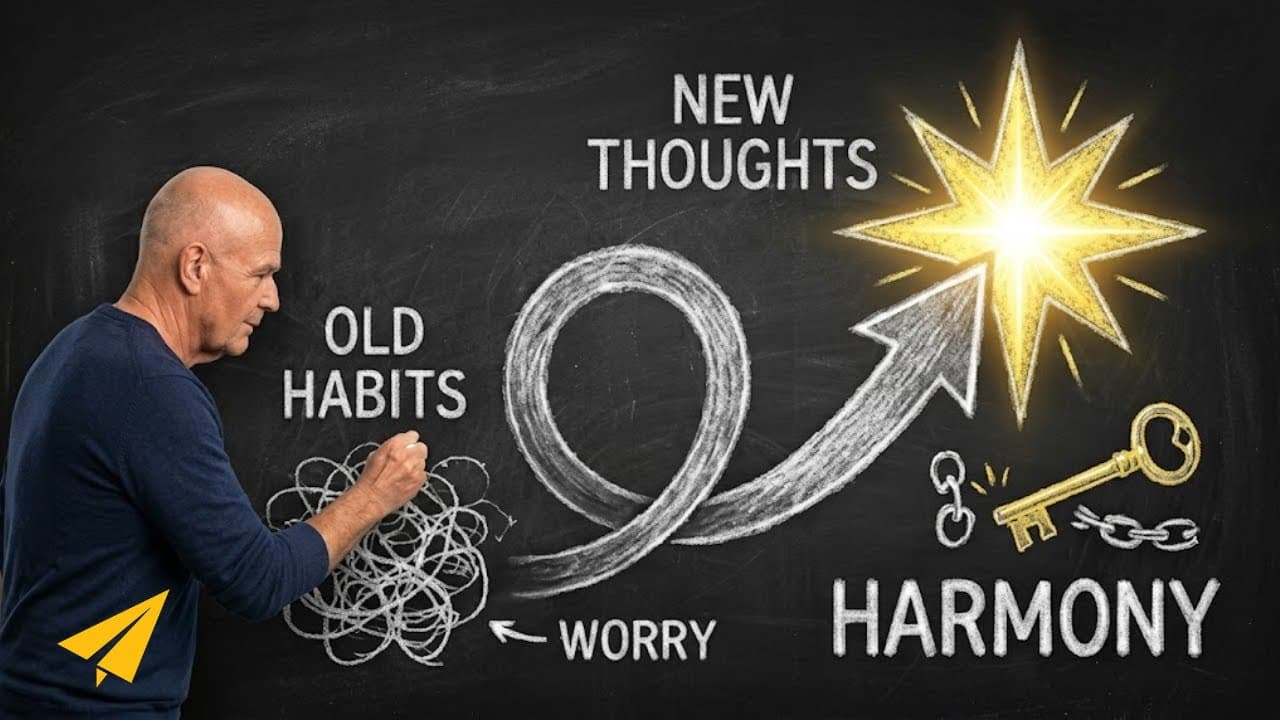
Keep your mind open to every possibility while refusing to attach your happiness to people, outcomes, or opinions. Build love, peace, kindness, and a sense of abundance within yourself before trying to share or attract them, then replace demands for more with the question, "How may I serve?" Letting go of offense and resentment creates room for motivation, fulfillment, and personal growth.
Transcript
Hello, believe Nation. I started the MentorMe series with the goal of trying to learn from people who've done a lot more than us by surrendering ourselves with them a little bit more than usual to get their ideas and wisdom and the way they think to help us break through our limited beliefs and become the best version of ourselves. So today we're g... Read More
Key Insights
- An open mind is a willingness to consider possibilities beyond what has already been taught or accepted. Dyer argues that closing the mind to what people or humanity can accomplish also closes access to the potential for greatness within each person.
- Detachment is the recognition that happiness does not have to depend on possessing something or controlling another person's behavior. It does not mean accepting victimhood. It means maintaining the ability to build a fulfilled life without making one desired condition emotionally indispensable.
- Habitual offense is a choice to search for words, customs, clothing, news, or beliefs that can trigger resentment. Dyer recommends meeting unfamiliar views with curiosity by treating them as perspectives that may be considered, even when they are not personally shared or accepted.
- Progress requires openness to methods and ideas beyond established habits. Dyer observes that repeating what has always been done cannot produce meaningful progress, while a willingness to consider unfamiliar possibilities allows human creativity, belief, and experimentation to contribute to change.
- Healthy relationships allow other people freedom to think, choose, and behave according to their own inclinations. Attachment creates conflict when happiness depends on a loved one meeting personal expectations, while detachment supports fulfillment without requiring that person to become someone else.
- People can give only what they possess internally. A person filled with love can share love, while someone dominated by anger, contempt, or fear is likely to transmit those qualities through interactions, regardless of what that person claims to want to offer.
- A scarcity belief shapes how much abundance a person expects to receive. Dyer compares abundance to an unlimited ocean, explaining that people may approach it with either a large capacity or an eyedropper according to what they believe is available to them.
- A service-oriented mindset redirects attention from constant acquisition to contribution. Dyer says that repeatedly demanding "give me" reinforces striving and insufficiency, while asking "How may I serve?" changes the message sent outward and encourages a corresponding experience of support and abundance.
Install to Summarize YouTube Videos and Get Transcripts
Explore YouTube Video Summarizer or Get YouTube Transcript Extractor
Questions & Answers
Q: How can changing your thoughts change your life?
Changing your thoughts changes how you interpret possibilities, relationships, and available opportunities. Dyer argues that a closed, offended, or scarcity-focused mind produces limitation, resentment, and continuous striving. An open and detached mind instead permits curiosity, inner fulfillment, and service. The practical change begins by examining what you expect, what you believe you deserve, and what emotional qualities you carry within yourself.
Q: What does it mean to have a mind open to everything?
Having a mind open to everything means remaining receptive to possibilities and unfamiliar ideas without immediately declaring them impossible, strange, or offensive. It does not require rejecting everything previously learned or agreeing with every claim. Dyer presents openness as a refusal to let pessimism and fixed assumptions close off human potential, creativity, progress, and the capacity for personal greatness.
Q: How can someone stop looking for reasons to be offended?
A person can stop looking for offense by noticing the many daily opportunities to react negatively to words, clothing, customs, news, and conflicting beliefs. Instead of treating each difference as a personal injury, Dyer suggests responding with curiosity: it is an interesting point of view that has not been considered before. This response creates distance between another person's expression and one's own emotional well-being.
Q: What does being attached to nothing mean?
Being attached to nothing means refusing to believe that happiness becomes impossible without a particular person, possession, behavior, or result. Dyer says attachment immobilizes people by making fulfillment conditional. Detachment preserves the ability to enjoy relationships and pursue goals while recognizing that inner happiness remains one's own responsibility. It also allows loved ones freedom to think, choose, and behave as themselves.
Q: How does detachment improve personal relationships?
Detachment improves relationships by removing the demand that another person must satisfy specific expectations before one can be happy. Dyer's relationship test involves recognizing that happiness does not depend entirely on a partner and leaving that partner free to follow personal thoughts, tastes, inclinations, and preferred behaviors. This reduces control and resentment while protecting each person's independence and capacity for fulfillment.
Q: Why can people not give love they do not have?
People cannot genuinely give love if love is absent from their inner life, just as someone cannot give away twelve oranges without first possessing them. Dyer uses this principle to show that outward behavior reflects inward content. When the inner state contains contempt, anger, or fear, those qualities are transmitted. Sharing love, peace, or kindness therefore begins by cultivating those qualities internally.
Q: How do scarcity beliefs affect a person's experience of abundance?
Scarcity beliefs cause people to approach an abundant world as though only a small share is available to them or as though others will obtain it first. Dyer illustrates this with an unlimited ocean that can be approached using either a large truck or an eyedropper. The amount people permit themselves to seek or receive reflects the limits created by their own expectations.
Q: Why should someone ask, "How may I serve?"
Asking "How may I serve?" shifts attention from demanding more to contributing something valuable. Dyer argues that a repeated "give me" message produces a matching experience of endless striving, pressure, neglect, and insufficiency. A service-oriented question changes what the person puts into the world. In his account, the world or universe then responds with the corresponding question, "How may I serve you?"
Summary & Key Takeaways
-
Wayne Dyer presents motivation as an inner practice rather than something determined by outside approval. His first principle is to keep a mind open to everything and attached to nothing. Openness preserves the possibility of growth, while detachment prevents personal happiness from becoming dependent on specific people, behaviors, possessions, or outcomes.
-
Looking for reasons to feel offended closes the mind and gives other people control over emotional well-being. Dyer recommends responding to unfamiliar or conflicting beliefs as interesting points of view instead. This attitude does not require agreement, but it allows new possibilities to be considered without automatically turning differences into anger or personal injury.
-
Dyer's second principle is that people cannot give away qualities they do not possess within themselves. Love, peace, anger, contempt, and fear are expressed outwardly from their inner source. He therefore recommends cultivating what you want to contribute and replacing a demanding "give me" mentality with the service-oriented question, "How may I serve?"
Read in Other Languages (beta)
Share This Summary 📚
Summarize YouTube Videos and Get Video Transcripts with 1-Click
Try YouTube Summary with ChatGPT & Claude or YouTube Transcript Generator
Explore More Summaries from Evan Carmichael 📚




Summarize YouTube Videos and Get Video Transcripts with 1-Click
Try YouTube Summary with ChatGPT & Claude or YouTube Transcript Generator