How Do Border Conflicts Shape Geopolitical Landscapes?
TL;DR
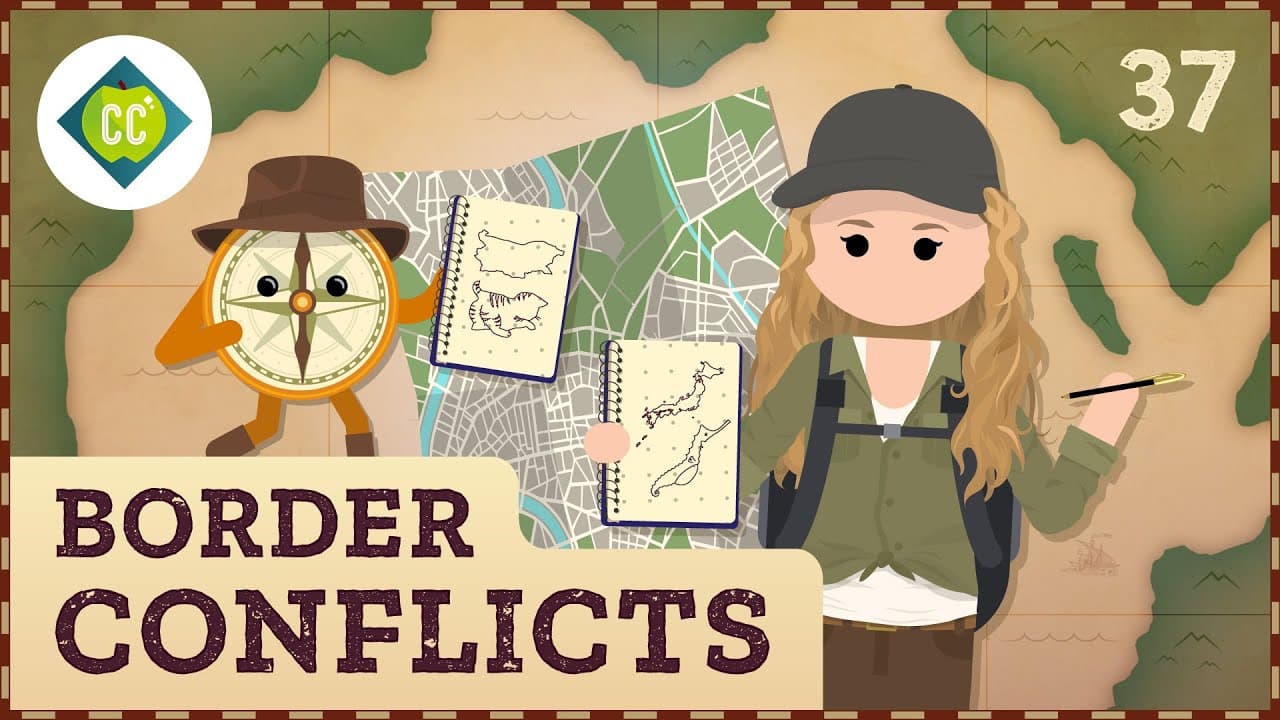
Border conflicts are deeply intertwined with geopolitical dynamics, as they not only influence the shapes of nations but also highlight power imbalances among states. The ongoing tensions between Armenia and Azerbaijan, as well as issues in the South China Sea, exemplify how borders can lead to significant international disputes and conflict.
Transcript
when we look at a map the shapes we're seeing can seem so permanent but like we've talked about many times here on crash course geography a map is just a snapshot of the earth at a particular time borders shift and change and get molded into some truly weird shapes in fact as much as i love watching a wispy cirrus or a chunky cumulus float by borde... Read More
Key Insights
- ⌛ Borders are not fixed and can change over time, reflecting the historical, cultural, and political dynamics of a region.
- ✊ The shape of a country can impact power dynamics and the efforts required to maintain unity within the state.
- ✊ Border conflicts often involve not only the directly affected countries but also larger world powers with vested interests.
- 💦 Natural boundaries, such as bodies of water, can be highly valuable and result in intense disputes over resources and trade routes.
- 🥺 Artificial boundaries can disregard cultural traits and local power structures, leading to tensions and conflicts.
- ✊ Fragmented territories and power confusion within countries can create areas where control is weak.
- 🫥 Balkanization and irredentism are common outcomes of border conflicts, leading to the creation of new states based on ethnic lines.
Install to Summarize YouTube Videos and Get Transcripts
Explore YouTube Video Summarizer or Get YouTube Transcript Extractor
Questions & Answers
Q: How do geography and history influence the shapes of borders?
Borders can be influenced by natural features like mountains and rivers, as well as historical events such as colonization and the collapse of empires. These factors shape the physical and political boundaries of countries.
Q: What are artificial and natural boundaries?
Artificial boundaries are imposed on the land and often ignore natural or cultural features. Natural boundaries, on the other hand, follow physical features like rivers and mountains.
Q: What are the consequences of fragmentation and power confusion in border regions?
Fragmentation can lead to weak control over territories, while power confusion creates uncertainty over who governs a certain area. These factors often result in conflicts and power imbalances within countries.
Q: How do larger world powers contribute to border conflicts?
Larger powers, such as Russia and Turkey, often intervene in border conflicts to tip the outcome in their favor. They may provide military support or become involved in proxy wars, which further complicate the resolution of border disputes.
Summary & Key Takeaways
-
Borders are not permanent and can change over time, often resulting in the creation of unconventional and fragmented shapes for countries.
-
Geopolitics, the study of international relationships across space, plays a crucial role in shaping borders and determining power imbalances.
-
The conflicts and divisions between Armenia and Azerbaijan, as well as the control over the South China Sea, exemplify the intricate nature of border disputes and their impact on geopolitics.
Read in Other Languages (beta)
Share This Summary 📚
Summarize YouTube Videos and Get Video Transcripts with 1-Click
Try YouTube Summary with ChatGPT & Claude or YouTube Transcript Generator
Explore More Summaries from CrashCourse 📚


Summarize YouTube Videos and Get Video Transcripts with 1-Click
Try YouTube Summary with ChatGPT & Claude or YouTube Transcript Generator