How Does TinyGrad Optimize OpenPilot Model for Speed?
TL;DR
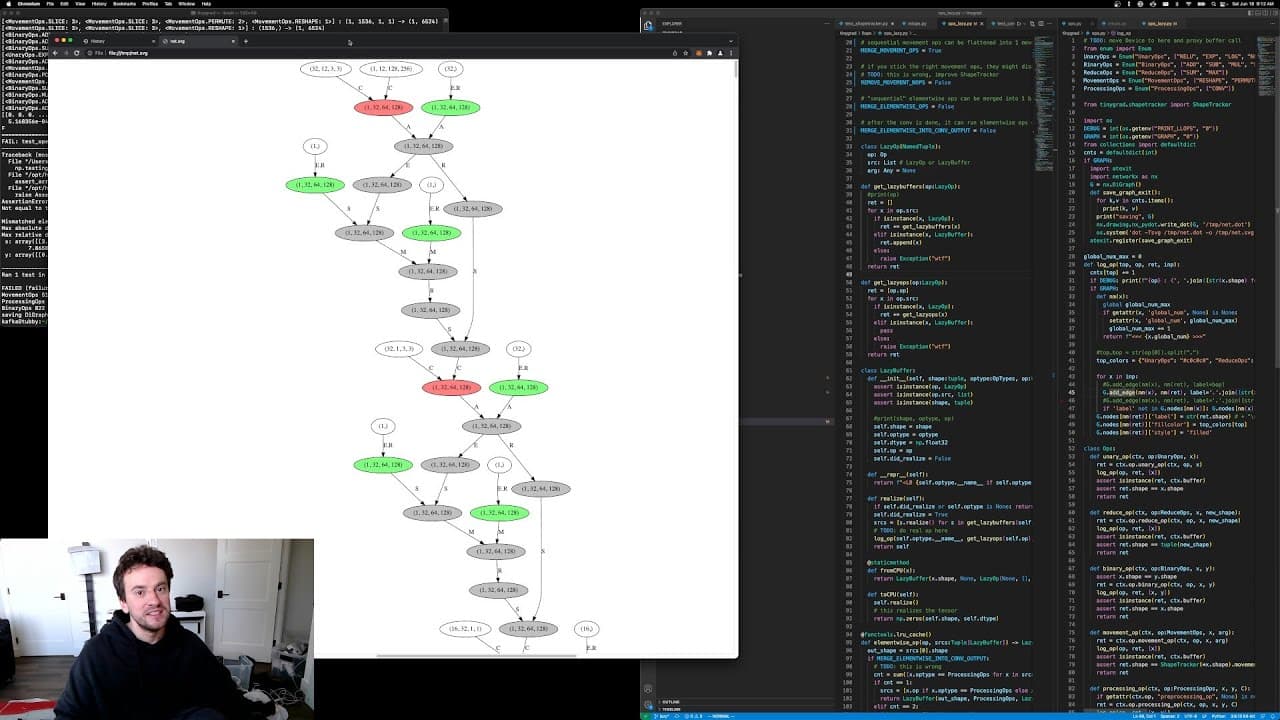
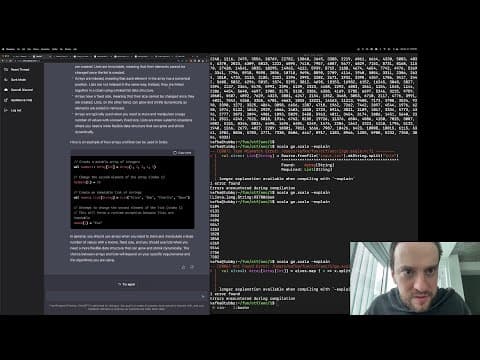
TinyGrad improves the speed and efficiency of the OpenPilot model by implementing optimizations that reduce memory usage and computational complexity. Techniques include merging movement operations, optimizing convolution calculations, and minimizing redundant memory allocations, resulting in a more agile neural network computation process.
Transcript
good morning good morning good morning good morning okay i moved i'm in a new apartment i just rewatched the sharon pat stay battle this morning there's so many so many classic lines in that you know at a sucker-free get hype when you boost buffer you just talk before other people fight i want that line oh yeah oh man you're such a bitch to the lea... Read More
Key Insights
- ❓ Optimizing GPU computation libraries like Tiny Grad is crucial for efficient neural network calculations.
- 🆘 Techniques such as merging movement operations and shuffling movement operations help reduce memory usage and improve performance in Tiny Grad.
Install to Summarize YouTube Videos and Get Transcripts
Explore YouTube Video Summarizer or Get YouTube Transcript Extractor
Questions & Answers
Q: What is the main focus of the content?
The main focus of the content is to optimize Tiny Grad, a GPU computation library, to improve speed and reduce memory usage for neural network calculations.
Q: What optimizations are implemented in Tiny Grad to enhance performance?
The optimizations implemented in Tiny Grad include merging movement operations, shuffling movement operations, and realizing buffers.
Q: Why is it important to minimize memory usage and improve computation speed in neural network calculations?
Minimizing memory usage and improving computation speed are crucial in neural network calculations as they help in reducing resource consumption, increasing efficiency, and enabling faster model training and inference times.
Q: Can you explain the process of merging movement operations and shuffling movement operations in Tiny Grad?
Merging movement operations involves combining multiple movement operations into a single operation, reducing the number of buffer allocations and memory usage. Shuffling movement operations rearranges the order of movement operations to minimize the number of memory operations, resulting in improved performance.
Summary & Key Takeaways
-
The content discusses the process of optimizing Tiny Grad, a GPU computation library, to improve speed and reduce memory usage.
-
Various optimizations, such as merging movement operations, shuffling movement operations, and realizing buffers, are implemented to enhance performance.
-
The importance of minimizing memory usage and improving computation speed in neural network calculations is emphasized.
Read in Other Languages (beta)
Share This Summary 📚
Summarize YouTube Videos and Get Video Transcripts with 1-Click
Try YouTube Summary with ChatGPT & Claude or YouTube Transcript Generator
Explore More Summaries from george hotz archive 📚


Summarize YouTube Videos and Get Video Transcripts with 1-Click
Try YouTube Summary with ChatGPT & Claude or YouTube Transcript Generator