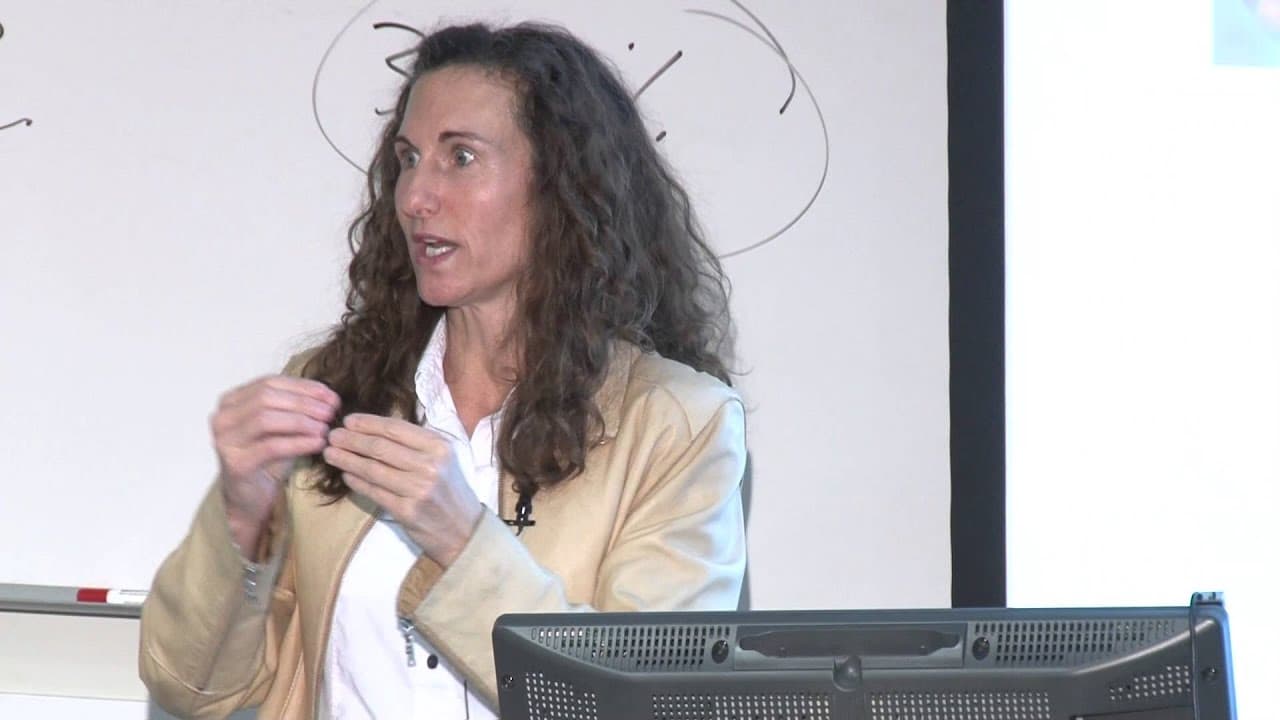
How Does Netflix Apply Data Science? Data Science @Stanford with Caitlin Smallwood, 2/17/2016
TL;DR
Netflix applies data science to major decisions involving content programming, personalized marketing, streaming quality, recommendations, and product launches. Caitlin Smallwood, Netflix’s Vice President of Science and Algorithms, explains that member viewing data is especially valuable because it captures varied entertainment tastes. She also describes Netflix’s use of predictive models, algorithms, experimentation, and highly specific row labels. Read on to see how these practices shape the service.
Transcript
well thank you every month everyone and welcome to another data science presentation of a very part of an ongoing series of talks that we're very excited about my name is Russ Altman I'm involved with the biomedical data science initiative and the Stanford data science initiative and I'm thrilled to introduce Kaitlin Smallwood vice-president of sci... Read More
Key Insights
- 👨💼 Netflix applies data science to all aspects of its business, including content programming, recommendation systems, and product launches.
- 🫵 The company collects and analyzes a vast amount of data, with viewing data being particularly valuable for understanding user preferences.
- 👤 Netflix uses a variety of algorithms and techniques, such as factor analysis and title-to-title similarity, to improve its recommender system and personalize the user experience.
- 🤩 Experimentation is a key component of Netflix's data science practice, allowing them to validate algorithm performance and make data-driven decisions.
- 😤 The company has a strong culture of collaboration and transparency, with data science being a collaborative effort involving various teams and executives.
Install to Summarize YouTube Videos and Get Transcripts
Explore YouTube Video Summarizer or Get YouTube Transcript Extractor
Questions & Answers
Q: How does Netflix use data science?
Netflix applies data science to major decisions across content programming, personalized marketing, streaming delivery, recommendations, and product launches. Its teams use methods ranging from lighter analytical techniques to deep machine-learning techniques, depending on where they can have an impact.
Q: What does Caitlin Smallwood do at Netflix?
Caitlin Smallwood is introduced as Netflix’s Vice President of Science and Algorithms. She and her team work on predictive models, algorithms, and experimentation science across the Netflix business.
Q: What data does Netflix consider most valuable?
Smallwood identifies member viewing data as Netflix’s most valuable data because it is reused across many applications. It records what titles members play, how long they watch, and which devices they use, helping Netflix examine entertainment tastes.
Q: How does Netflix use viewing data to understand audience tastes?
Netflix studies viewing behavior because it reflects how entertainment preferences vary from person to person. The company also examines highly specific row labels, such as “girls night in” and “murder mysteries with a strong female lead,” to explore how categories can capture those tastes.
Q: How does data science support Netflix’s recommendation system?
The recommendation system is one of Netflix’s major applications of data science. Netflix uses member viewing data and its understanding of varied entertainment tastes to personalize what appears in the product.
Q: How does Netflix apply data science to marketing?
Netflix uses data science in marketing and tries to personalize its outreach to potential customers. Smallwood presents this as one of several major business areas where the company invests in data science.
Q: How does Netflix use science to improve streaming quality?
Netflix applies science to delivering large amounts of streaming traffic across the internet at high quality. Its goal is to make the experience after a member clicks play feel smooth and easy, including under low-bandwidth conditions.
Q: What makes data science at Netflix successful?
Smallwood says Netflix tries to apply data science to its largest decisions and areas of potential impact. The company draws on predictive models, algorithms, experimentation science, and techniques ranging from lighter analysis to deep machine learning.
Summary & Key Takeaways
-
Kaitlin Smallwood, Vice President of Science and Algorithms at Netflix, discusses the application of data science at Netflix, focusing on content development, recommendation systems, and product launch decisions.
-
Netflix collects a vast amount of data, with viewing data being the most valuable. They use this data to understand human tastes and preferences in order to inform content programming decisions and personalize the user experience.
-
Netflix uses predictive models to estimate the demand for new content and optimize content licensing decisions. They also continually experiment with different algorithms and techniques to improve their recommender system.
Read in Other Languages (beta)
Share This Summary 📚
Summarize YouTube Videos and Get Video Transcripts with 1-Click
Try YouTube Summary with ChatGPT & Claude or YouTube Transcript Generator
Explore More Summaries from Stanford 📚



Summarize YouTube Videos and Get Video Transcripts with 1-Click
Try YouTube Summary with ChatGPT & Claude or YouTube Transcript Generator