AI and the Art of Ingenuity: Computational Creativity
TL;DR
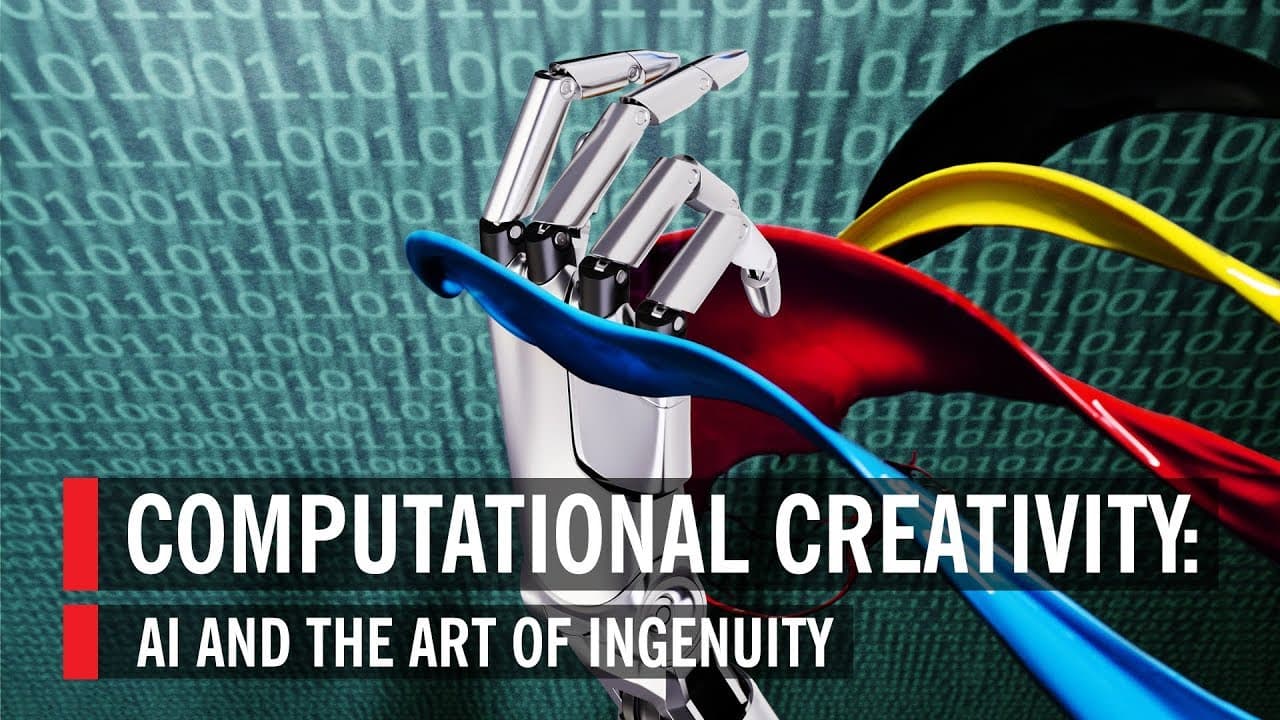
Can artificial intelligence truly possess a unique and original creative expression, or is it merely imitating human creativity? Experts discuss the limits and potential of computational creativity.
Transcript
CREATIVITY: IT’S AT THE HEART OF WHO WE HUMANS ARE… …WITH BRAINS EQUIPPED BY EVOLUTION TO INVENT, TO WRITE, TO MAKE ART AND MUSIC. WE HUMANS ARE SPECIAL, RIGHT? BUT WAIT. WHAT IF A ROBOT COULD PAINT A MASTERPIECE? WHAT IF ARTIFICIAL INTELLIGENCE COULD COMPOSE GREAT MUSIC? DOES A ROBOT – A MACHINE WITH ARTIFICIAL INTELLIGENCE – DRIVEN BY CODE AND AL... Read More
Key Insights
- 👶 Human creativity has evolved over thousands of years, and AI provides a new tool to foster creativity.
- 👶 Computational creativity can help artists explore new ideas, but the balance between novelty and quality is crucial.
- 🪛 AI systems are data-driven and learn from existing patterns, resulting in outputs influenced by human creations.
- 😚 The future of computational creativity lies in closing the feedback loop between artist and machine, enhancing human expression rather than trying to replace it.
Install to Summarize YouTube Videos and Get Transcripts
Explore YouTube Video Summarizer or Get YouTube Transcript Extractor
Questions & Answers
Q: Can robots create original masterpieces of art or music?
While AI can generate new artworks or compositions, the definition of "original" becomes subjective. AI systems are trained on existing data, so their outputs are influenced by the patterns and styles they have learned from human creations.
Q: Can AI's creativity match or surpass human creativity?
AI is capable of producing creative outputs that were previously unseen or unexplored, but the level of creativity and subjective interpretation is still limited without human intervention. The current state of AI does not possess consciousness or emotional depth.
Q: Is computational creativity a threat to human creativity?
Computational creativity can be seen as both a competitor and a collaborator to human creativity. AI tools can assist artists in creating new expressions and exploring uncharted territories. However, AI cannot replace the unique perspectives and experiences that humans bring to the creative process.
Q: What are the ethical considerations regarding ownership of creative outputs generated by AI?
Current laws dictate that AI-generated creations are in the public domain, as machines do not possess property rights. This raises questions about the future of intellectual property and how to incentivize research and development in computational creativity.
Summary & Key Takeaways
-
Artificial intelligence and machine learning systems have the potential to generate novel and high-quality creative outputs in various domains such as music, art, and fashion.
-
Computational creativity tools can assist human artists in exploring new ideas, combining different elements, and creating unique compositions.
-
The challenge lies in finding a balance between novelty and quality, as too much of either can hinder creativity.
-
The use of AI in creative processes raises questions about ownership, property rights, and the future of human artistic expression.
Read in Other Languages (beta)
Share This Summary 📚
Summarize YouTube Videos and Get Video Transcripts with 1-Click
Try YouTube Summary with ChatGPT & Claude or YouTube Transcript Generator
Explore More Summaries from World Science Festival 📚
Summarize YouTube Videos and Get Video Transcripts with 1-Click
Try YouTube Summary with ChatGPT & Claude or YouTube Transcript Generator