How to Use ICT Price Action Model for Swing Trading
TL;DR
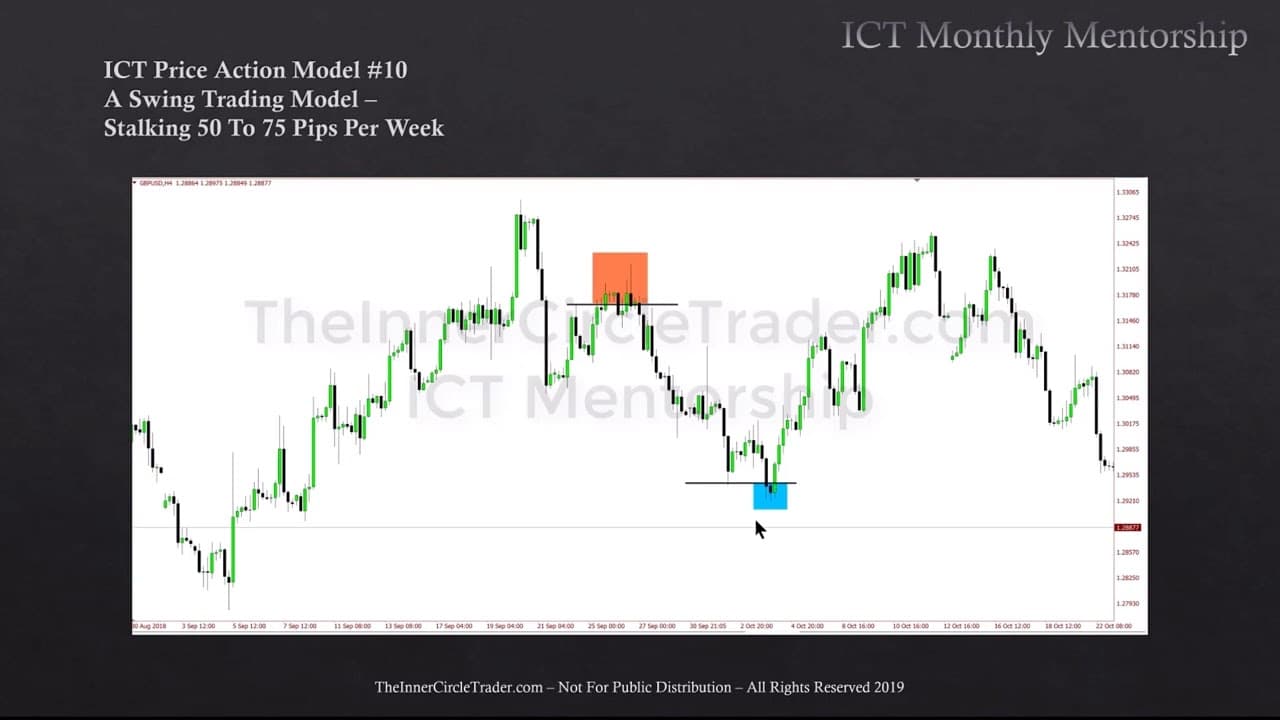
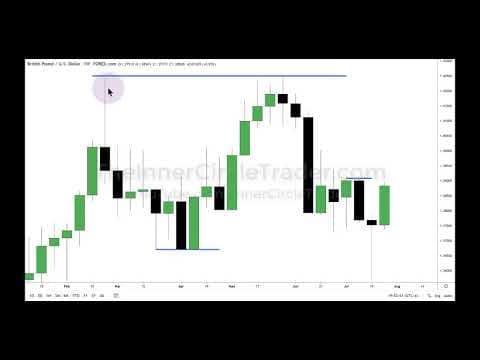
The ICT Price Action Model 10 is a swing trading strategy aimed at capturing 50 to 75 pips per week by identifying weekly range expansions. Traders focus on external range liquidity pools for entry and exit points, using the model to predict the directional movement of weekly price bars. It is adaptable to various timeframes and market conditions.
Transcript
okay folks welcome back so we're looking at Price action model number 10 this is a swing trading model and we're going to be dealing with setups that we stock for 50 to 75 Pips now obviously as I'll discuss when we just go into the details of this model it's not limited to 50 to 75 Pips and you can use it to make smaller amounts of Pips but you can... Read More
Key Insights
- ICT Price Action Model 10 targets 50 to 75 pips per week.
- The model focuses on weekly range expansions to predict price direction.
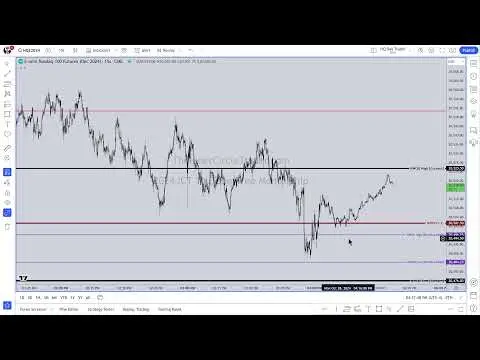
- Traders use external range liquidity pools for entry and exit.
- The model is adaptable to different timeframes and market conditions.
- An anchor point forms on Monday, Tuesday, or Wednesday for setups.
- The strategy involves selling above old highs and buying below old lows.
- The model is not a complete trading plan but a foundation for strategies.
- Traders should practice identifying patterns to build confidence.
Install to Summarize YouTube Videos and Get Transcripts
Explore YouTube Video Summarizer or Get YouTube Transcript Extractor
Questions & Answers
Q: How to identify entry points in ICT Price Action Model 10?
Entry points in the ICT Price Action Model 10 are identified by focusing on external range liquidity pools. Traders look for price movements above old highs to sell short and below old lows to buy long. The model operates on the premise of weekly range expansions, requiring traders to set up trades early in the week, typically on Monday, Tuesday, or Wednesday.
Q: What is the role of liquidity pools in this trading model?
Liquidity pools play a critical role in the ICT Price Action Model 10 by serving as strategic points for entering and exiting trades. Traders use external range liquidity pools to determine where to sell short or buy long, based on the movement of price above or below these pools. This approach helps in capturing the directional bias of the market effectively.
Q: Why is the ICT Price Action Model not a complete trading plan?
The ICT Price Action Model 10 is not a complete trading plan because it serves as a foundational framework rather than a detailed system. It provides the basis for identifying potential trade setups through liquidity pools and weekly range expansions, but traders must develop their own specific strategies and risk management rules to implement the model effectively in live trading.
Q: How can traders practice using the ICT Price Action Model?
Traders can practice using the ICT Price Action Model by consistently analyzing historical price charts to identify patterns of liquidity runs and weekly range expansions. By marking out old highs and lows and observing how price interacts with these levels, traders can build confidence in recognizing entry and exit points. Regular practice is essential for mastering the model's principles.
Q: What timeframes are suitable for the ICT Price Action Model?
The ICT Price Action Model 10 is versatile and can be applied to various timeframes, including intraday and swing trading charts. While the model is designed to capture weekly range expansions, traders can adapt it to shorter timeframes like the 4-hour or 15-minute charts, depending on their trading style and objectives. Flexibility in timeframe selection is a key advantage of this model.
Q: What are the key components of a trade setup in this model?
Key components of a trade setup in the ICT Price Action Model 10 include identifying weekly directional bias, setting anchor points early in the week, and using external range liquidity pools for entry and exit. Traders focus on selling short above old highs and buying long below old lows, aligning their trades with the anticipated weekly range expansion for optimal results.
Q: How does the model handle risk management?
While the ICT Price Action Model 10 provides a framework for identifying trade opportunities, risk management is left to the trader's discretion. Traders should develop their own rules for stop-loss placement, position sizing, and profit-taking to manage risk effectively. The model emphasizes practice and adaptation, encouraging traders to refine their personal risk management strategies.
Q: Why is practice important for mastering the ICT Price Action Model?
Practice is crucial for mastering the ICT Price Action Model 10 because it helps traders internalize the model's principles and build confidence in identifying trade setups. By regularly analyzing charts and marking liquidity pools, traders enhance their ability to recognize patterns and make informed decisions. Consistent practice ensures a deeper understanding of the model's application across different market conditions.
Summary & Key Takeaways
-
ICT Price Action Model 10 is designed for swing trading, aiming to capture 50 to 75 pips per week. It uses weekly range expansions to predict price direction and employs external range liquidity pools for strategic entry and exit points. The model is flexible across various timeframes and market conditions, offering a foundational approach to trading.
-
Traders focus on identifying weekly directional bias and setting up trades based on external liquidity runs. Anchor points typically form early in the week, guiding traders in capturing potential price movements. While the model provides a framework, it requires practice and adaptation to individual trading styles.
-
The model encourages selling above previous highs and buying below previous lows, using liquidity pools as key decision points. It's not a complete trading system but serves as a basis for developing personalized strategies. Consistent practice and observation are crucial for mastering this approach.
Read in Other Languages (beta)
Share This Summary 📚
Summarize YouTube Videos and Get Video Transcripts with 1-Click
Try YouTube Summary with ChatGPT & Claude or YouTube Transcript Generator
Explore More Summaries from The Inner Circle Trader 📚

Summarize YouTube Videos and Get Video Transcripts with 1-Click
Try YouTube Summary with ChatGPT & Claude or YouTube Transcript Generator