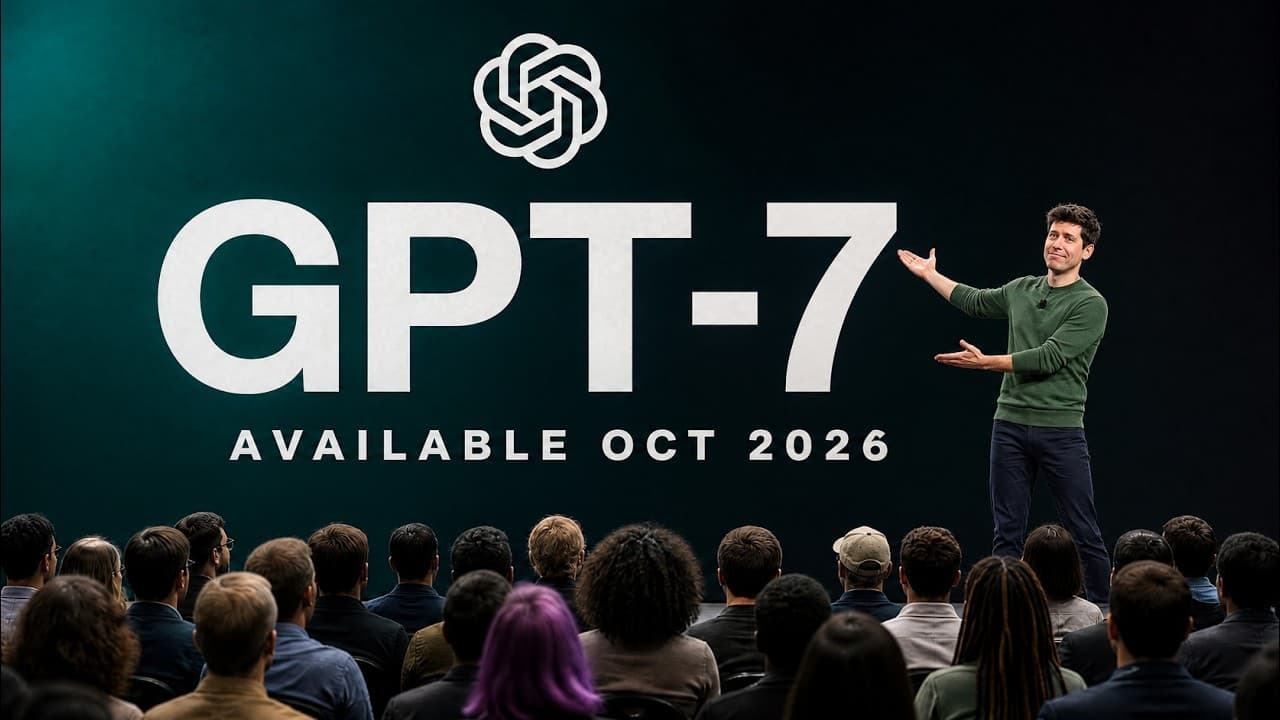
What is GPT-7 expected features and rumors debunked
TL;DR
GPT-7 rumors are rated for credibility. The video explains Astra and Bel, compares multiple frontier models, and encourages skepticism about leaks. It asserts that there is no public confirmation of GPT-7 specifics beyond Astra, and it emphasizes evaluating claims against on record statements and independent benchmarks.
Transcript
A guy named Zahi had GPT6 Astra draw his portrait inside Canva. It used nothing but its own computer use controls pixel by pixel with the mouse. The clip showed it picking the drawing back up on its own after the browser crashed. That's by the account's own telling. Hundreds of thousands of people watched it. And the model Open AI reportedly finish... Read More
Key Insights
- GPT-7 rumors are evaluated with a four badge system: confirmed, credible leak, speculation, or debunked.
- Astra is described as OpenAI's GPT6 and not a future upstream research system.
- Four frontier labs shipped flagships in one week, signaling a competitive race for long horizon, token heavy workloads.
- OpenAI may publish and yet lose on certain evaluation claims, showing that public benchmarks do not always align with internal assessments.
- Credible leaks are identified by track records and specific, boring details that align with real sources.
- Benchmarks are less decisive for winners when multiple models perform similarly on key tasks.
- The video emphasizes that many headlines rely on single posts or multiple outlets without independent verification.
- Users are advised to consider cost, integration, and stability when mixing multiple vendors.
Install to Summarize YouTube Videos and Get Transcripts
Explore YouTube Video Summarizer or Get YouTube Transcript Extractor
Questions & Answers
Q: What is the status of GPT-7 as described in the video
The video states that there is no publicly verified confirmation of GPT-7 specifics beyond Astra. It explains that claims are rated with badges such as confirmed, credible leak, speculation, or debunked. Viewers are urged to rely on on record statements and independent evaluations rather than rumors when planning AI workflows.
Q: How many flagship models were released in a single week according to the video
The video notes that four frontier labs shipped flagships in one week, including Claude Fable 5.1, Mythos 5.1, Muse Spark 1.3, and Gemini Omni 1.1 Flash, highlighting the rapid pace of advancement and the competitive landscape for long horizon, high token tasks.
Q: What does the video say about Astra in relation to GPT6
The video states Astra is GPT6 and not a separate research system upstream of a consumer product. It discusses the release stages, pricing per million tokens, and the overall context of how Astra fits into the market without implying a new architecture as a standalone product.
Q: Why are credible leaks given weight in the analysis
Credible leaks are given weight when they come from sources with a track record and when details are specific and align with real sources. The video explains that a single origin claim can be repeated by many outlets, but credibility comes from corroboration and consistent, verifiable details.
Q: What is the relationship between price and token context in the video
The video mentions a pricing figure of $10 per million tokens in and 50 out, applicable to some models, and discusses how larger context windows impact cost. It emphasizes that higher costs can accompany stronger capabilities, especially for long horizon tasks and agent based workflows.
Q: How does the video describe evaluating benchmarks for AI models
The video explains that benchmarks are not definitive winners when multiple flagships score near each other. It discusses the shift from relying solely on benchmarks to considering real world performance, reliability, and the ability to maintain consistent outputs across generations.
Q: What is the suggested approach to using multiple AI vendors
The video suggests using a platform to run models side by side in the same prompt to compare outputs, performance, and costs. It argues that this approach helps avoid vendor lock in and enables efficient integration of diverse capabilities within a single workflow.
Q: What does the video say about the term Bell or Doug in relation to GPT-7 rumors
The video discusses rumors around code names Bell and Doug, clarifying that these are unverified claims tied to posts rather than confirmed documents. It emphasizes that headlines often rely on a single post and that independent verification is required before treating such claims as factual.
Summary & Key Takeaways
-
The video reviews the claim landscape around GPT-7 and related models, noting that several flagship releases occurred within a short time and that the term GPT-7 itself is not confirmed by all sources. It focuses on how the on screen badges classify claims and how to judge credibility. The discussion highlights the need for caution when evaluating leaked information and the importance of corroboration.
-
The analysis covers pricing, deployment steps, and product ecosystems around flagship models, including how users interact with multiple vendors in a single workspace. It also explains that assessments can shift quickly as new information appears, and that headlines may not reflect the full context.
-
The takeaway is to monitor credible, on record updates rather than rumors, and to understand that frontend toolchains may change as new models ship. The video encourages building workflows that can adapt to new capabilities while avoiding overcommitment to unverified claims.
Read in Other Languages (beta)
Share This Summary 📚
Summarize YouTube Videos and Get Video Transcripts with 1-Click
Try YouTube Summary with ChatGPT & Claude or YouTube Transcript Generator
Explore More Summaries from AI Master 📚





Summarize YouTube Videos and Get Video Transcripts with 1-Click
Try YouTube Summary with ChatGPT & Claude or YouTube Transcript Generator