Why Powell Says Rate Cuts May Be Warranted
TL;DR
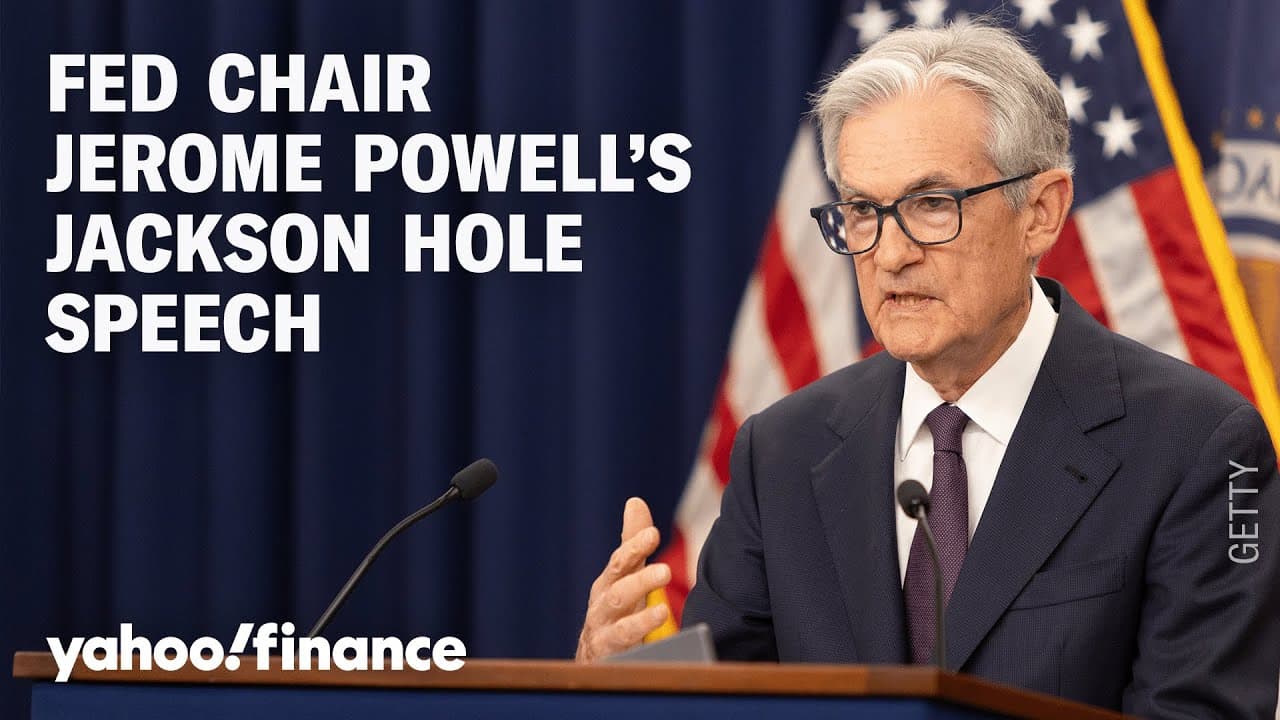
The shifting balance of risks may justify adjusting interest-rate policy because employment risks are increasing while tariff-related inflation risks remain elevated. Powell said policy is still restrictive, inflation expectations appear anchored, and the Federal Open Market Committee will proceed carefully, evaluating incoming data rather than following a preset course.
Transcript
When I appeared at this podium one year ago, the economy was at an inflection point. Our policy rate had stood at 5 and a quarter to 5 a.5% for more than a year. That restrictive policy stance was appropriate to help bring down inflation and to foster a sustainable balance between aggregate demand and supply. Inflation had moved much closer to our ... Read More
Key Insights
- Payroll growth slowed sharply to an average of 35,000 jobs per month over the latest three months, compared with 168,000 per month during 2024. Substantial downward revisions to May and June made the deterioration considerably larger than policymakers had assessed one month earlier.
- The labor market is balanced through simultaneous weakness in labor demand and labor supply, rather than through robust growth. Unemployment was 4.2% in July, while quits, layoffs, vacancies relative to unemployment, and nominal wage growth changed little or softened only modestly.
- Employment risks are increasingly tilted to the downside because the unusual labor-market balance could deteriorate rapidly. Powell warned that if current risks materialize, the adjustment may appear quickly through sharply higher layoffs and a rising unemployment rate.
- Economic growth slowed to 1.2% in the first half of the year, roughly half the 2.5% pace recorded during 2024. The slowdown largely reflected weaker consumer spending, although some weakness may also represent slower growth in supply or potential output.
- Tariff effects are clearly visible in consumer prices, with total PCE prices rising 2.6% over the 12 months ending in July and core PCE prices increasing 2.9%. Core goods prices rose 1.1%, reversing the modest decline observed during 2024.
- Tariff-driven inflation may be a one-time shift in the price level, but the adjustment will not occur all at once. Higher costs still need to pass through supply chains and distribution networks, while evolving tariff rates may extend the timing and increase uncertainty.
- Longer-term inflation expectations appear anchored and consistent with the Fed's 2% objective, despite inflation remaining above target for more than four years. Powell nevertheless stressed that policymakers cannot assume expectations will remain stable or allow temporary price increases to become persistent inflation.
- Monetary policy remains restrictive, but the policy rate is now 100 basis points closer to neutral than it was one year earlier. The baseline outlook and changing balance between upside inflation risks and downside employment risks may warrant an adjustment, although policy is not preset.
Install to Summarize YouTube Videos and Get Transcripts
Explore YouTube Video Summarizer or Get YouTube Transcript Extractor
Questions & Answers
Q: Why may the Federal Reserve adjust interest rates?
An adjustment may be warranted because the balance of economic risks has shifted. Inflation risks are tilted upward as tariffs raise some goods prices, while employment risks are tilted downward as payroll growth and labor-force growth slow. Policy remains restrictive, and the policy rate is 100 basis points closer to neutral than one year earlier. The Fed will weigh incoming data, the outlook, and both sides of its mandate before deciding.
Q: What is happening in the labor market?
The labor market appears balanced, but the balance comes from marked slowing in both worker demand and worker supply. Payroll growth averaged only 35,000 per month over the latest three months, yet unemployment remained historically low at 4.2%. Quits, layoffs, vacancies relative to unemployment, and wage growth changed little or softened modestly. Reduced immigration and lower participation also decreased the job growth needed to keep unemployment stable.
Q: Why are downside risks to employment increasing?
Downside employment risks are increasing because payroll growth has slowed sharply while the labor market's apparent stability depends partly on weaker labor supply. Reduced immigration and a lower participation rate have limited labor-force growth, keeping unemployment relatively stable even as hiring weakens. Powell cautioned that this unusual balance could change quickly, producing sharply higher layoffs and rising unemployment if labor demand deteriorates further.
Q: How are tariffs affecting inflation?
Higher tariffs have begun raising prices in some categories of goods, and their effects on consumer prices are clearly visible. Total PCE prices rose 2.6% over the 12 months ending in July, core PCE prices rose 2.9%, and core goods prices increased 1.1%. The effects are expected to accumulate as tariff costs move through supply chains and distribution networks, although their timing and size remain uncertain.
Q: Will tariff increases cause persistent inflation?
A reasonable base case is that tariffs create a relatively short-lived, one-time increase in the price level, although the increase will not happen all at once. Persistent inflation could emerge if workers obtain higher wages after losing real income or if inflation expectations rise. Powell judged adverse wage-price dynamics less likely because the labor market is not particularly tight, but he said the risk must still be assessed and managed.
Q: What do inflation expectations indicate?
Market-based and survey-based measures suggest that longer-term inflation expectations remain well anchored and consistent with the Fed's longer-run objective of 2%. That stability reduces the likelihood that tariff-related price increases automatically develop into continuing inflation. However, inflation has exceeded the target for more than four years and remains important to households and businesses, so policymakers cannot take anchored expectations for granted.
Q: How fast is the economy growing?
GDP growth slowed to 1.2% during the first half of the year, roughly half the 2.5% pace recorded in 2024. The decline largely reflected slower consumer spending. As with employment, Powell said some of the deceleration may represent slower supply growth or lower potential output, not solely cyclical weakness. That distinction matters because monetary policy can stabilize cyclical fluctuations but has little power over structural changes.
Q: How has the Fed's monetary policy framework changed?
The revised framework preserves the congressional mandate of maximum employment and stable prices while seeking to remain suitable across a broad range of economic conditions. The review included Fed Listens events, a research conference, staff analysis, and policymaker deliberations. It builds on the 2012 consensus statement and responds to lessons from the effective lower bound period, the pandemic reopening, and the subsequent surge in inflation.
Summary & Key Takeaways
-
Powell described an economy facing simultaneous pressure from higher tariffs, tighter immigration policy, slower labor-force growth, and uncertainty about future tax, spending, and regulatory policies. These forces affect both demand and supply, making it harder to distinguish temporary cyclical weakness from structural changes that monetary policy cannot meaningfully reverse.
-
Labor conditions remain broadly balanced, but that balance reflects slowing demand for workers alongside slowing labor supply. Payroll growth averaged only 35,000 per month over the latest three months, while unemployment remained historically low at 4.2%. Powell warned that employment risks could materialize quickly through layoffs and rising unemployment.
-
Tariffs are already raising some goods prices, but Powell presented a short-lived price-level increase as a reasonable base case. Because inflation and employment risks point in opposite directions, the Fed must balance both parts of its mandate. Policy remains restrictive, and the changing outlook may warrant an adjustment without predetermining the decision.
Read in Other Languages (beta)
Share This Summary 📚
Summarize YouTube Videos and Get Video Transcripts with 1-Click
Try YouTube Summary with ChatGPT & Claude or YouTube Transcript Generator
Explore More Summaries from Yahoo Finance 📚




Summarize YouTube Videos and Get Video Transcripts with 1-Click
Try YouTube Summary with ChatGPT & Claude or YouTube Transcript Generator