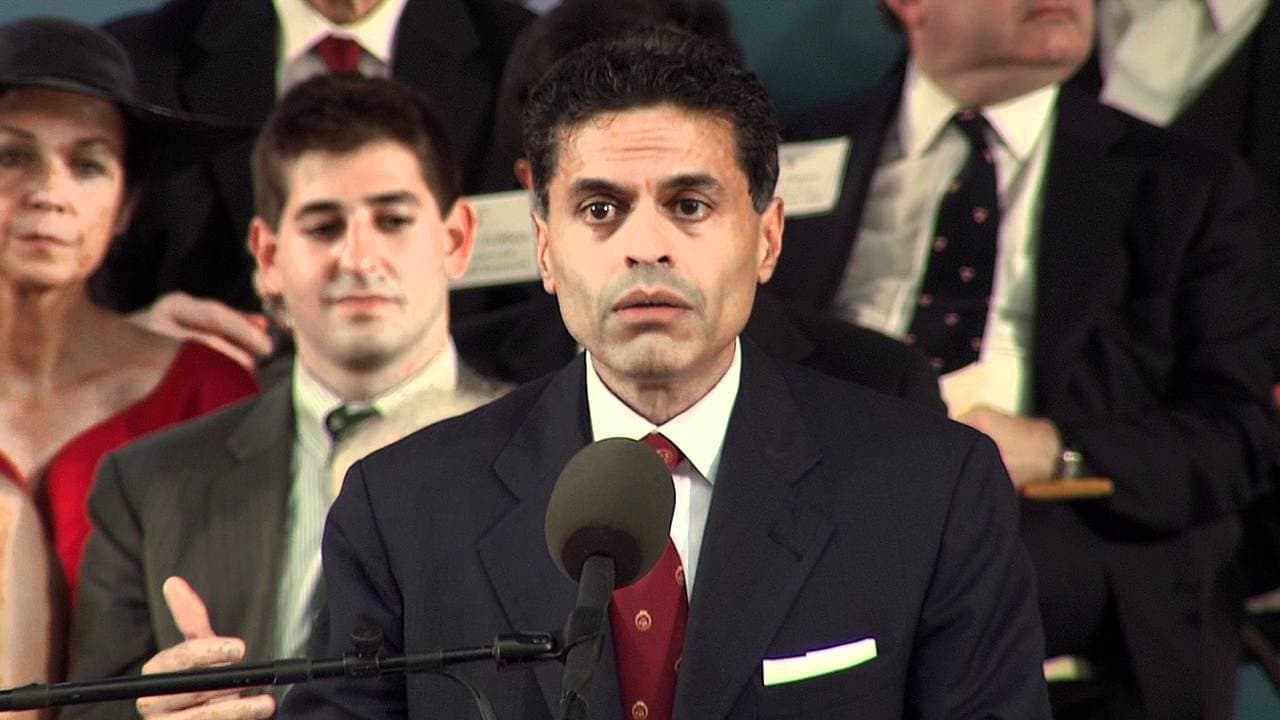
Fareed Zakaria Commencement Speech || Harvard University Commencement 2012
TL;DR
The world today is the most peaceful in human history, with war and terrorism deaths down 50% from the 1990s and 99% from the World War Two decade. Global prosperity has spread to about 80 fast-growing countries, cut poverty faster in 50 years than the previous 500, and added 25 years to Chinese life expectancy.
Transcript
Our speaker this afternoon is a celebrated thought leader on international affairs named by Foreign Policy as one of the top one hundred global thinkers perhaps most visible as the host of CNN's flagship international affairs program a role he's held since 2008 he's also editor-at-large at Time Magazine, a Washington Post columnist and a New York T... Read More
Key Insights
- The richest countries of the world are not in major geopolitical or geomilitary competition, with no arms races, proxy races, or wars among them, a level of political stability unmatched for hundreds of years.
- War, civil war, and terrorism deaths are down 50% this decade from the 1990s, down 75% from the preceding five decades, and down 99% from the World War Two decade, which Steven Pinker cites as evidence these are the most peaceful times in human history.
- Robust global growth has spread widely: in 1980 about 16 countries grew at four percent a year, a number that doubled by 2007 and stands at roughly 80 today even after the financial crisis.
- Poverty has fallen more in the last 50 years than in the preceding 500, with most of that reduction occurring in the last 20, and the average Chinese person is ten times richer than 50 years ago with 25 more years of life expectancy.
- Life expectancy is rising so fast that humanity gains five hours of life expectancy every day, and a quarter of babies born in the developed world this year will live to be a hundred.
- College graduation has surged globally, rising four-fold for men and seven-fold for women over the last 40 years, and female U.S. House members secured $49 million more in federal grants than male counterparts over 25 years.
- The rise of the rest benefits the United States most, since it has the largest and most dynamic economy, hosts hundreds of the world's greatest companies, and holds almost all of the world's great universities.
- The United States is the only industrialized country that is demographically vibrant, adding three million people a year, strengthened by immigrants, and is projected to have a better demographic profile than China by 2050.
Install to Summarize YouTube Videos and Get Transcripts
Explore YouTube Video Summarizer or Get YouTube Transcript Extractor
Questions & Answers
Q: How peaceful is the world today according to Fareed Zakaria?
Zakaria argues the world is profoundly at peace, with the richest countries not engaged in major geopolitical or geomilitary competition, no arms races, proxy races, wars, or cold wars among them. He cites data showing deaths from war, civil war, and terrorism are down 50% this decade from the 1990s, down 75% from the preceding five decades, and down 99% from the World War Two decade. Harvard professor Steven Pinker argues these are the most peaceful times in human history.
Q: How many countries are experiencing robust economic growth?
Zakaria explains that in 1980 about 16 countries were growing at four percent a year with robust growth. By 2007 that number had doubled to roughly 32, and even after the financial crisis it stands today at about 80 countries. He adds that even in the current slow-growth decade, the global economy as a whole would grow ten to twenty percent faster than last decade, sixty percent faster than two decades ago, and five times as fast as three decades ago.
Q: How much has global poverty been reduced?
According to the United Nations estimates Zakaria cites, poverty has been reduced more in the last fifty years than in the preceding five hundred years, with most of that reduction taking place in the last twenty years. As an example, the average Chinese person is today ten times richer than he or she was fifty years ago, with twenty-five more years of life expectancy. He attributes this to a single global economy that allowed countries worldwide to participate and flourish.
Q: Why does Zakaria say the rise of the rest is good for America?
Zakaria argues a world at peace brings prosperity, and the rise of the rest particularly benefits the United States because it has the largest and most dynamic economy in the world, hosts hundreds of the world's greatest companies, and dominates the age of technology. It holds almost all of the world's great universities, with no Harvard equivalent in China or India expected for decades. He would rather have America's problems than those of most other countries.
Q: What makes the United States demographically strong?
Zakaria states the United States is the only country in the industrialized world that is demographically vibrant, adding three million people every year, which he calls a powerful life force. This strength is amplified because many of these people are immigrants who arrive with aspirations, drive, and determination and develop a fierce love of the country. He projects that America in 2050 will have a better demographic profile than China.
Q: How fast is human life expectancy rising?
Zakaria says life expectancy has risen across the world dramatically, with humanity gaining five hours of life expectancy every day, without even exercising. He notes that a quarter of all babies born in the developed world this year will live to be a hundred. He attributes this to rising standards of living, hygiene, and medicine, contrasting it with a nineteenth-century operation described by Harvard surgeon Atul Gawande that had a 300% fatality rate.
Q: What does Zakaria say about women and progress?
Zakaria notes the number of college graduates globally has risen four-fold for men over the last forty years but seven-fold for women. On whether women are smarter than men, he says the evidence is now overwhelmingly yes. His favorite example is a study showing female members of the House of Representatives secured forty-nine million dollars more in federal grant money than male counterparts over twenty-five years. He looks forward to increasing female participation from African villages to American boardrooms.
Q: What examples show human ability to solve major problems?
Zakaria stresses he is not urging complacency, noting the past century saw world wars, depressions, cold wars, and dozens of smaller challenges, each matched by a response through human action and achievement. He cites the 2009 H1N1 virus outbreak in Mexico, which could have spread like the Asian flu of 1957 or 1968 that cost four million lives, but Mexican health authorities identified it early, shared information with the World Health Organization, and learned best practices.
Summary
Fareed Zakaria gives a commencement speech at Harvard, discussing the world as he sees it and the progress that has been made. He emphasizes the peace and stability that exists among the world's richest countries, the growth of the global economy, the reduction of poverty, and the advancements in technology and medicine. He also highlights the increasing participation of women in society and the strength of the United States. Zakaria acknowledges the challenges that still exist, such as economic crises, terrorism, and climate change, but believes that human action and cooperation can lead to solutions.
Questions & Answers
Q: What is Zakaria's background and why was he chosen to speak at this commencement?
Fareed Zakaria is a respected thought leader on international affairs, known for hosting a CNN international affairs program, being an editor-at-large at Time Magazine, and being a Washington Post columnist and New York Times bestselling author. He was chosen to speak at this commencement because of his expertise in global affairs and his connection to Harvard as an alumnus.
Q: Why did Zakaria mention that he never attended his own commencements at college and his Ph.D. program?
Zakaria mentioned this to relate to the students and make himself more relatable. He humorously admits to celebrating too much the night before his college commencement and not being able to take the day off for his Harvard commencement due to work commitments. He wants the students to feel that they are already ahead of him in some ways.
Q: According to Zakaria, what are the main achievements and progress of the world in recent years?
Zakaria highlights several achievements and progress in the world, including the absence of major geopolitical, geomilitary competition and wars among the richest countries, the growth and participation of countries in the global economy, the reduction of poverty and increase in life expectancy, and the advancements in technology and medicine.
Q: How does Zakaria address the concerns about terrorism and safety in today's world?
Zakaria acknowledges the worries about terrorism and safety but provides statistical data to show that the number of people dying from war, civil war, and terrorism has decreased significantly in recent years. He also mentions successful actions taken against terrorist organizations through international cooperation and emphasizes that human response and action can effectively combat these challenges.
Q: What is Zakaria's view on the future and opportunities?
Zakaria believes that the future holds even more opportunities for progress and innovation. He mentions Moore's Law and how it has impacted computing power, but also highlights the advancements in fields like the sequencing of the human genome and the customization of manufacturing through material science. He states that these different fields will intersect to create new and unimaginable opportunities.
Q: How does Zakaria discuss the increasing participation of women in society?
Zakaria points out that the number of female college graduates globally has increased sevenfold in the last forty years, and even provides an example of the financial success of female members of the House of Representatives. He expresses his belief that the increasing participation of women will enrich and ennoble the world.
Q: How does Zakaria portray the United States in relation to the rest of the world?
Zakaria sees the United States as having a large and dynamic economy, an abundance of great companies and universities, and demographic vibrancy due to its population growth and immigrant influx. He believes that the United States will continue to thrive and have a better demographic profile than countries like China.
Q: What is Zakaria's overall message about the world and its challenges?
Zakaria recognizes the challenges the world faces, such as economic crises, terrorism, climate change, and resource scarcity. However, he emphasizes that human action and response to these challenges can lead to solutions. He believes that individual and collective efforts from governments, organizations, and ordinary people will shape the future positively.
Q: What advice does Zakaria give to the graduates?
Zakaria advises the graduates to trust themselves and follow their instincts in determining their paths in life. He emphasizes the importance of virtues such as intelligence, hard work, discipline, courage, love, and faith in building a fulfilling and rewarding life. He encourages them to trust in their abilities to make a difference in the world.
Q: Why does Zakaria talk about the love of parents and the importance of expressing it?
Zakaria shares his personal experience of realizing the depth of parental love when he became a parent himself and highlights the importance of not waiting too long to express love and appreciation to parents. He wants the graduates to cherish their relationships with their parents and not take them for granted.
Takeaways
Fareed Zakaria's commencement speech at Harvard highlights the progress that has been made in the world, such as peace among the richest countries, global economic growth, poverty reduction, advancements in technology and medicine, and the increasing participation of women. He acknowledges the challenges that still exist but believes in the power of human action and cooperation to find solutions. Zakaria's message encourages graduates to trust themselves, follow their instincts, and prioritize virtues such as intelligence, hard work, discipline, courage, love, and faith in shaping their own lives and making a positive impact on the world. He also reminds them of the importance of expressing love and appreciation to their parents.
Summary & Key Takeaways
-
Fareed Zakaria, a Harvard PhD alumnus, opened his 2012 commencement address by recalling he slept through his Yale commencement and missed Harvard's for a job, receiving his degree in the mail 19 years earlier. He credited Harvard's graduate programs with teaching him to think.
-
Against gloomy expectations of slow recovery, terrorism fears, and environmental crisis, Zakaria argued the world is profoundly at peace. War and terrorism deaths have fallen 50% from the 1990s and 99% from World War Two, the most peaceful era in human history per Steven Pinker.
-
Political stability enabled a single global economy where about 80 countries now grow robustly, poverty fell more in 50 years than the prior 500, life expectancy rises five hours daily, and rising female participation, from African villages to American boardrooms, will enrich the world.
Read in Other Languages (beta)
Share This Summary 📚
Summarize YouTube Videos and Get Video Transcripts with 1-Click
Try YouTube Summary with ChatGPT & Claude or YouTube Transcript Generator
Explore More Summaries from Harvard University 📚


Summarize YouTube Videos and Get Video Transcripts with 1-Click
Try YouTube Summary with ChatGPT & Claude or YouTube Transcript Generator