Is an AI-Driven Stock Market Crash Imminent?
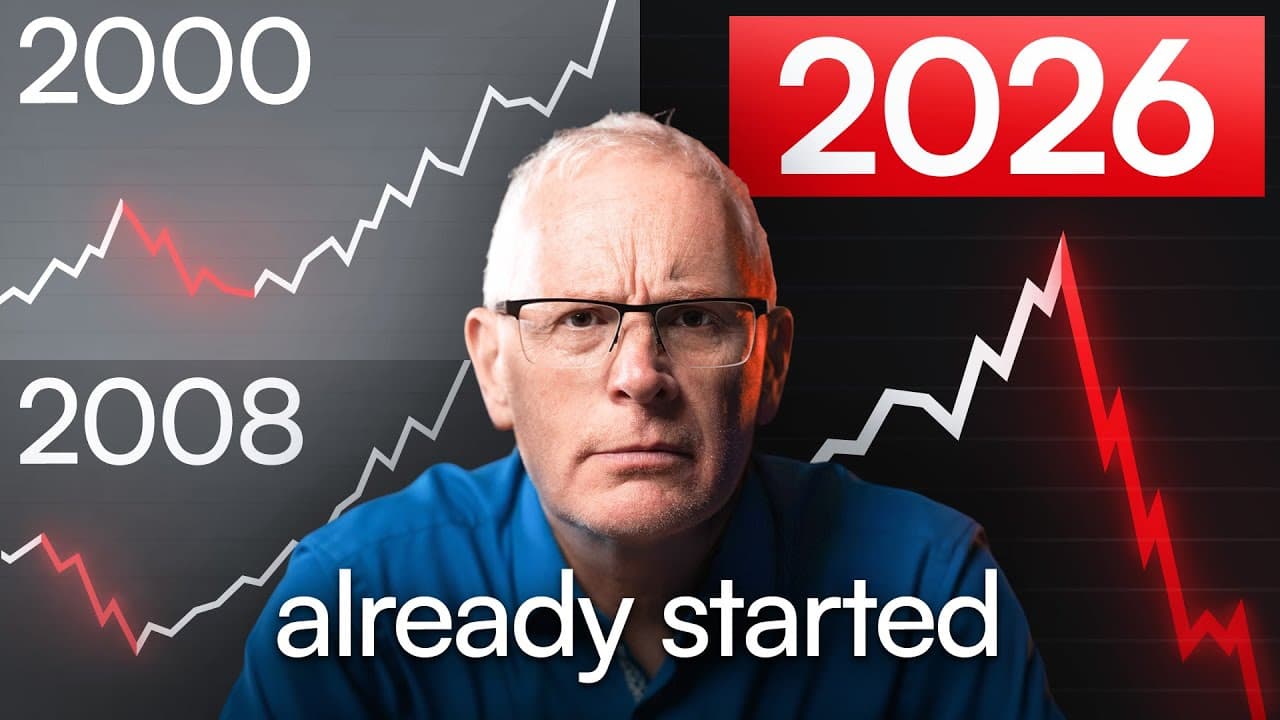
TL;DR
A potential stock market bubble could be forming due to massive investments in AI by major tech companies. This situation mirrors the dot-com bubble, with overvaluation and revenue manipulation. Investors should focus on diversification and steady investment strategies to navigate potential market volatility.
Transcript
- I want you to imagine for a moment that you started investing in 1998. The world's going mad for the internet. New companies are popping up outta nowhere, and every investor is convinced they found the next big thing. So you take all your money and invest it in a few tech stocks just because they have catchy dot-com names, and for a couple of yea... Read More
Key Insights
- The Magnificent Seven tech companies dominate the S&P 500, heavily investing in AI.
- AI spending is predicted to reach $500 billion by 2026, impacting global markets.
- AI companies engage in complex financial exchanges, potentially inflating stock values.
- The AI industry might face a 'data wall,' limiting future growth due to data scarcity.
- Current AI company valuations hinge on continued rapid technological progress.
- Diversification is crucial for investors to mitigate risks in a potential bubble.
- The AI race involves both corporate and national competition, especially between the US and China.
- Investors should maintain steady investments, focusing on broad index funds and avoiding panic.
Install to Summarize YouTube Videos and Get Transcripts
Explore YouTube Video Summarizer or Get YouTube Transcript Extractor
Questions & Answers
Q: How are tech companies influencing the stock market with AI investments?
Tech giants like Amazon, Microsoft, and Nvidia are heavily investing in AI, collectively spending billions to dominate the field. These investments significantly influence the stock market, as these companies comprise a large portion of the S&P 500. Their spending decisions impact everything from chip manufacturers to energy companies, affecting overall market dynamics and investor portfolios.
Q: What is the AI Money Machine and why is it concerning?
The AI Money Machine refers to the intricate financial exchanges between AI companies, such as Microsoft, Nvidia, and OpenAI, which involve funding cycles that inflate revenue reports. This system raises concerns about artificially boosted stock prices, as companies report revenue from these internal transactions, potentially misleading investors about the true financial health of the AI industry.
Q: What is the 'data wall' in AI, and how could it affect the industry?
The 'data wall' refers to the impending limit on available data for AI training, as AI systems have consumed vast amounts of public data. By 2027, AI is expected to have utilized nearly all human-generated online content. This scarcity could slow AI development, challenge current growth expectations, and potentially burst the investment bubble if new data sources aren't found.
Q: How does the current AI investment climate compare to the dot-com bubble?
The current AI investment climate mirrors the dot-com bubble in terms of overvaluation and speculative fervor. However, unlike many dot-com companies, today's AI firms offer tangible utility and paths to profitability. Despite this, the potential for a bubble exists due to inflated valuations and financial maneuvers, requiring cautious investment approaches similar to those during the dot-com era.
Q: What strategies should investors consider in light of the potential AI bubble?
Investors should focus on diversification, spreading investments across various asset classes like stocks, bonds, and real estate. Consistent investment in broad, low-cost index funds can mitigate risks associated with market volatility. Avoiding panic during downturns and maintaining a steady investment schedule are crucial strategies to capitalize on long-term market growth despite potential short-term bubbles.
Q: Why is diversification important in the current market environment?
Diversification is vital to mitigate risks associated with potential market bubbles, such as the one forming around AI investments. By spreading investments across different asset classes, investors can protect their portfolios from volatility in any single sector. This approach helps ensure stability and potential growth, even if specific markets, like AI, experience significant downturns.
Q: What role do geopolitical factors play in the AI investment landscape?
Geopolitical factors significantly influence AI investments, as countries like the US and China vie for technological supremacy. Both nations are investing heavily in AI to secure global dominance, creating a competitive environment that drives massive spending. This international race impacts global markets and investor strategies, adding another layer of complexity to the AI investment landscape.
Q: How can investors benefit from potential market downturns?
Investors can benefit from market downturns by maintaining a disciplined investment strategy, focusing on buying opportunities when prices are low. Consistent investments in diversified, low-cost index funds can lead to long-term gains as markets recover. Avoiding panic selling and leveraging downturns to acquire undervalued assets can enhance portfolio performance over time, capitalizing on eventual market rebounds.
Summary & Key Takeaways
-
A potential stock market bubble is forming as major tech companies invest heavily in AI, reminiscent of the dot-com bubble. The AI industry's rapid growth may face challenges such as the 'data wall,' limiting future advancements. Investors should focus on diversification and steady investment strategies to navigate potential market volatility.
-
The video discusses the financial maneuvers among AI companies that may artificially inflate stock prices. With AI investments expected to reach $500 billion by 2026, the industry's sustainability is questioned. The speaker advises maintaining a diversified portfolio and consistent investment approach to withstand potential market fluctuations.
-
The AI arms race involves significant spending by tech giants, with implications for global markets and individual investors. While AI promises transformative potential, its current valuations depend on sustained progress. Investors are urged to diversify and invest cautiously, considering the parallels with past market bubbles.
Read in Other Languages (beta)
Share This Summary 📚
Summarize YouTube Videos and Get Video Transcripts with 1-Click
Try YouTube Summary with ChatGPT & Claude or YouTube Transcript Generator
Explore More Summaries from Mark Tilbury 📚






Summarize YouTube Videos and Get Video Transcripts with 1-Click
Try YouTube Summary with ChatGPT & Claude or YouTube Transcript Generator