Which War Films Do Veterans Consider Authentic?
TL;DR
Veterans often value war films that capture procedure, exhaustion, unit culture, and institutional friction more than polished dialogue or conventional heroism. The highlighted films earn credibility through veteran filmmakers and performers, authentic locations, tactical movement, historically grounded details, practical effects, and stories focused on survival, sacrifice, bureaucracy, or the repetitive mechanics of military work.
Transcript
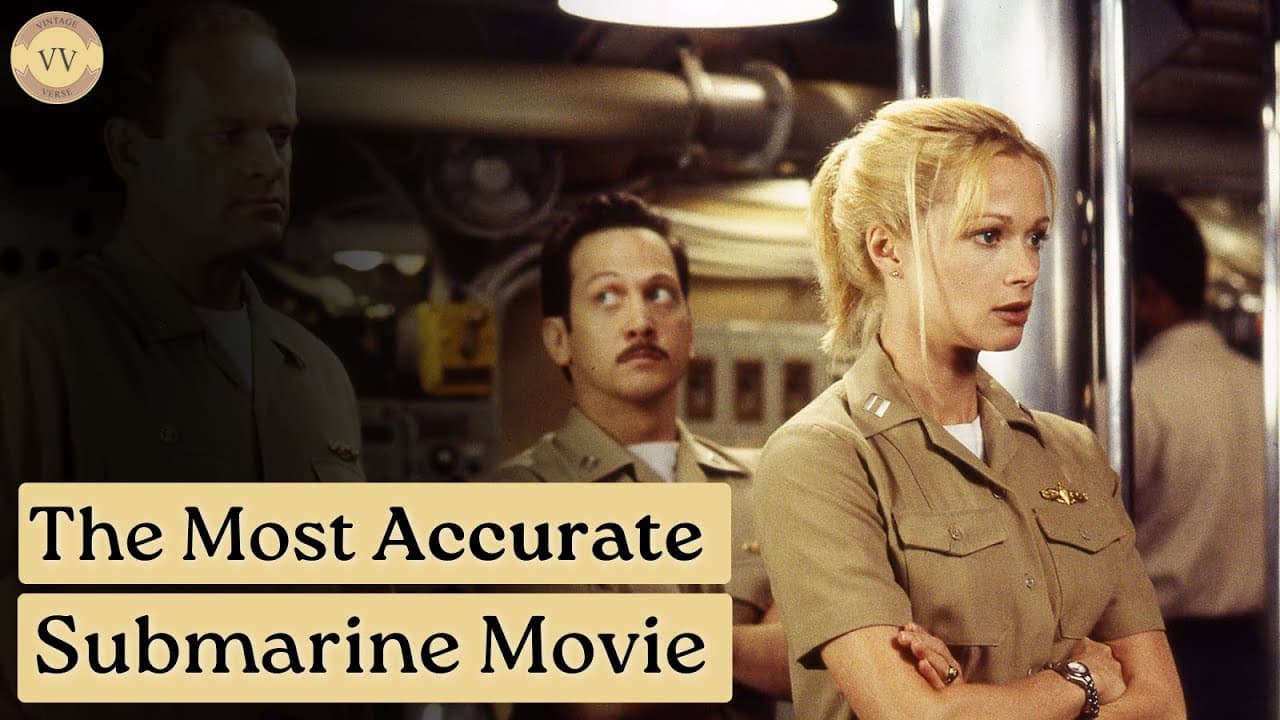
Here's a look at war films critics rejected, but veterans embraced. Movies that ignored Hollywood rules to show the job as it actually is. Down Periscope was written off as a dumb Navy comedy. Critics laughed it out of the room. Veterans didn't. Because with Down Periscope, something unexpected happened. It nails submarine culture. It ended up bein... Read More
Key Insights
- • Military authenticity is often expressed through ordinary work rather than spectacle. Down Periscope earns credibility by portraying constant noise, boredom, unreliable equipment, an untidy but functional crew, and humor that grows naturally from how submariners communicate with one another.
- • 84 Charlie MoPic creates intimacy through a fully committed found-footage approach. The film has no score, its camera shakes during movement, mud hits the lens, and cuts occur only when the embedded specialist physically changes the film magazine.
- • BAT 21 builds tension around evasion rather than firepower. Gene Hackman's character is presented as a strategist who understands navigation but lacks survival experience, while communication with Danny Glover's spotter plane and a historically accurate golf-course code guide the rescue.
- • Act of Valor prioritizes trained movement over polished acting. Active-duty Navy SEALs provide realistic spacing, timing, and muzzle awareness, while the lake extraction uses 4,000 live rounds and places the protected cameraman close enough to capture genuine impacts and recoil.
- • The Siege of Firebase Gloria treats battlefield leadership as frantic and practical. Vietnam veteran R. Lee Ermey reportedly replaced scripted dialogue with improvised briefings, while tight spaces, harsh lighting, constant noise, sweat, and confusion communicate a base gradually losing control.
- • The Big Red One follows the fragmented rhythm of infantry memory. Director Samuel Fuller drew upon his service in the First Infantry Division, creating an episodic story centered on exhaustion, repetitive survival, quiet observation, and strange moments that remain vivid after combat.
- • The Pentagon Wars presents military procurement as a bureaucratic battle. Based on Colonel James Burton's memoirs, its technical dialogue, altered testing criteria, career protection, and 17 years of red tape show how institutional incentives can become a threat away from the battlefield.
- • Tora! Tora! Tora! reconstructs Pearl Harbor through a forensic timeline rather than melodrama. Separate American and Japanese production teams, an absence of major stars, ignored warnings, diplomatic delays, replica aircraft, and large-scale practical staging keep attention on the accumulating errors.
Install to Summarize YouTube Videos and Get Transcripts
Explore YouTube Video Summarizer or Get YouTube Transcript Extractor
Questions & Answers
Q: Why do veterans value some war films that critics reject?
Veterans may recognize credible details that conventional reviews treat as roughness, stiffness, or poor pacing. The featured films emphasize workplace humor, tactical spacing, equipment problems, exhaustion, fragmented memories, strained leadership, and bureaucratic obstruction. These elements can reflect military experience more directly than polished dialogue, heroic speeches, smooth character arcs, or large action sequences designed primarily for spectacle.
Q: How does Down Periscope portray submarine culture authentically?
Down Periscope portrays submarine service through constant noise, grinding boredom, unreliable equipment, stale surroundings, and a crew that appears disorganized but functions effectively when necessary. Its humor comes from the way submariners talk to each other instead of being imposed on the setting. Filming aboard the USS Pampanito, a genuine World War II relic, strengthens its lived-in atmosphere.
Q: What makes 84 Charlie MoPic an unusual war film?
84 Charlie MoPic is presented entirely through the camera of a specialist embedded with a reconnaissance team. It eliminates a musical score, allows the frame to shake during movement, shows mud striking the lens, and cuts only when the operator changes the film magazine. Soldiers also address the camera directly, explaining the practical survival logic of patrol operations in the bush.
Q: How does BAT 21 create tension without large battles?
BAT 21 focuses on isolation, navigation, and evasion instead of overwhelming firepower. Gene Hackman's Lieutenant Colonel Isil Hamilton is a deskbound strategist who understands navigation but lacks field survival knowledge. His connection with Danny Glover's spotter plane becomes central, and the extraction is coordinated through a historically accurate code based on particular golf-course holes rather than a massive shootout.
Q: Why is Act of Valor considered tactically realistic?
Act of Valor was built around procedure and cast active-duty Navy SEALs so their spacing, timing, movement, and muzzle awareness would reflect training. During the lake extraction, the production fired 4,000 live rounds at a target truck. A cameraman wearing a helmet and flak vest filmed near the lake as rounds struck the water and vehicle, capturing real recoil and impacts.
Q: How did R. Lee Ermey influence The Siege of Firebase Gloria?
R. Lee Ermey, identified as a real Vietnam veteran, reportedly disregarded the scripted dialogue and improvised the film's briefings. His language introduced the rhythm and profanity associated with a career drill sergeant. Combined with tight framing, blown-out lighting, constant noise, and a base coming apart, his performance presents leadership as pressured work focused on keeping people alive.
Q: Why does The Big Red One feel episodic and fragmented?
The Big Red One reflects director Samuel Fuller's own infantry experience rather than following smooth Hollywood structure. Fuller served in the First Infantry Division in Africa, Sicily, and Normandy, and shaped the film around uneven fragments of military life. Lee Marvin's quiet, exhausted practicality, repeated survival routines, and unusual memories such as a birth inside a tank reinforce that recollective approach.
Q: How does The Pentagon Wars criticize military bureaucracy?
The Pentagon Wars uses dark comedy and dialogue drawn from Colonel James Burton's memoirs to examine development of the Bradley fighting vehicle. An outsider attempts to conduct a straightforward live-fire test while encountering 17 years of red tape. Officials alter testing criteria to protect careers, showing how spending, institutional incentives, and technical decisions can undermine accountability before equipment reaches combat.
Summary & Key Takeaways
-
The selection argues that critical reception can miss the qualities military audiences recognize most clearly. Films such as Down Periscope, Act of Valor, and The Siege of Firebase Gloria emphasize workplace culture, trained movement, strained leadership, and rough conditions instead of polished performances, inspirational speeches, or conventional cinematic heroism.
-
Several films achieve credibility through unusual production choices. 84 Charlie MoPic adopts an embedded camera perspective without a musical score, Tora! Tora! Tora! uses separate American and Japanese production teams, and Act of Valor casts active-duty Navy SEALs while using extensive live fire to capture realistic movement and recoil.
-
The films approach war through varied perspectives, including submarine comedy, patrol footage, isolated evasion, base defense, infantry memory, rescue missions, institutional satire, and historical reconstruction. Their shared strength is attention to how military work feels, from boredom and confusion to technical procedure, sacrifice, bureaucracy, and survival under pressure.
Read in Other Languages (beta)
Share This Summary 📚
Summarize YouTube Videos and Get Video Transcripts with 1-Click
Try YouTube Summary with ChatGPT & Claude or YouTube Transcript Generator
Explore More Summaries from VintageVerse 📚



Summarize YouTube Videos and Get Video Transcripts with 1-Click
Try YouTube Summary with ChatGPT & Claude or YouTube Transcript Generator