How Does the 15-Second Breath Trick Help You Enter a Flow State?

TL;DR
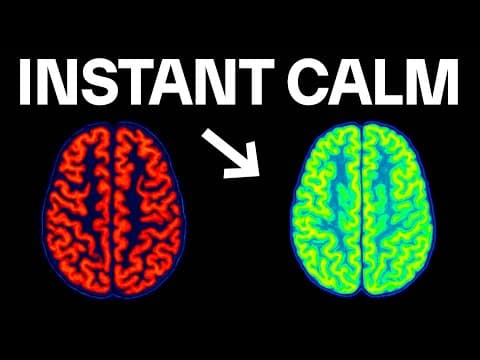
Deliberate breathing can help you enter flow by reducing excessive nervous-system arousal while keeping you calm and alert. Herbert Benson’s research showed that seasoned meditators could lower their breathing rate, pulse, and blood pressure within minutes, demonstrating that supposedly automatic processes can be influenced intentionally. Read on to understand why physiology can overpower willpower and how matching your state to the task creates better conditions for deep focus.
Transcript
what if the only thing sabotaging your focus was breath your breathing is quietly deciding if you'll get into deep states of focus or drown in distraction now I'm Riand Dar founder and CEO of flowstate.com we've trained everyone from Audi Assenture and the US Air Force to use neuroscience-based principles to access flow states at will today I'm goi... Read More
Key Insights
- Flow is a state of optimal consciousness in which action and awareness merge, time can feel altered, self-consciousness disappears, and people feel and perform at their best.
- The autonomic nervous system is adjustable to a greater degree than many people assume. Breathing practices can influence physiological functions such as breathing rate, heart rate, blood pressure, digestion, and hormone release through this system.
- The sympathetic nervous system prepares the body for fight, flight, or freeze, while the parasympathetic nervous system supports rest, digestion, and energy conservation. Effective focus requires an appropriate balance between these modes.
- Willpower is insufficient when physiology conflicts with a task. A person may remain restless and distracted despite strong discipline if the nervous system's current state does not match the calm concentration required for focused work.
- State-task synchronization is the process of matching physiological arousal to the demands of an activity. The goal is to make biology support performance instead of forcing effort against an incompatible bodily state.
- Flow occurs at moderate arousal, where a person is calm but alert. Excessive challenge can create anxiety, while insufficient challenge can cause disengagement, so the task should stretch current ability without overwhelming it.
- Professional pianists displayed calmer physiology as they entered flow. Their heart rates slowed, blood pressure dropped, and muscles relaxed, demonstrating an alert but unstrained physical state suited to skilled performance.
- Breathing works like a dimmer switch for nervous-system arousal. Manipulating the mechanical movement of air can alter biochemical respiration, helping reduce stress and create physiological conditions that are more compatible with flow.
Install to Summarize YouTube Videos and Get Transcripts
Explore YouTube Video Summarizer or Get YouTube Transcript Extractor
Questions & Answers
Q: How can breathing help you enter a flow state?
Deliberate breathing can shift the autonomic nervous system away from excessive stress and toward a calmer state without eliminating alertness. Because flow is associated with moderate arousal, reducing tension and restlessness can better align your physiology with focused work.
Q: What does a flow state feel like?
Flow is described as a state of optimal consciousness in which you feel and perform at your best. Action and awareness merge, time can feel altered, and self-consciousness disappears.
Q: Why can willpower fail to produce deep focus?
Willpower may fail when your nervous system is physiologically mismatched with the task. Even strong discipline cannot fully overcome a body that remains jittery, tense, or prepared for a different kind of demand.
Q: What is state-task synchronization?
State-task synchronization means matching your physiological state to the activity you are trying to perform. The goal is to make your biology support the task instead of fighting it with every attempt at action.
Q: What level of arousal supports flow?
Flow occurs at moderate arousal, where you are calm but alert. Excessive challenge can create anxiety, while insufficient challenge can cause disengagement, so the task should stretch your abilities without overwhelming them.
Q: How does the autonomic nervous system affect focus?
The autonomic nervous system coordinates bodily activity and helps determine your level of arousal. Its sympathetic component prepares for fight, flight, or freeze, while its parasympathetic component supports rest, digestion, and energy conservation.
Q: What is Herbert Benson’s relaxation response?
The relaxation response is described as the physiological mirror image of the fight-or-flight response. In a 1974 paper, Benson reported that seasoned meditators could reduce breathing rate, pulse, and blood pressure within minutes, and his team replicated the effect one year later.
Q: What did research on professional pianists suggest about flow?
As professional classical pianists entered flow, their heart rates slowed, blood pressure dropped, and muscles relaxed. The findings suggest that flow can combine alert, skilled performance with a calm and unstrained physiological state.
Summary & Key Takeaways
-
Focus depends partly on whether the nervous system matches the task. Excessive activation can produce tension, restlessness, and distraction, while insufficient activation can cause disengagement. Flow is associated with moderate arousal, where a person remains calm and alert and perceives the challenge as closely matched to their current skills.
-
Herbert Benson's research is presented as evidence that people can intentionally influence functions commonly treated as automatic. Seasoned meditators reduced breathing rate, pulse, and blood pressure within minutes, producing what Benson called the relaxation response. This response is described as a physiological counterpart to the fight-or-flight response.
-
Deliberate breathing is presented as a practical way to regulate arousal before demanding work. Changing the mechanics of breathing can affect respiration and the autonomic nervous system. By calming excessive stress without becoming sluggish, a person may move through struggle, release tension, and improve the conditions for focused performance and flow.
Read in Other Languages (beta)
Share This Summary 📚
Summarize YouTube Videos and Get Video Transcripts with 1-Click
Try YouTube Summary with ChatGPT & Claude or YouTube Transcript Generator
Explore More Summaries from Rian Doris 📚

Summarize YouTube Videos and Get Video Transcripts with 1-Click
Try YouTube Summary with ChatGPT & Claude or YouTube Transcript Generator