How Did Qatar Build World Cup Stadiums with Forced Labor?
TL;DR
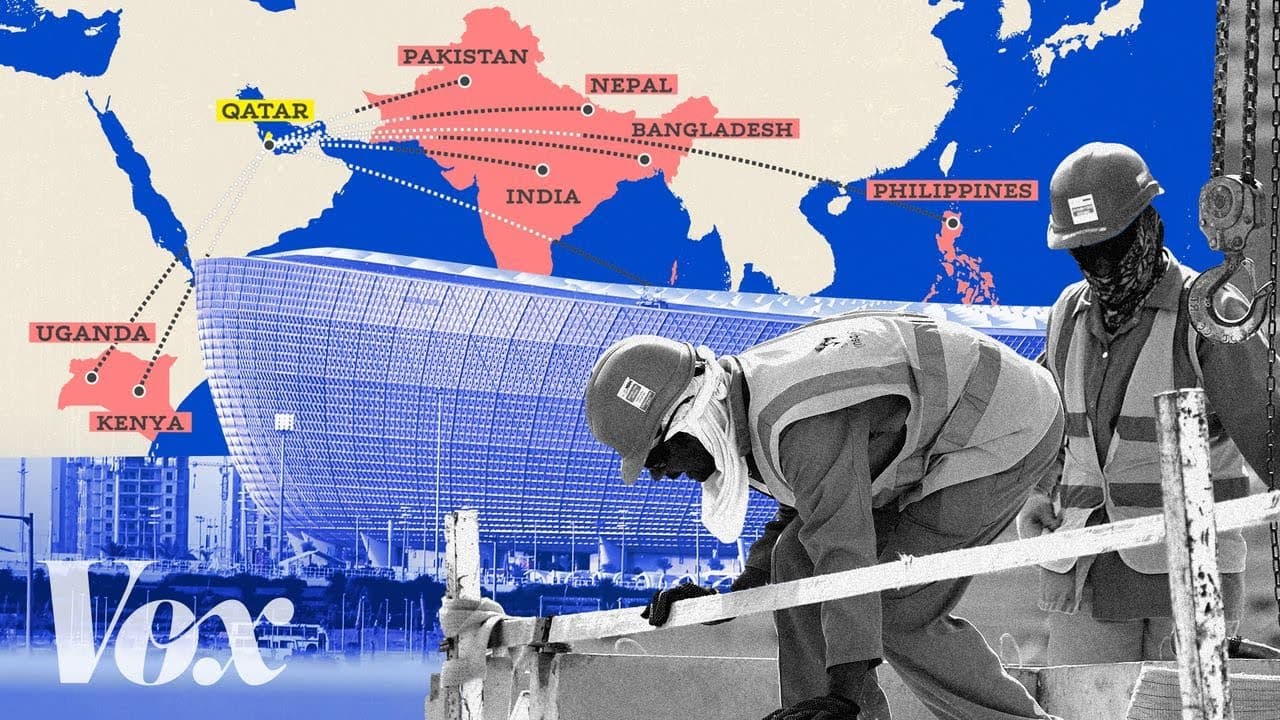
Qatar built its World Cup stadiums using migrant labor in a system that often leads to exploitation and abuse. Many workers faced dangerous conditions, long hours, and wage theft under the kafala system, which ties their legal status to their employers. Despite reforms, enforcement remains weak, and the legacy of these human rights violations continues to overshadow Qatar's ambitious development goals.
Transcript
This is where the FIFA World Cup final will soon be held... the Lusail Stadium in Qatar. In just four years, it went from this... to this. It has 80,000 seats... and cost more than $700 million to build. It's the biggest stadium in the Middle East. But it's more than that. Over a decade ago, Qatar had hoped that hosting a mega sporting event in ... Read More
Key Insights
- Qatar's Lusail Stadium, hosting the FIFA World Cup final, symbolizes the nation's ambitions but also highlights the exploitation of migrant workers.
- Qatar's economy heavily relies on oil and gas exports, but recent global shifts towards renewable energy have made this market less dependable.
- The kafala system ties migrant workers' legal status to their employers, granting employers excessive control over workers' lives and movements.
- Migrant workers face severe abuse, including unsafe working conditions, long hours in extreme heat, and wage theft, leading to significant debt.
- Despite promises of reform, enforcement of labor laws remains weak, and the kafala system's practices continue to trap migrant workers.
- Qatar's hosting of the World Cup was intended to showcase its development but has instead drawn attention to human rights abuses.
- International pressure has led to some labor reforms, but human rights organizations argue that these changes are insufficient and poorly enforced.
- The World Cup has sparked calls for compensation to migrant workers, highlighting the ongoing struggle for justice and fair treatment.
Install to Summarize YouTube Videos and Get Transcripts
Explore YouTube Video Summarizer or Get YouTube Transcript Extractor
Questions & Answers
Q: What is the significance of the Lusail Stadium in Qatar?
The Lusail Stadium is significant as it is set to host the FIFA World Cup final, representing Qatar's ambition to showcase its development on a global stage. However, it also symbolizes the exploitation of migrant workers who built the stadium under harsh conditions, highlighting human rights issues.
Q: How has Qatar's economy evolved over the years?
Qatar's economy has evolved from being heavily reliant on oil and gas exports, which constitute 70% of government revenue, to diversifying into sports and other sectors. This shift is partly due to the global move towards renewable energy, making traditional markets less dependable, and regional tensions affecting trade.
Q: What is the kafala system, and how does it affect migrant workers?
The kafala system is an immigration framework that ties migrant workers' residency status to their employers, granting employers significant control over workers' lives. It restricts workers' freedom of movement and traps them in cycles of abuse, as they face exploitation and are often unable to change jobs or leave the country without employer consent.
Q: What challenges do migrant workers face in Qatar?
Migrant workers in Qatar face numerous challenges, including unsafe working conditions, long hours in extreme heat, wage theft, and living in overcrowded, unsanitary accommodations. They often incur significant debt due to illegal recruitment fees and are trapped in the kafala system, limiting their ability to seek justice or improve their situation.
Q: What reforms has Qatar implemented in response to international pressure?
In response to international pressure, Qatar has implemented some labor reforms, including establishing a minimum wage and allowing workers to terminate their employment contracts. However, these reforms are poorly enforced, and the kafala system's practices continue, leading to ongoing exploitation and abuse of migrant workers.
Q: How has the World Cup affected Qatar's international image?
The World Cup was intended to enhance Qatar's international image and showcase its development. However, it has also drawn significant attention to human rights abuses, particularly the exploitation of migrant workers, leading to international scrutiny and calls for reform and compensation for the affected workers.
Q: What are the calls for compensation for migrant workers about?
Calls for compensation for migrant workers are centered around providing financial redress for the exploitation and abuse they have suffered while building World Cup infrastructure. Human rights organizations and some football associations are advocating for a remedy fund to address the injustices faced by these workers.
Q: What is the current state of labor reforms in Qatar?
While Qatar has made some labor reforms, such as introducing a minimum wage, the enforcement remains weak, and the kafala system's practices persist. Human rights organizations argue that the changes are insufficient, and the exploitation of migrant workers continues, necessitating further reforms and stronger enforcement mechanisms.
Summary & Key Takeaways
-
Qatar's Lusail Stadium, built for the FIFA World Cup, symbolizes both the country's development ambitions and the exploitation of migrant workers. The stadium highlights how Qatar's reliance on the kafala system has led to widespread abuse and human rights violations.
-
Qatar's economy, traditionally dependent on oil and gas exports, is facing challenges due to global shifts towards renewable energy. In response, Qatar has invested heavily in sports, hosting numerous major events to boost its international standing.
-
Despite promises of reform, the kafala system continues to trap migrant workers in abusive conditions. International scrutiny has led to some changes, but enforcement is weak, and the exploitation persists, prompting calls for compensation and further reforms.
Read in Other Languages (beta)
Share This Summary 📚
Summarize YouTube Videos and Get Video Transcripts with 1-Click
Try YouTube Summary with ChatGPT & Claude or YouTube Transcript Generator
Explore More Summaries from Vox 📚



Summarize YouTube Videos and Get Video Transcripts with 1-Click
Try YouTube Summary with ChatGPT & Claude or YouTube Transcript Generator