How to cultivate an awakened brain for resilience and joy
TL;DR
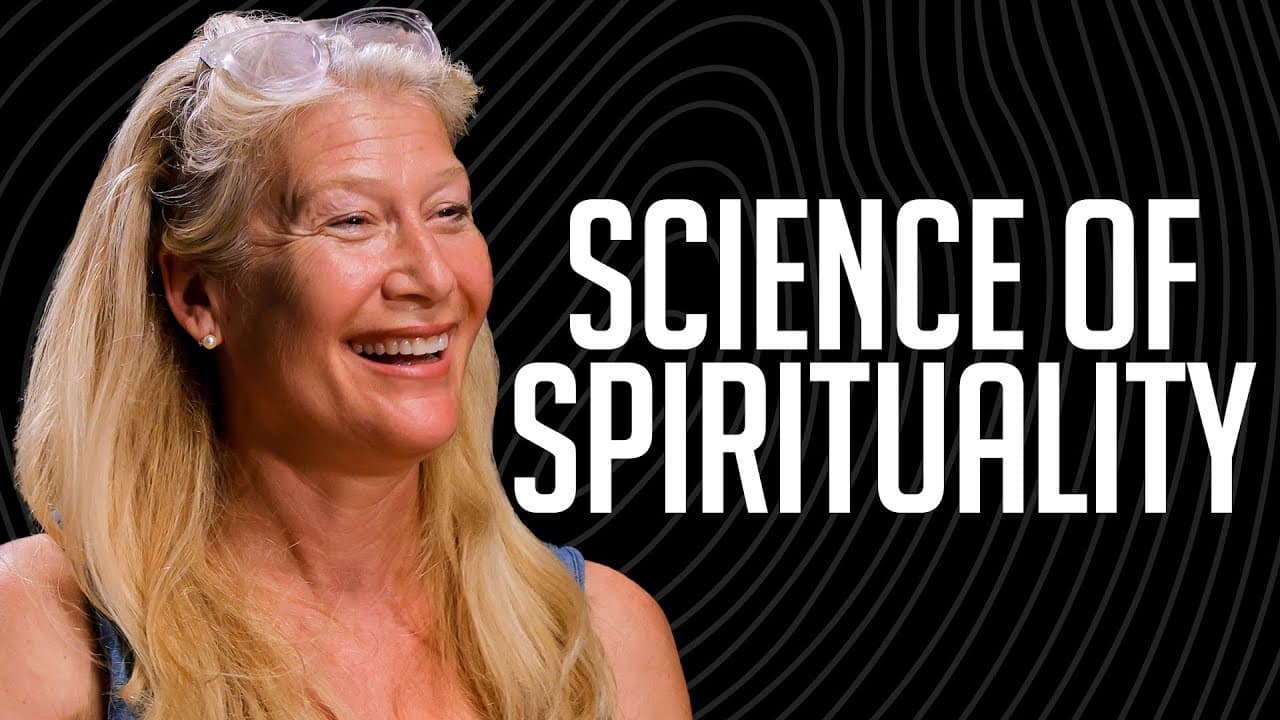
Spirituality enhances resilience and optimism by engaging an innate transcendent awareness. The science of spirituality examines how practices, environment, and community can cultivate this awakened brain, reducing vulnerability to trauma and depression while increasing grit and well being. The conversation explores definitions, methods, and practical steps to access this capacity.
Transcript
There's no reason that the scientific lens has to be limited to interpretations or understandings so they're simply material, only that which we can touch, which we can point to. (bright music) Right now we're not studying spirituality. We've been educated out of our awakened awareness. We've been educated out of our spiritual awareness. (upbeat mu... Read More
Key Insights
- Spirituality is an innate capacity linked to transcendent awareness and is hardwired in humans.
- The awakened brain can increase grit, optimism, and resilience while reducing vulnerability to trauma and depression.
- Science is a method and lens that can study spirituality when scientists ask the right questions and avoid equating science with ideology.
- Spirituality and religion are related but distinct, with spirituality not entirely dependent on religious frameworks.
- Transcendent awareness can be shared through relationships, rituals, and community, enhancing connectedness.
- Natural experiences, nature, art, and family can serve as access points to personal spirituality for many people.
- The field is moving toward measurable neuroscience and genetics to understand how spiritual practices shape brain function.
- Practical steps to awaken spirituality include attention, awareness, and engagement with life that enhances well being.
Install to Summarize YouTube Videos and Get Transcripts
Explore YouTube Video Summarizer or Get YouTube Transcript Extractor
Questions & Answers
Q: What is the awakened brain and why does it matter for everyday life?
The awakened brain refers to an innate capacity for transcendent awareness that connects individuals to a sense of being loved, held, guided, and never alone. When cultivated, this awareness can improve resilience, optimism, and social connectedness, which in turn supports mental health, performance, and meaningful contribution to others. The science seeks to understand how practices and environments nurture this capacity and how it translates into tangible well being.
Q: How does Lisa Miller distinguish spirituality from religion in the context of science?
Spirituality, as discussed, is an innate capacity for transcendent awareness that can be accessed independently of religious structures. Religion often involves community rituals and traditions that transmit beliefs and practices. Science treats spirituality as a measurable human experience that can be studied, while acknowledging that religion may amplify or shape spiritual experiences through environment and shared practice.
Q: Why is there historically a tension between science and spirituality, and how is it changing?
The tension arose from a view that science and spirituality are incompatible, with science seen as purely material and spiritual experiences as subjective. The thaw, however, recognizes science as a method for observing any phenomenon, including spirituality, using brain imaging, genetics, and longitudinal studies. This shift allows rigorous study of how spiritual practices affect health and behavior.
Q: Do non humans have any form of awakened awareness or spirituality according to the discussion?
The speaker argues that the awakened brain may be a shared capacity across living beings, enabling some form of deep field awareness and attunement to life. The example of geese warning a kayaker illustrates how attentional presence and an interconnected sense of situation can guide action, suggesting a broader sense of connected consciousness beyond humans.
Q: What practical steps can someone take to access their awakened brain in daily life?
Practical steps include cultivating mindful attention, staying present in daily activities, and engaging with life in meaningful ways. Building relationships, participating in communities or rituals, and connecting with nature or art can serve as gateways to transcendent awareness. These practices aim to strengthen resilience, optimism, and the sense that one is part of a larger, supportive system.
Q: How does the conversation link spirituality to mental health outcomes like depression or trauma?
The discussion presents evidence that spiritual practices and an awakened brain can insulate individuals from the impacts of trauma and depression by fostering a sense of connection, purpose, and meaning. This resilience arises from enduring relationships, hopeful perspectives, and the neural changes associated with spiritual engagement, together reducing vulnerability to mental health problems.
Q: What is the role of environment and culture in transmitting spirituality versus religion?
Environment and culture play a major role in transmitting religion through community and ritual. Spirituality, in contrast, is described as an innate capacity that can be expressed and nurtured regardless of religious upbringing. The culture around science is changing to embrace spirituality as a legitimate area of study, allowing broader exploration of how spiritual life influences well being.
Q: What does the speaker suggest about using trauma as a catalyst for growth in depression?
The speaker suggests that trauma can be used as a catalyst for growth by engaging with one s spiritual capacity and meaning making. This involves recognizing inner resources, leaning on supportive communities, and applying practices that foster resilience. Such an approach aligns with findings that spiritual engagement can fortify the mind against depressive patterns and promote recovery.
Summary & Key Takeaways
-
The discussion frames spirituality as an innate human capacity that can be awakened through conscious practice and environment, leading to measurable benefits in health and performance. It emphasizes that science is a lens, not a limit, for studying spiritual experiences and their impact.
-
The conversation contrasts spirituality with religion, showing that spirituality is inward and hardwired, while religion is often transmitted through community and tradition. The two can overlap, but they are not the same thing.
-
The guest explains that the awakened brain involves transcendent awareness and a sense of connection with life and others, which can be cultivated to foster joy, fulfillment, and contribution to others.
-
The interview highlights that neuroscience and genetics are beginning to map how spiritual practices influence brain resilience and coping with adversity, including trauma, addiction, and depression.
-
The host discusses the historical tension between science and spirituality, arguing that scientific methods can study spiritual phenomena when used with the right questions and openness.
-
The conversation includes a story about geese guiding a kayaker, illustrating how awareness and attentional presence can reveal a sense of unity and shared consciousness.
-
The dialogue addresses practical pathways to awaken the brain, including mindful attention, community, and engagement with life in a meaningful way.
Read in Other Languages (beta)
Share This Summary 📚
Summarize YouTube Videos and Get Video Transcripts with 1-Click
Try YouTube Summary with ChatGPT & Claude or YouTube Transcript Generator
Explore More Summaries from Rich Roll 📚



Summarize YouTube Videos and Get Video Transcripts with 1-Click
Try YouTube Summary with ChatGPT & Claude or YouTube Transcript Generator