How Do SIMs and eSIMs Secure Connected Devices?
TL;DR
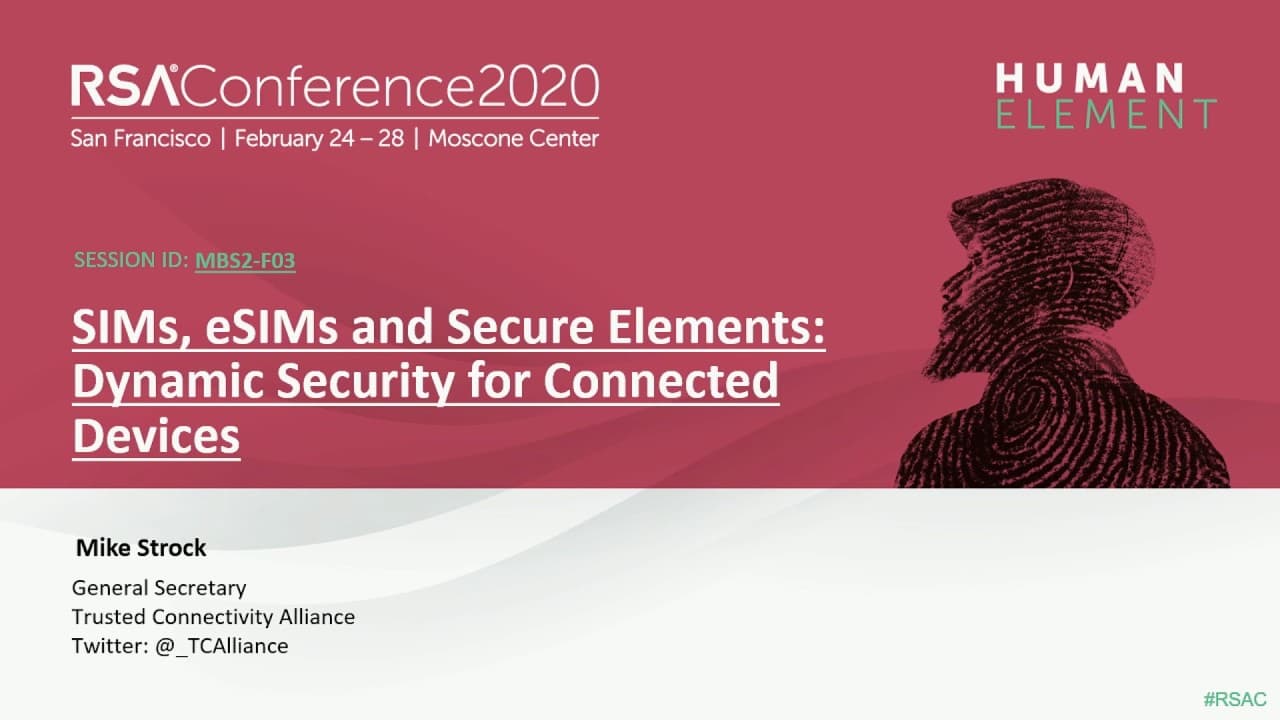
SIMs and eSIMs can manage security functions while giving connected devices flexible access to cellular networks. Their trusted hardware can identify and authenticate subscribers, protect sensitive data, support secure communication between device applications and the cloud, and provide manufacturers and service providers with control throughout a connected object’s lifetime.
Transcript
Hi everyone. How's it going? Welcome to the last session of the day. Please come in, get seated, and settled. Um, just a reminder to please silence your phones throughout the session. That would be great. Um, reminder as well that after this, we have the main keynote, which is just downstairs in Moscone West. So as part of the mobile and IoT securi... Read More
Key Insights
- A SIM is a Subscriber Identity Module that identifies and authenticates a user to a mobile provider. It also enables cellular network access and allows the provider to associate usage with the appropriate subscriber account.
- A SIM is a small circuit board and tiny computer, not merely a storage card. Its limited memory reflects its primary role in secure identity, authentication, and connectivity rather than preserving all of a modern phone’s personal content.
- Modern phone data is generally stored on the device or in the cloud, so moving a SIM into another phone no longer restores all contacts and information in the way users may remember from older mobile devices.
- Flexible connectivity is a fundamental benefit of SIM technology. Users increasingly expect to travel, reach an available network quickly, access email, and make calls without first purchasing and manually swapping a local physical SIM card.
- Security is critical when connected devices contain personal and sensitive information. A compromised home, automotive, or consumer device could expose private records or allow attackers to manipulate functions that were previously isolated from remote access.
- Connected devices require security tailored to their use cases. Connected cars need protection for location records, operational controls, software compatibility, manufacturer liability, and defenses against unauthorized or harmful software being installed.
- IoT SAFE is a common API and standardized approach that lets a SIM securely perform mutual authentication between an IoT device application and the cloud, extending the SIM’s role beyond basic cellular subscriber authentication.
- SIMs, eSIMs, and Secure Elements are proven hardware components that can support payment, travel, authentication, and other connected applications. Manufacturers and service providers can use them to maintain flexible security control throughout a connected object’s lifetime.
Install to Summarize YouTube Videos and Get Transcripts
Explore YouTube Video Summarizer or Get YouTube Transcript Extractor
Questions & Answers
Q: What is a SIM and what does it do?
A SIM is a Subscriber Identity Module implemented as a small circuit board and tiny computer. It contains an identifier that links a user or device to a mobile provider, authenticates that subscriber, enables access to cellular networks, and helps the provider associate usage with the correct account. Its central functions are trusted identity, authentication, connectivity, and security management.
Q: How do SIMs and eSIMs improve connected-device security?
SIMs and eSIMs provide trusted hardware that can manage security functions inside connected devices. They can authenticate identities, protect access to cellular connectivity, and support secure interaction between device applications and cloud services. This makes them useful for manufacturers, mobile providers, and IoT service providers that need flexible security control across a connected object’s operating lifetime.
Q: Why does swapping a SIM no longer restore all phone data?
Modern smartphones generally keep contacts, personal information, and other user content on the phone itself or in cloud services rather than primarily on the SIM. Moving the SIM to another device can restore the subscriber’s network identity and connectivity, but it does not automatically transfer everything stored elsewhere. The SIM’s role has shifted away from being perceived as a backup for phone content.
Q: How does a SIM connect a device to a cellular network?
A SIM supplies the subscriber identity and authentication needed by a mobile provider before a device can use its cellular network. The provider uses that trusted identity to recognize the subscriber and associate network usage with the relevant account. Without the required SIM-based identity, the device cannot connect normally to the cellular networks discussed in the presentation.
Q: What is the difference between a SIM and an eSIM?
The presentation treats SIMs and eSIMs as closely related technologies while noting that the terms have different meanings. Both support trusted identity, connectivity, authentication, and security functions for connected devices. The practical emphasis is that either form can help provide flexible network access and manage device security, including applications that must remain controlled throughout a connected object’s lifetime.
Q: What is IoT SAFE and how does it use a SIM?
IoT SAFE is described as a common API and standardized method for using a SIM to perform secure mutual authentication between an IoT device application and the cloud. It extends the SIM’s trusted role beyond authenticating a subscriber to a cellular provider. The approach gives connected applications a consistent hardware-based mechanism for establishing trust with remote cloud services.
Q: Why do connected cars need hardware-based security?
Connected cars contain location records, software, and remotely accessible operational systems that require protection. The presentation describes how attackers in a controlled demonstration manipulated vehicle functions and eventually stopped the vehicle while it was moving. Trusted security components can also help manufacturers restrict incompatible or malicious software, protect privacy, trace assets, and manage responsibility for installed software.
Q: When should Secure Elements be used in connected devices?
Secure Elements are relevant when a connected product needs trusted hardware for sensitive applications such as payment, travel, or authentication. Alongside SIMs and eSIMs, they can help manufacturers, IoT service providers, mobile network operators, and automotive companies establish connectivity and trust. They are especially applicable when security and control must continue across the connected object’s full operating lifetime.
Summary & Key Takeaways
-
A SIM is a small circuit board and tiny computer that identifies and authenticates a subscriber to a mobile provider. It enables access to cellular networks and lets the provider associate device usage with the correct account, making connectivity and identity management its fundamental responsibilities rather than general storage.
-
Connected devices can hold personal or critical information, including contact, financial, identity, location, and health-related data. Security requirements vary by device and use case. Connected cars, for example, require protection against privacy breaches, unauthorized control, incompatible software, and malicious software that could interfere with vehicle systems.
-
SIMs, eSIMs, and Secure Elements provide proven hardware foundations for connectivity and trust across applications such as payment, travel, and authentication. Standardized approaches such as IoT SAFE allow a SIM to perform secure mutual authentication between an IoT device application and the cloud, supporting security throughout the connected object’s lifetime.
Read in Other Languages (beta)
Share This Summary 📚
Summarize YouTube Videos and Get Video Transcripts with 1-Click
Try YouTube Summary with ChatGPT & Claude or YouTube Transcript Generator
Explore More Summaries from RSAC Cybersecurity 📚





Summarize YouTube Videos and Get Video Transcripts with 1-Click
Try YouTube Summary with ChatGPT & Claude or YouTube Transcript Generator