How to Make Threat Intelligence More Actionable
TL;DR
Make threat intelligence actionable by connecting protection, detection, correction, and learning across an integrated security environment. Security teams can resolve more threats faster with fewer people when tools share relevant data, operations are coordinated, and lessons from detected incidents are used to strengthen protection against repeated attack paths.
Transcript
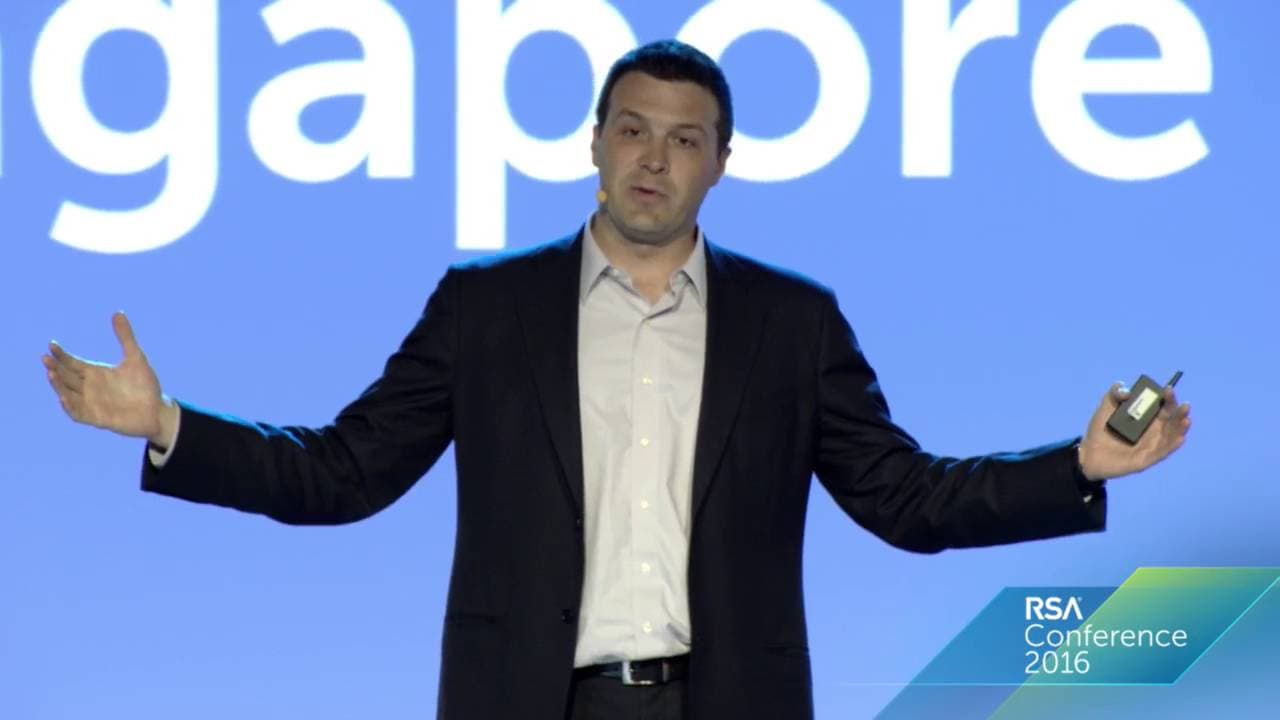
Jason Rolston. Awesome. I'm off to a great start because I didn't fall getting onto the stage. Pretty excited about that. Um, thank you so much for having me. I'm, I'm really excited to be here and, and have a chance to, to talk to you. I have the, uh, perhaps unenviable position of trying to keep you awake on a, on an afternoon late in the day. Um... Read More
Key Insights
- Security teams are reaching critical mass because growing workloads, excessive data, labor-intensive threat intelligence, and disconnected products exceed the capacity of available qualified personnel. Information has little operational value when analysts lack the time or integration needed to examine it and act.
- Adding a separate product for every new security challenge creates a vicious cycle. A tool may help temporarily, but it also adds another console, agent, server, operating system, maintenance obligation, integration task, and training requirement to an already complex environment.
- Security tool sprawl is an operational burden rather than a coherent architecture. One large firm reported using 80 security products from 60 vendors, illustrating how fragmented environments force analysts to navigate interfaces and manually transfer information between systems.
- Workforce turnover magnifies the cost of fragmented security operations. Every additional interface and specialized workflow increases the knowledge employees must acquire, while organizations already face difficulty finding, retaining, and replacing qualified and experienced security personnel.
- The threat defense lifecycle consists of protection, detection, correction, and learning. Organizations must look beyond preventing attacks to finding breaches, responding actively, remediating weaknesses, and adapting their defenses based on what each detected incident reveals.
- Learning is necessary to prevent repeated compromise through the same vulnerability or path. Detection and correction should feed directly into updated protections, ensuring that experience changes the defensive system instead of allowing the organization to suffer the same method repeatedly.
- Integrated security technologies are more effective because protection, detection, and correction depend on one another. Detection requires relevant information from endpoints, firewalls, and other protective controls, including trace data and other information beyond the security logs traditionally collected.
- Architecture drives operational velocity by reducing the friction created by isolated tools and consoles. When security capabilities and their data work together, teams can investigate and resolve more threats faster with fewer people instead of relying on manual copying between products.
Install to Summarize YouTube Videos and Get Transcripts
Explore YouTube Video Summarizer or Get YouTube Transcript Extractor
Questions & Answers
Q: How can organizations make threat intelligence actionable?
Organizations can make threat intelligence actionable by connecting it directly to protection, detection, correction, and learning workflows. Relevant intelligence and operational data should move between endpoints, firewalls, analytics, and response capabilities without depending on extensive manual reading or copying. Detected incidents should produce corrective action and update protections so the same vulnerability or attack path is less likely to succeed again.
Q: Why does adding more security products increase operational risk?
Adding products can increase operational risk because each tool may introduce another agent, console, user interface, server, operating system, maintenance schedule, integration requirement, and training burden. When products remain isolated, analysts must move information manually and remember different procedures for different systems. This complexity slows responses and leaves already overwhelmed teams less prepared for the next security challenge.
Q: What is the threat defense lifecycle?
The threat defense lifecycle is a connected approach built around protection, detection, correction, and learning. Protection attempts to prevent compromise, detection identifies breaches or suspicious activity, correction supports active response and remediation, and learning uses the findings to improve future protection. The lifecycle treats security as an adaptive system rather than a collection of isolated preventive controls.
Q: Why is prevention alone insufficient for enterprise security?
Prevention alone is insufficient because an attacker or insider may already be operating inside the environment. Security teams therefore need capabilities that identify breaches and suspicious behavior, not only controls that attempt to block entry. They must also correct the problem, remediate its cause, and use what they discover to strengthen protection against the same vulnerability or path.
Q: What data is needed to detect security breaches?
Detecting breaches requires the right information from the systems already used for protection, including endpoints, firewalls, and other security controls. Traditional security logs may not contain everything analysts need. Detection can require more data, different data, and trace data, which means protective technologies and analytics must work together rather than operating as disconnected functions.
Q: How does security architecture affect response speed?
Security architecture affects response speed by determining how easily people, tools, and data can work together. A fragmented environment forces analysts to switch between consoles, learn unrelated interfaces, and copy information manually from one product to another. A connected architecture reduces that operational friction and helps organizations resolve more threats faster with fewer people.
Q: Why must security systems learn from detected incidents?
Security systems must learn from detected incidents so that the same vulnerability or attack path does not work repeatedly. After detecting and correcting a problem, the organization should adapt its protections using the knowledge gained during the investigation and response. Without this feedback, detection becomes a recurring cleanup process instead of a mechanism for improving future resilience.
Q: How do workforce shortages affect security operations?
Workforce shortages make fragmented security environments harder to sustain because teams already have too much work and too few qualified, experienced people. Each additional product requires training, operational knowledge, maintenance, and familiarity with another interface. Rapid employee turnover compounds the problem because replacements must learn numerous disconnected tools and the manual workflows used to transfer information among them.
Summary & Key Takeaways
-
Security teams are overwhelmed by excessive data, threat intelligence that demands manual reading, disconnected products, and too few experienced workers. Buying another tool for each emerging problem can provide temporary relief, but it also introduces another console, integration task, maintenance burden, and training requirement that makes the environment progressively harder to operate.
-
A threat defense lifecycle connects protection, detection, correction, and learning. Prevention alone cannot address attackers or insiders already within an environment. Organizations must detect breaches, respond actively, remediate weaknesses, and update protections with what they discover so that the same vulnerability or attack path does not succeed repeatedly.
-
An effective security environment depends on technologies, teams, and data working together. Detection needs information from endpoints, firewalls, and other protective systems, including data beyond conventional security logs. A holistic architecture reduces the delays created by isolated consoles and manual transfers, helping teams resolve more threats faster with fewer people.
Read in Other Languages (beta)
Share This Summary 📚
Summarize YouTube Videos and Get Video Transcripts with 1-Click
Try YouTube Summary with ChatGPT & Claude or YouTube Transcript Generator
Explore More Summaries from RSAC Cybersecurity 📚



Summarize YouTube Videos and Get Video Transcripts with 1-Click
Try YouTube Summary with ChatGPT & Claude or YouTube Transcript Generator