What Caused Two Bizarre Medical Emergencies?
TL;DR
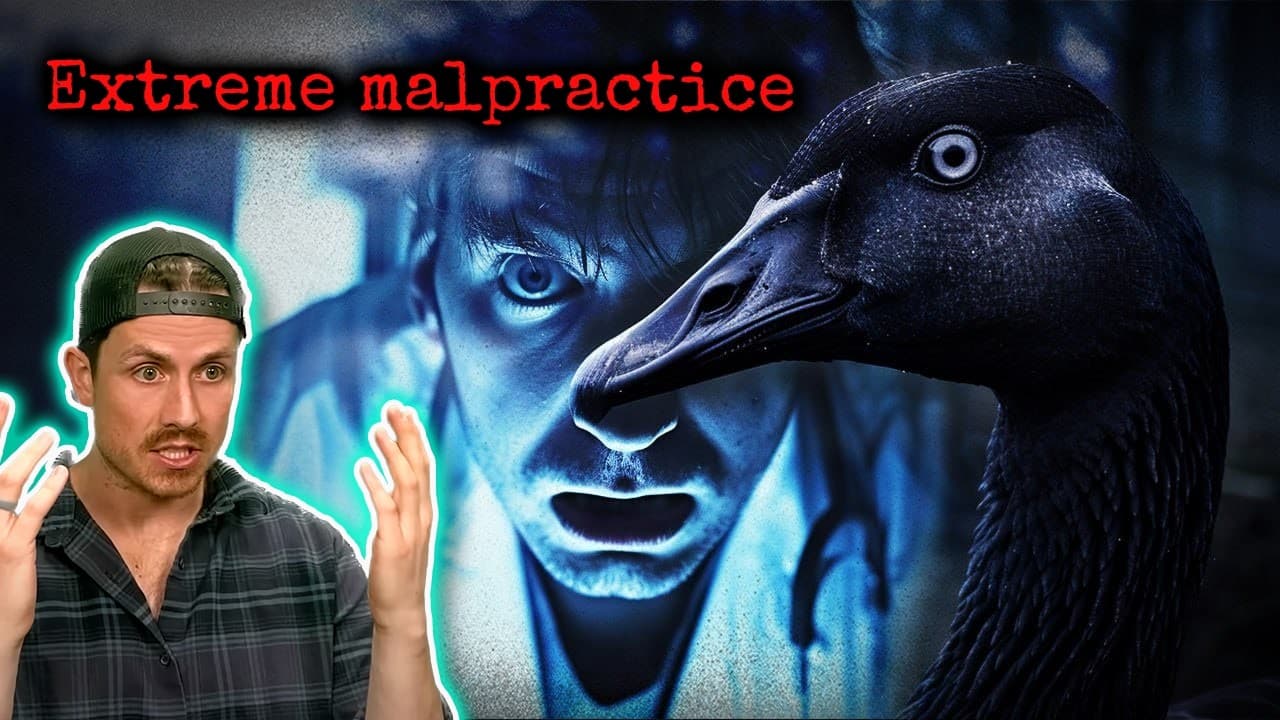
A 12-year-old boy honked because he accidentally inhaled a goose larynx, which obstructed his throat until a doctor removed it through an emergency tracheotomy. A second patient, a kidney transplant recipient with worsening leg pain, weakness, nausea, abdominal pain, and fever, faced a potentially serious condition after initially being diagnosed with sciatica.
Transcript
today I'm going to tell two totally insane medical mystery stories but before we get into those stories if you're a fan of the strange dark and mysterious delivered in story format then you've come to the right place because that's all we do and we upload once a week so if that's of interest to you the next time the like button is feeling down give... Read More
Key Insights
- The boy’s honking was caused by a goose larynx lodged in his throat. He accidentally inhaled it while playing a game in which children blew through recently severed goose necks like trumpets, giving the obstruction an extraordinarily direct connection to the sound he produced.
- The airway obstruction had persisted for 18 hours before the doctor arrived. By then, the boy’s face was swollen and bluish, he was sweating heavily, and every inhalation required visible effort, showing that the unusual honking accompanied potentially fatal suffocation.
- The obstruction could not be seen through the boy’s open mouth. The doctor discovered it only by reaching into the throat with a finger, then attempted to remove the small, hard, slippery object with forceps before deciding that emergency surgery was necessary.
- The emergency tracheotomy allowed the doctor to access and remove the obstruction. After opening the boy’s throat, he saw a small pink object, scooped it out with his finger, and immediately restored the child’s normal breathing without the honking sound.
- The boy made a full recovery after the goose larynx was removed. The incident began when he developed a coughing fit while holding a goose neck near his mouth, then inhaled the bird’s larynx during one of his breaths.
- Robert Smith’s leg pain was initially attributed to sciatica. His vital signs were normal during the first emergency visit, and the doctor advised him to take ibuprofen and wait for the condition to clear without additional treatment.
- Robert’s symptoms progressed despite rest and pain medication. Three days after his first emergency visit, he could not put weight on his right leg because it felt weak and tingly, and he also experienced nausea that he initially suspected might be related to ibuprofen.
- A fever was especially concerning for Robert because he had received a kidney transplant a year and a half earlier. His anti-rejection medication suppressed his immune system, making it harder for his body to fight a real infection if one was causing his worsening symptoms.
Install to Summarize YouTube Videos and Get Transcripts
Explore YouTube Video Summarizer or Get YouTube Transcript Extractor
Questions & Answers
Q: Why was the 12-year-old boy honking like a goose?
The boy honked because a goose larynx was lodged in his throat. Before the symptoms began, he and his friends had been blowing through recently severed goose necks as if they were trumpets. During a coughing fit, he inhaled while holding one near his mouth and accidentally drew the goose larynx into his airway.
Q: How did the doctor discover the boy’s airway obstruction?
The doctor first looked inside the boy’s open mouth but could not see anything blocking the airway. He then reached into the throat with his finger and felt a small, hard object. After failing to grip the slippery obstruction with forceps, he concluded that a more direct emergency procedure was needed to remove it.
Q: Why did the doctor perform an emergency tracheotomy?
The boy was visibly struggling to breathe, with a swollen, bluish face, heavy sweating, and honking during inhalation. The doctor could feel the obstruction but could not pull it out with forceps. Believing the child could die if the blockage remained, he opened the throat to reach and remove the object directly.
Q: What happened after the goose larynx was removed?
The doctor saw the small pink obstruction through the opening created during the tracheotomy and scooped it out with his finger. The boy could breathe again immediately, and the honking stopped. The story states that the child subsequently made a full recovery from the dangerous and highly unusual airway obstruction.
Q: Why was Robert Smith’s leg pain initially diagnosed as sciatica?
Robert described throbbing pain beginning in his right hip and shooting down his right leg, a pattern the emergency doctor associated with pressure on the sciatic nerve. His vital signs were normal during that visit, so the doctor concluded that the condition would probably resolve without treatment and recommended over-the-counter ibuprofen.
Q: How did Robert Smith’s condition worsen after his first hospital visit?
Robert’s pain continued despite taking ibuprofen and resting. Three days after the visit, he could no longer put weight on his right leg because it felt weak and tingly, and he was nauseous. By the following day, he also had abdominal pain near his kidney transplant scar and was developing a fever.
Q: Why was Robert Smith’s fever especially concerning?
Robert had received a kidney transplant a year and a half earlier and was taking medication intended to prevent his body from rejecting the organ. The medication suppressed his immune system, which also reduced his ability to fight a genuine infection. Fever alongside worsening pain and weakness therefore signaled a potentially serious problem.
Q: What was the final diagnosis for Robert Smith’s symptoms?
The provided transcript does not reveal Robert Smith’s final diagnosis. It ends after his leg pain, weakness, tingling, nausea, abdominal pain, and fever worsen, prompting him to recognize that he needs to return to the hospital. Any specific explanation beyond that point would not be supported by the supplied source material.
Summary & Key Takeaways
-
In 1848, a doctor in East Prussia was summoned to treat a 12-year-old boy who had honked with nearly every breath for 18 hours. The boy’s swollen, bluish face and severe breathing difficulty indicated that the strange noise was part of a dangerous airway obstruction rather than an harmless symptom.
-
The doctor felt a small, hard object lodged in the boy’s throat but could not extract the slippery obstruction with forceps. Believing the child might die, he performed an emergency tracheotomy, found a pink object inside the throat, and removed it. The boy immediately stopped honking and could breathe again.
-
In 2013, kidney transplant recipient Robert Smith sought emergency care for worsening pain extending from his right hip down his leg. Initially diagnosed with sciatica, he later developed weakness, tingling, nausea, abdominal pain near his transplant scar, and fever. The provided transcript ends when he decides to return to the hospital.
Read in Other Languages (beta)
Share This Summary 📚
Summarize YouTube Videos and Get Video Transcripts with 1-Click
Try YouTube Summary with ChatGPT & Claude or YouTube Transcript Generator
Explore More Summaries from MrBallen 📚





Summarize YouTube Videos and Get Video Transcripts with 1-Click
Try YouTube Summary with ChatGPT & Claude or YouTube Transcript Generator