How Does Sleep Impact Learning and Memory Retention?
TL;DR
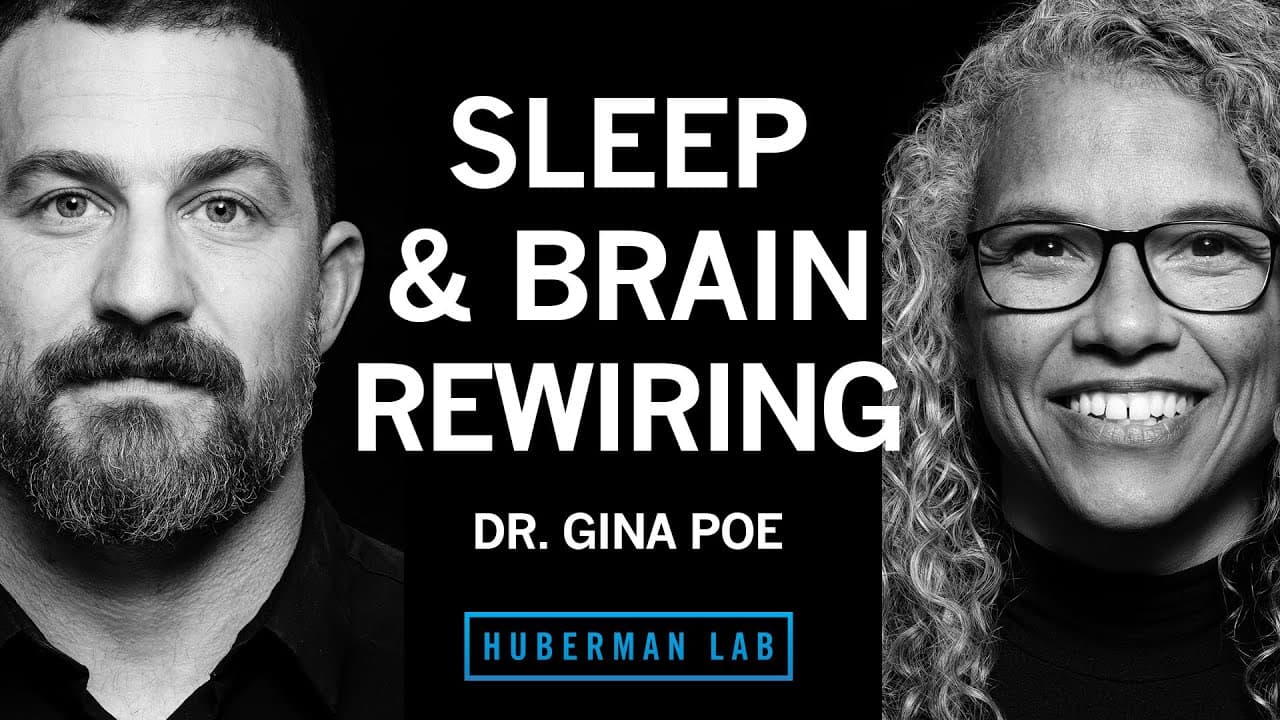
Sleep significantly enhances learning and memory retention by regulating hormone release. Consistently sleeping at the same time each night optimizes growth hormone release, especially during the first 90 minutes of sleep, which is crucial for cognitive functions. REM sleep, occurring later in the night, fosters creativity and consolidates memories, making quality sleep vital for overall brain health.
Transcript
ANDREW HUBERMAN: Welcome to the Huberman Lab podcast, where we discuss science and science-based tools for everyday life. [MUSIC PLAYING] I'm Andrew Huberman, and I'm a professor of nNeurobiology and ophthalmology at Stanford School of Medicine. Today, my guest is Dr. Gina Poe. Dr. Gina Poe is a professor in the Department of Integrative Biology an... Read More
Key Insights
- 🌙 Sleep and Learning: Dr. Gina Poe's research focuses on how different phases of sleep impact our ability to learn and remember information.
- 😴 Importance of Consistency: Getting to sleep at the same time each night ensures adequate growth hormone release in the first hours of sleep, which is critical for overall health and vitality.
- 🌙 Sleep Phases: There are four stages of sleep, including non-REM and REM sleep. Each stage has distinct brain activity patterns and functions.
- 💭 REM Sleep and Dreams: REM sleep, which occurs more in the later part of the night, is associated with vivid and elaborate dreams. Dreams during REM sleep can help with creativity and schema development. ⏰ Waking up in the Middle of the Night: It is normal to wake up once during the night, and there is usually no detriment to this. It's important to go back to sleep in a reasonable amount of time.
- 💤 Skull & Brain Structure: Sleep research may have been limited in its understanding of certain brain structures due to lack of access. Future studies may shed more light on the role of different brain regions in sleep.
- 💡 Sleep Trackers: Sleep trackers can be informative but should be taken with a grain of salt. They are only about 70% effective at staging sleep. Trusting your own body and how you feel is essential.
- 🌅 Morning Awakening: Waking up closer to sunrise and going to bed within a few hours after sunset is associated with better overall health. This aligns with natural circadian rhythms and supports optimal sleep patterns.
- 💡 Tips: Avoid alcohol before sleep as it can disrupt sleep stages, and try to minimize disruptions during sleep. Consistency is key when it comes to sleep schedules.
Install to Summarize YouTube Videos and Get Transcripts
Explore YouTube Video Summarizer or Get YouTube Transcript Extractor
Questions & Answers
Q: What are the different stages of sleep and how do they impact the body and mind?
Sleep is divided into non-REM and REM sleep, each with multiple stages. Non-REM sleep includes stages 1, 2, and 3, while REM sleep is characterized by vivid dreaming. Each stage of sleep plays a unique role in memory consolidation, brain repair, and overall health.
Q: Why is it important to go to bed at a consistent time each night?
Going to bed at the same time each night ensures that you get proper growth hormone release and allows for optimal memory consolidation. The body's internal clock synchronizes with consistent bedtimes, leading to improved sleep quality and overall health.
Q: How does sleep pattern affect creativity and problem-solving?
The second half of the night, characterized by increased REM sleep, is associated with more elaborate dreams and enhanced creativity. During this time, the brain incorporates new and old information to make novel connections, facilitating problem-solving and creativity.
Q: Is it possible to catch up on missed sleep during the day?
While it is possible to make up for lost sleep, it is important to prioritize consistent sleep patterns for optimal health and function. Waking up during specific sleep cycles can disrupt the body's internal rhythm and lead to sleep inertia, making it difficult to fully recover from sleep debt.
Q: Do sleep trackers accurately measure sleep stages?
Sleep trackers provide a general idea of sleep patterns but are not 100% accurate in measuring sleep stages. The best sleep trackers achieve about 70% effectiveness in staging sleep. It is important to rely on subjective feelings and listen to your own body's cues when assessing the quality of sleep.
Summary & Key Takeaways
-
Sleep is divided into different phases, including non-REM and REM sleep.
-
The first 90 minutes of sleep are critical for growth hormone release and memory consolidation.
-
REM sleep, which occurs later in the night, is associated with more elaborate dreams and creative thinking.
-
Sleep architecture changes throughout the night, with longer REM sleep periods in the second half.
-
Waking up during deep slow-wave sleep can lead to sleep inertia and grogginess upon awakening.
-
The brain undergoes a washout process during sleep to clear out debris and optimize brain function.
Read in Other Languages (beta)
Share This Summary 📚
Summarize YouTube Videos and Get Video Transcripts with 1-Click
Try YouTube Summary with ChatGPT & Claude or YouTube Transcript Generator
Explore More Summaries from Andrew Huberman 📚





Summarize YouTube Videos and Get Video Transcripts with 1-Click
Try YouTube Summary with ChatGPT & Claude or YouTube Transcript Generator