What Is Expressionist Theater?
TL;DR
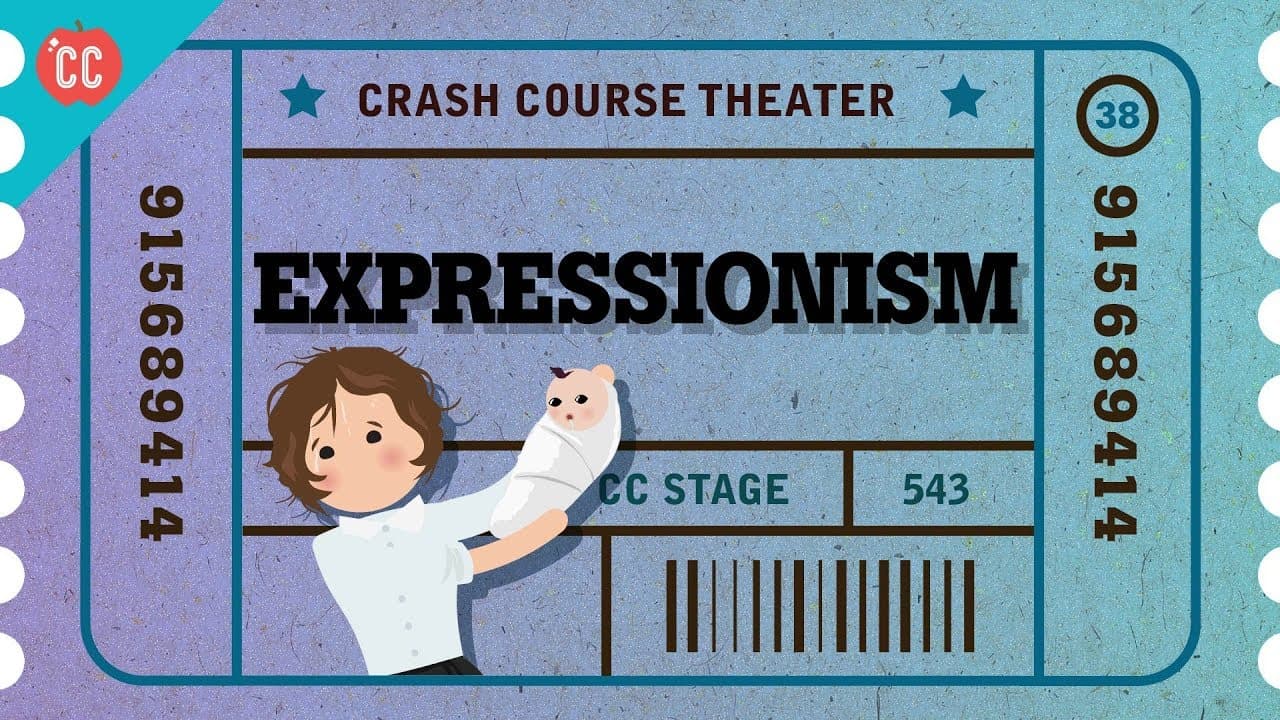
Expressionist theater emerged as a response to realism, focusing on portraying the human soul's experience in a mechanistic world. It emphasized emotion over realism, using abstract set designs and exaggerated acting. Major contributors included Georg Kaiser and Ernst Toller, whose works critiqued industrialization's impact on humanity.
Transcript
Greetings. I’m Mike Rugnetta. This is Crash Course Theater, and today we’ll explore another controversial 20th-century movement. This one revolted against the confining form of realism in favor of a form that more adequately portrayed the experience of the human soul in the midst of an increasingly violent and mechanistic world. Ladies, gentlem... Read More
Key Insights
- Expressionism is a 20th-century movement that reacted against realism, aiming to portray the human soul's experience.
- Expressionist art focuses on emotional experience rather than realistic depictions of objects or situations.
- Expressionism in theater involved abstract set designs and exaggerated acting styles, moving away from realism.
- Georg Kaiser and Ernst Toller were significant German playwrights in the expressionist movement.
- Expressionist plays often dealt with dark themes, reflecting the chaos and violence of the modern world.
- Expressionism influenced American theater, with playwrights like Eugene O’Neill exploring themes of dehumanization.
- Expressionist set designs favored abstraction and symbolism, influenced by designers like Adolphe Appia and Edward Gordon Craig.
- Expressionism critiqued industrialization, portraying it as soul-killing and dehumanizing.
Install to Summarize YouTube Videos and Get Transcripts
Explore YouTube Video Summarizer or Get YouTube Transcript Extractor
Questions & Answers
Q: What is expressionist theater?
Expressionist theater is a movement that emerged in the early 20th century as a reaction against realism. It focuses on portraying the emotional experience of the human soul in a mechanistic and violent world. The movement is characterized by abstract set designs, exaggerated acting, and themes that critique industrialization and dehumanization.
Q: How did expressionism influence American theater?
Expressionism influenced American theater by introducing themes of dehumanization and critiques of industrialization. Playwrights like Eugene O’Neill explored these themes, using fragmented narratives and abstract set designs. The movement's focus on emotion over realism resonated with American writers, who saw mechanization as a soul-killing force.
Q: Who were key figures in the expressionist theater movement?
Key figures in the expressionist theater movement included German playwrights Georg Kaiser and Ernst Toller, who wrote plays critiquing industrialization and exploring dark themes. Designers like Adolphe Appia and Edward Gordon Craig contributed to the movement's abstract and symbolic set designs, emphasizing emotion over realism.
Q: What themes are commonly explored in expressionist plays?
Expressionist plays commonly explore themes of dehumanization, industrialization, and the chaotic nature of modern life. They often depict characters' struggles against mechanized society and emphasize emotional experiences over realistic portrayals. The movement critiques the impact of industrialization on the human soul, portraying it as soul-killing and dehumanizing.
Q: How does expressionist theater differ from realism?
Expressionist theater differs from realism by focusing on emotional experiences rather than realistic depictions of objects or situations. It uses abstract set designs and exaggerated acting styles to convey its themes, moving away from the realistic portrayals favored by realism. Expressionism emphasizes the inner emotional state of characters and critiques modern society.
Q: What role did set design play in expressionist theater?
Set design played a crucial role in expressionist theater by emphasizing abstraction and symbolism over realism. Designers like Adolphe Appia and Edward Gordon Craig created abstract sets that enhanced the emotional impact of the plays. These designs often featured stark, uncluttered spaces that highlighted the actors' movements and the play's themes.
Q: Why is expressionism considered a reaction against realism?
Expressionism is considered a reaction against realism because it rejects realistic portrayals in favor of expressing the emotional experience of characters. It emerged as a response to the limitations of realism in capturing the chaotic and violent nature of the modern world. Expressionism uses abstraction and exaggerated acting to convey its themes, focusing on the inner emotional state rather than external reality.
Q: What impact did expressionism have on modern theater?
Expressionism had a significant impact on modern theater by introducing new themes and techniques that challenged traditional realism. It influenced playwrights and designers to explore abstract and symbolic representations, focusing on emotion and critique of industrialization. Expressionism paved the way for other avant-garde movements, shaping the development of modern theater by emphasizing the power of emotional expression and abstraction.
Summary & Key Takeaways
-
Expressionist theater emerged as a reaction against realism, focusing on the emotional experience of the human soul amidst a violent and mechanistic world. It utilized abstract set designs and exaggerated acting to convey its themes. Notable figures in this movement included Georg Kaiser and Ernst Toller, who critiqued industrialization's dehumanizing effects.
-
The movement began in Germany after World War I, with plays often featuring dark themes and chaotic narratives. Expressionism influenced American theater, with playwrights like Eugene O’Neill addressing themes of dehumanization and industrialization. Designers like Adolphe Appia and Edward Gordon Craig contributed to its abstract and symbolic set designs.
-
Expressionism's critique of industrialization portrayed it as a dehumanizing force, with plays often depicting characters' struggles against mechanized society. The movement's focus on emotion and abstraction marked a departure from realism, influencing both European and American theater in the early 20th century.
Read in Other Languages (beta)
Share This Summary 📚
Summarize YouTube Videos and Get Video Transcripts with 1-Click
Try YouTube Summary with ChatGPT & Claude or YouTube Transcript Generator
Explore More Summaries from CrashCourse 📚





Summarize YouTube Videos and Get Video Transcripts with 1-Click
Try YouTube Summary with ChatGPT & Claude or YouTube Transcript Generator