How Did Trump Strengthen US-Japan Relations?
TL;DR
The United States and Japan strengthened their alliance through agreements involving critical minerals and shipbuilding, alongside Japan’s commitment to increase imports of U.S. military supplies. The talks also advanced a $550 billion Japanese investment pledge connected to a 15% tariff rate, while positioning cooperation in strategically important industries as a response to competition with China.
Transcript
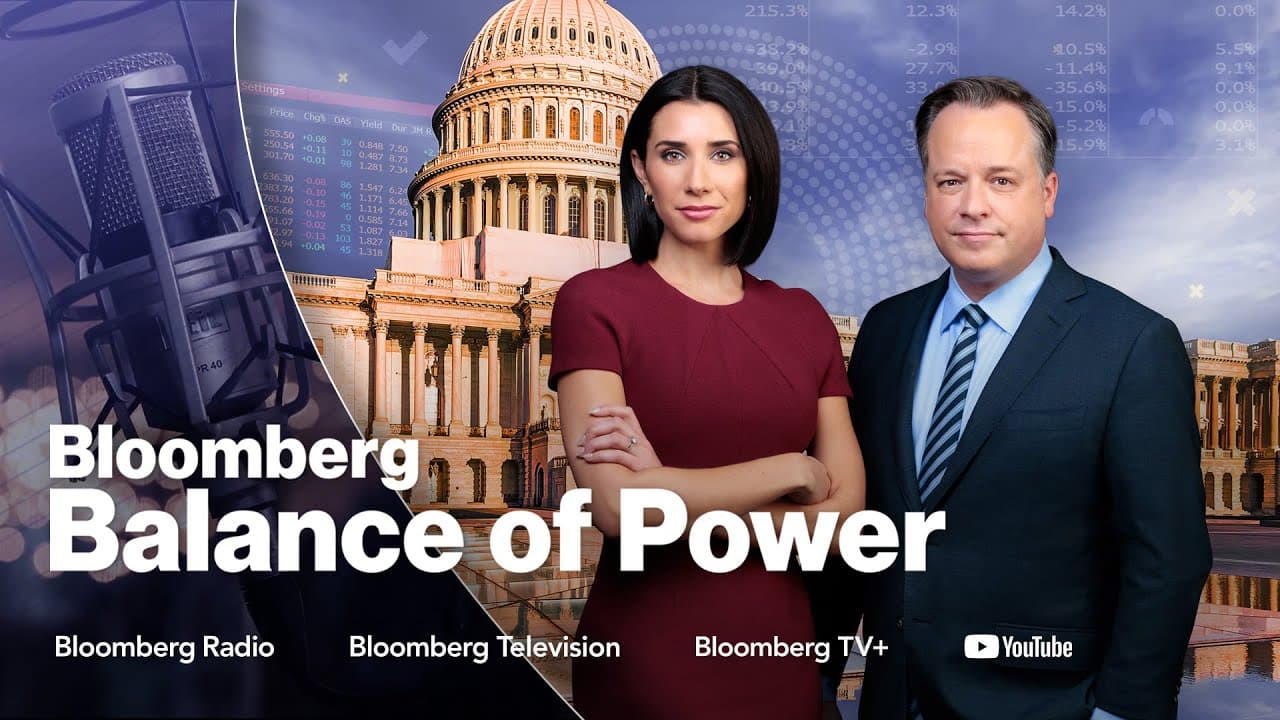
Live from Washington, D.C.. Is balance of power with Joe Matthew. I'm David Gura in Washington, in for Joe Matthew on this Tuesday, where a lot's happening here in the nation's capital, but also around the world. Of course, this the 28th day of the federal government shutdown. Looking ahead just a couple of days to when SNAP benefits will expire. S... Read More
Key Insights
- The U.S.-Japan meeting centered on bolstering the bilateral alliance through defense, trade, investment, critical minerals, and shipbuilding. Bloomberg correspondent Tyler Kendall said the underlying theme connecting these announcements was an effort to strengthen both countries in their competition with China.
- Japan committed to increasing imports of U.S. military supplies. The commitment aligned with Trump’s recurring position that allied countries should spend more on their own defense, a theme also discussed by U.S. Ambassador to NATO Matthew Whitaker during the program.
- The critical-minerals agreement was presented as a cooperation pact between the United States and Japan. Although additional details were still pending, the agreement was grouped with shipbuilding and defense announcements that were described as strategically important in responding to China’s industrial position.
- The shipbuilding memorandum established another area of U.S.-Japan cooperation. The report connected this initiative to China’s strong position in the industry, making shipbuilding part of the broader effort to reinforce strategically important economic and security capabilities between the allied countries.
- Japan’s $550 billion investment pledge was tied to a trade arrangement granting a preferential 15% tariff rate. The report said Japan was working to fulfill this investment-fund commitment while expanding an economic relationship in which it was already the leading foreign investor in the United States.
- Japan invested more than $750 billion in the United States during the previous year, according to government data cited by Bloomberg. That existing investment base provided significant economic context for the additional $550 billion fund discussed as part of the countries’ trade agreement.
- Trump’s next major diplomatic meetings were scheduled in South Korea. The agenda included talks with South Korea’s president about an unfinished trade agreement, a possible meeting with Nvidia CEO Jensen Huang, and a highly anticipated Thursday meeting with Chinese President Xi Jinping.
- A meeting with North Korean leader Kim Jong Un appeared unlikely during the trip. Trump had raised the possibility but later told reporters he probably would not have enough time, while adding that he welcomed a future meeting when the timing was appropriate.
Install to Summarize YouTube Videos and Get Transcripts
Explore YouTube Video Summarizer or Get YouTube Transcript Extractor
Questions & Answers
Q: How did Trump strengthen relations between the United States and Japan?
Trump and Japan’s new prime minister advanced cooperation across defense, trade, investment, critical minerals, and shipbuilding during their Tokyo meeting. Japan agreed to increase imports of U.S. military supplies, while both countries announced a critical-minerals agreement and a shipbuilding memorandum. They also discussed Japan’s pledged $550 billion investment fund, which was connected to a preferential 15% tariff rate.
Q: Why was China an underlying theme of the U.S.-Japan talks?
Bloomberg correspondent Tyler Kendall described countering China as the underlying theme because the announced initiatives covered industries considered strategically important to economic and security competition. Critical minerals, shipbuilding, military supplies, and investments involving major technology and industrial companies were all presented as ways to strengthen U.S. and Japanese capabilities in areas where China holds substantial influence.
Q: What critical-minerals agreement did the United States and Japan announce?
The United States and Japan announced an agreement focused on cooperation in critical minerals. The report characterized it as a cooperation pact but noted that additional details were still awaited. It was discussed alongside defense purchases and shipbuilding cooperation, with all three initiatives framed as components of a stronger alliance and a broader response to competition with China.
Q: What did Japan agree to do about U.S. military supplies?
President Trump confirmed that Japan would increase its imports of U.S. military supplies. The announcement supported the meeting’s central goal of strengthening the U.S.-Japan alliance. It also matched Trump’s broader foreign-policy emphasis on encouraging allied nations to devote more resources to their own defense, an approach discussed elsewhere in the program in relation to NATO members.
Q: How does Japan’s $550 billion investment pledge relate to tariffs?
Japan was working to fulfill a pledged $550 billion investment fund as part of its trade arrangement with the United States. According to the report, the commitment was connected to Japan receiving a more preferential tariff rate of 15%. The fund would add to an already substantial investment relationship between Japan and the United States.
Q: How much had Japan already invested in the United States?
Government data cited in the report showed that Japan invested more than $750 billion in the United States during the previous year. Bloomberg described Japan as the largest foreign investor in the country. This existing investment level provided context for the additional $550 billion investment-fund pledge being pursued under the trade deal associated with a 15% tariff rate.
Q: What was planned for Trump’s visit to South Korea?
Trump was expected to meet South Korea’s president as the country worked to finalize its version of a trade agreement with the United States. The proposed arrangement would include a 15% tariff rate and extend to automobiles. Trump also suggested he would meet Nvidia CEO Jensen Huang around the APEC CEO summit before meeting Chinese President Xi Jinping on Thursday.
Q: Was Trump expected to meet North Korea’s leader during the Asia trip?
A meeting with the North Korean leader appeared unlikely during this trip. Trump had raised the possibility, but he later told reporters that he did not think he would have enough time. He nevertheless said he welcomed a meeting when the timing was right. The trip’s remaining schedule instead emphasized South Korea and the planned Thursday meeting with Chinese President Xi Jinping.
Summary & Key Takeaways
-
President Trump met Japan’s new prime minister in Tokyo during the second-to-last leg of his Asia tour. Their discussions focused on strengthening the U.S.-Japan alliance through defense purchases, critical-minerals cooperation, shipbuilding, trade, and investment. Bloomberg correspondent Tyler Kendall described countering China as the underlying theme connecting these initiatives and the participating industries.
-
Japan agreed to boost imports of U.S. military supplies and continued working toward a pledged $550 billion investment fund associated with a preferential 15% tariff rate. Japan was already the largest foreign investor in the United States, with government data cited in the report showing more than $750 billion invested during the previous year.
-
Trump’s trip was scheduled to continue in South Korea, where trade negotiations, an APEC CEO summit, and a possible meeting with Nvidia CEO Jensen Huang were anticipated. The most closely watched event was a planned Thursday meeting with Chinese President Xi Jinping. Trump said a North Korea meeting was unlikely during this trip.
Read in Other Languages (beta)
Share This Summary 📚
Summarize YouTube Videos and Get Video Transcripts with 1-Click
Try YouTube Summary with ChatGPT & Claude or YouTube Transcript Generator
Explore More Summaries from Bloomberg Television 📚
Summarize YouTube Videos and Get Video Transcripts with 1-Click
Try YouTube Summary with ChatGPT & Claude or YouTube Transcript Generator