How to Write E-commerce Copy That Increases Sales
TL;DR
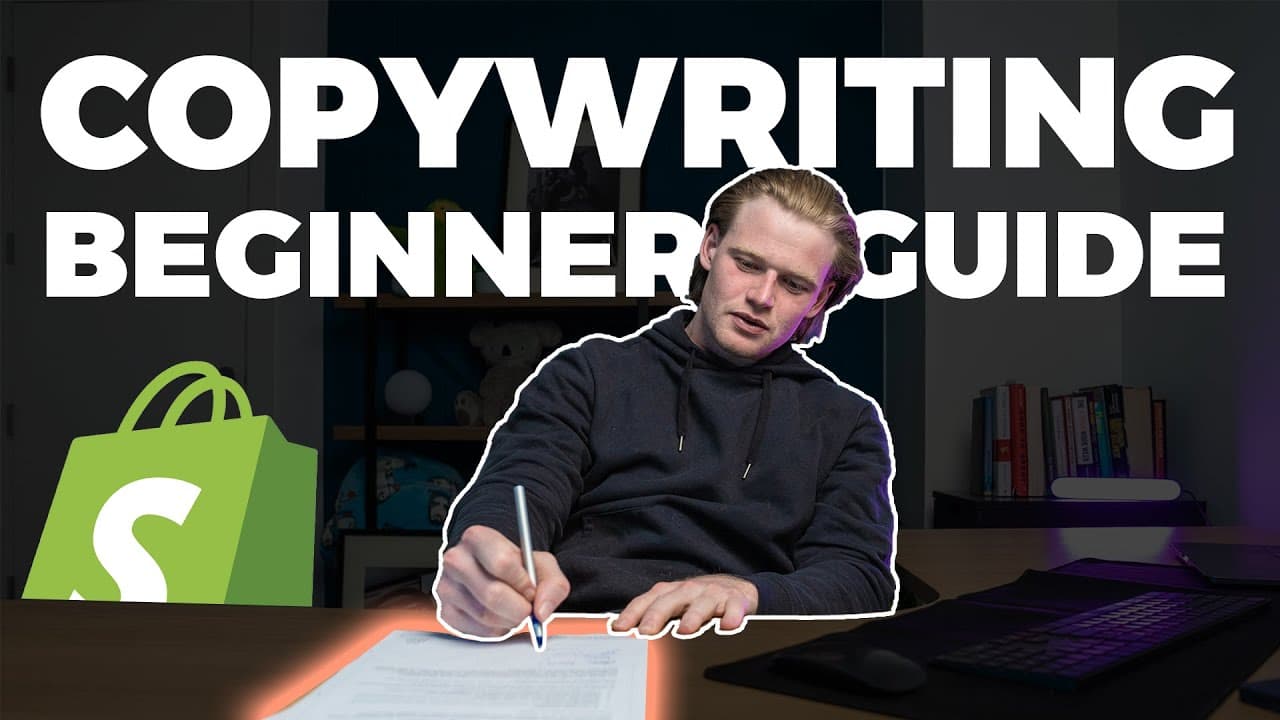
Direct-response copy should support sales across website sections, welcome emails, abandoned-cart emails, and Facebook ads. For the related product launch, test demand with a small order before scaling, document every specification on the Alibaba invoice, and confirm packaging requirements such as dielines, tapered labels, directions, barcodes, ingredients, and compliance information.
Transcript
- What is up, everybody. Welcome back to how to build a billion, not billion. I was actually gonna keep going with it. Howdy everyone, welcome back to building a million dollar brand series. Got a bit to get through today, but it's definitely not gonna be as long as the other ones have been simply because it's copywriting. You know, we've written a... Read More
Key Insights
- Direct-response copywriting is intended to support sales across website sections, welcome emails, abandoned-cart emails, and Facebook advertisements. Each placement serves a different stage of the customer journey, so the message must fit the context in which a prospective or existing customer encounters it.
- A small product order is a practical way to test a brand before committing to scale. The Lemon Scrub supplier agreed to produce 50 units, allowing the creator to prove demand within budget before considering a substantially larger inventory purchase.
- Customization increases supplier requirements because changes to color, scent, or labels can trigger a larger minimum order quantity. Keeping the first production run relatively simple can reduce the initial commitment while the product and brand concept are still being validated.
- An accurate Alibaba invoice is a key form of transaction protection. It should state every required specification clearly, including dimensions, fit, materials, exact colors, and Pantone references, because vague documentation may weaken a buyer's position if a supplier dispute occurs.
- Professional supplier communication is clearer when questions are structured and deliberate. Sending many unrelated questions at once can appear unprofessional, while organized requests make it easier to confirm pricing, samples, ingredients, compliance documentation, production details, and packaging requirements.
- Packaging design must account for the physical shape of the container. A tapered tub requires a tapered label so the applied design fits properly, while directions, usage areas, a top label, and barcode space make the package functional and suitable for fulfillment.
- A barcode supports accurate third-party fulfillment because a 3PL scans products as inventory moves in and out. The scanning process helps reduce pick-and-pack errors, while the printed barcode also gives the finished packaging a more professional appearance.
- Supplier responsiveness and technical competence are useful evaluation signals. Fast answers, compliance documentation, examples, pricing, and correct dielines build confidence, while difficulty understanding or providing dielines can indicate that an intermediary lacks direct factory access or packaging expertise.
Install to Summarize YouTube Videos and Get Transcripts
Explore YouTube Video Summarizer or Get YouTube Transcript Extractor
Questions & Answers
Q: How should beginners write copy for an e-commerce brand?
Beginners should prepare direct-response copy for the main customer touchpoints identified in the lesson: website sections, welcome emails, abandoned-cart emails, and Facebook advertisements. The purpose is to support sales while communicating the product consistently. Each piece should be written for its specific placement rather than treated as one interchangeable message across every channel.
Q: What types of e-commerce copy are covered in the lesson?
The lesson covers copy for multiple parts of an e-commerce operation, specifically website segments, welcome emails, abandoned-cart emails, and Facebook ad copy. These formats span both customer acquisition and follow-up communication. Together, they provide a practical set of places where direct-response writing can be used to present the offer and encourage sales.
Q: Why should a new e-commerce product start with a small order?
A small order allows the seller to prove that the product and brand can generate demand without making a large inventory commitment. For Lemon Scrub, the supplier agreed to produce 50 units so the test could remain within budget. The creator did not expect major profit from those units and planned to consider scaling after validation.
Q: What details should an Alibaba invoice include?
An Alibaba invoice should clearly document everything the supplier is expected to produce. The examples given include dimensions, fit, a technical pack, exact materials, colors, and Pantone color references rather than a vague description such as blue. Detailed specifications create a stronger record if the finished goods are incorrect and a dispute must be raised.
Q: How does product customization affect supplier minimum orders?
Customization can increase the minimum order quantity required by a supplier. The transcript identifies product color, scent, and labels as changes that can make suppliers require a larger commitment. For an early test, limiting customization can help control spending, while more extensive branded production can be considered after the seller has evidence that the product will sell.
Q: Why does e-commerce packaging need a barcode?
A barcode is needed when a third-party logistics provider handles the product because the provider scans inventory as it moves in and out. That process helps prevent pick-and-pack errors during fulfillment. The creator also notes that a barcode makes the packaging appear professional, so the final label design includes a dedicated area for it.
Q: What packaging information should a supplier provide?
A supplier should provide the packaging dielines needed by the designer, ideally with usable measurements. The final product label should also accommodate practical details such as directions, where the product can be used, barcode space, and relevant ingredient or compliance information. Missing or poorly understood dielines can be a warning sign about the supplier's technical capability.
Q: How should sellers evaluate and communicate with suppliers?
Sellers should assess how quickly and clearly a supplier responds, whether the supplier can provide compliance documentation, examples, pricing, ingredients, and correct dielines, and whether production details are understood. Communication should be structured rather than delivered as a scattered list of questions. Final requirements should also be recorded through Alibaba chat or a detailed Alibaba invoice.
Summary & Key Takeaways
-
The lesson focuses on direct-response copywriting for several e-commerce touchpoints, including website sections, welcome emails, abandoned-cart emails, and Facebook advertisements. The broader goal is to create copy that supports sales while presenting the product clearly and consistently throughout the customer journey, from initial advertising through follow-up email communication.
-
The Lemon Scrub launch uses a small initial order to prove demand without exceeding the planned budget. The supplier accepted an order of 50 units, while larger customized orders would require greater commitments. If the brand validates successfully, the creator expects to consider a much larger order, potentially around 5,000 units.
-
Supplier management requires accurate documentation and professional communication. Product specifications should appear clearly on the Alibaba invoice, including dimensions, fit, materials, colors, and Pantone references when relevant. Packaging preparation also requires supplier-provided dielines, suitable label shapes, directions, barcode space, ingredients, and supporting compliance information before production scales.
Read in Other Languages (beta)
Share This Summary 📚
Summarize YouTube Videos and Get Video Transcripts with 1-Click
Try YouTube Summary with ChatGPT & Claude or YouTube Transcript Generator
Explore More Summaries from Davie Fogarty 📚



Summarize YouTube Videos and Get Video Transcripts with 1-Click
Try YouTube Summary with ChatGPT & Claude or YouTube Transcript Generator