How to choose a 3PL to speed Shopify fulfillment
TL;DR
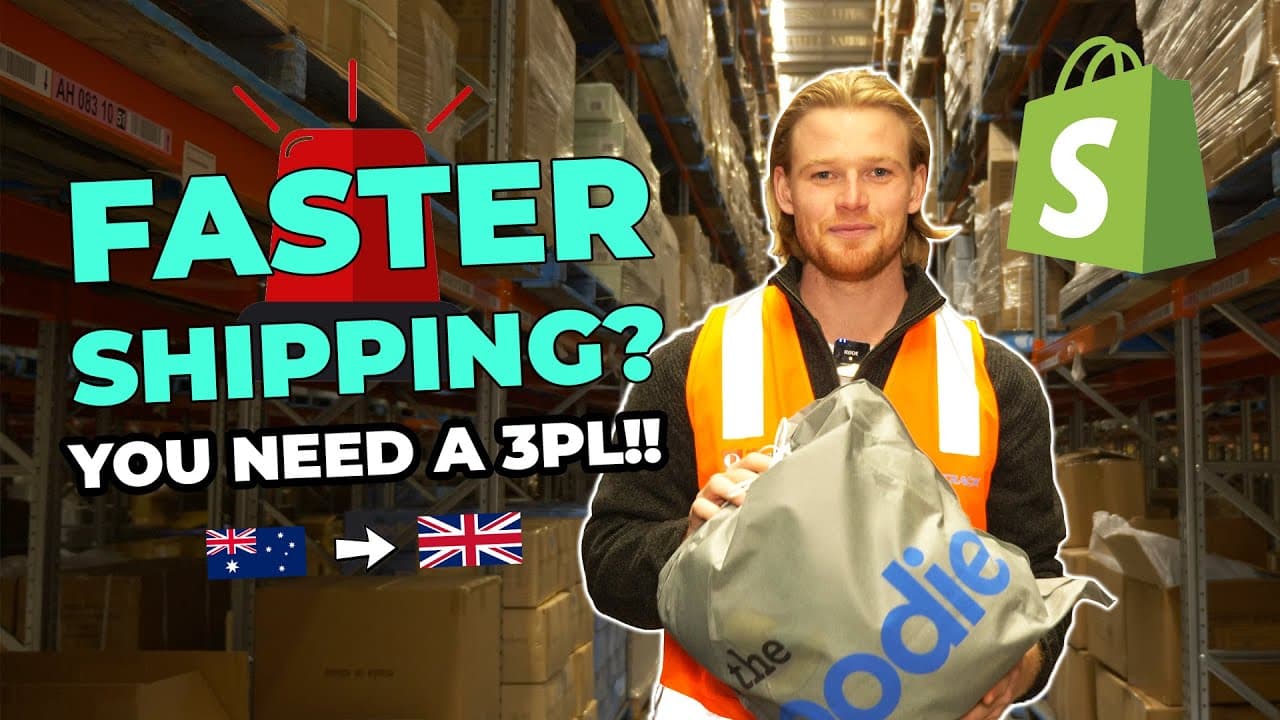
A 3PL should be chosen based on clear integrations, transparent pricing, and scalable capacity. Use multiple warehouses to reduce shipping time and costs, verify barcoding and stock tracking, and insist on real time data and strong communication. Red flags include vague SOPs, poor integration, and unclear pricing.
Transcript
- Hey guys, welcome back. And if you're new here, I'm Davie, I've done over $200 million in sales on Shopify. Today's episode is gonna be a full guide on fulfillment. And I'm gonna take you around the tour of one of our top 3PLs. You'll learn everything you need to know about how to set up a 3PL, the ins and outs of shipping rates, and so you don't... Read More
Key Insights
- 3PLs handle warehousing, storage, packaging and shipping, enabling you to scale while focusing on brand growth. It reduces reliance on dropshipping and supports faster, more reliable delivery.
- Distributing inventory across multiple warehouses lowers transport costs and speeds up delivery by routing orders to the closest location. This is a core advantage of a capable 3PL platform.
- A transparent pricing model is essential; you should understand how costs change with volume and growth to avoid surprises and red flags.
- Barcodes are critical for stock accuracy because they enable precise picking and reduce human error during fulfillment and inventory checks.
- Real time data is necessary to prevent overselling and to maintain trust with customers through accurate stock counts and predictable fulfillment.
- Clear standard operating procedures and easy onboarding reduce friction and improve consistency across the fulfillment process.
- Integration with shopping carts like Shopify is a basic requirement for automating order flow and minimizing manual work.
- Effective communication from the 3PL, including response times and written terms, directly affects customer experience and brand reputation.
- More videos from this channel:
- More from this channel: Davie Fogarty
Install to Summarize YouTube Videos and Get Transcripts
Explore YouTube Video Summarizer or Get YouTube Transcript Extractor
Questions & Answers
Q: How to evaluate if a 3PL is suitable for growing Shopify orders
To evaluate a 3PL you should look for a solution that can scale with your order volume, such as handling more than 10 to 20 orders per day and providing scalable warehousing across multiple locations. Compare inbound and outbound capacities, review their expectations for growth, and verify that their pricing model remains transparent as you expand. Ask for references and real examples where they reduced costs or improved delivery times for similar businesses.
Q: What role do multiple warehouses play in faster shipping
Multiple warehouses enable distributed inventory so orders are fulfilled from the closest location to the customer, reducing transit time and costs. The 3PL should be able to route orders based on customer location, so you can offer faster same day or next day fulfillment where available. This approach also protects against stockouts by reallocating stock across sites as demand shifts.
Q: Why are barcodes essential in a 3PL workflow
Barcodes enable precise stock tracking and accurate picking. Each product and master carton should be scanned to ensure the correct item is picked and packed, reducing mispicks and returns. Barcodes tied to a warehouse management system allow real time updates, improve inventory accuracy, and support accurate invoicing and reporting.
Q: What red flags should I watch for when shopping 3PLs
Red flags include vague or complicated pricing, poor or non existent integration with Shopify, unclear standard operating procedures, lack of barcode usage, no real time stock data, weak reporting, inconsistent FIFO practices, and slow or opaque communication. These issues typically lead to higher costs, slower fulfillment, and unhappy customers.
Q: How important is integration with Shopify for a 3PL
Shopify integration is important because it automates order flow, reduces manual data entry, and ensures orders are pulled automatically into the 3PL system. Good integration minimizes delays and errors, and it helps you maintain accurate stock counts across channels. Ask how the integration handles new SKUs and promotions.
Q: What should ongoing 3PL performance checks look like
Ongoing checks should include regular stock on hand reports, order accuracy metrics, shipping times, and customer communication quality. You should compare online stock counts with 3PL invoicing and ensure there is clear accountability for discrepancies. Set service levels and review them periodically to keep performance aligned with customer expectations.
Q: How can a 3PL support international expansion
A 3PL with warehouses in multiple regions can simplify cross border fulfillment, reduce international shipping times, and lower landed costs. They should provide clear international capabilities, compliant documentation, and a strategy for local returns handling. Verify that they can service the regions you target and offer scalable options as you enter new markets.
Q: What onboarding steps are essential when signing with a 3PL
Essential onboarding steps include sharing product dimensions, SKU counts, and projected sales volumes to get an accurate quote. Review the onboarding timeline, ensure barcoding and WMS setups are planned, confirm the required SOPs, and obtain written agreements on pricing, response times, and service levels to avoid misunderstandings later.
Summary & Key Takeaways
-
This segment explains when to use a 3PL, such as filling more than 10 to 20 orders per day, and how to assess growth and storage needs. It emphasizes the benefit of distributing inventory across locations to improve speed and cost. It also covers how to compare 3PLs and avoid red flags.
-
The tour of a 3PL shows how inventory is stored, reserved, and picked, detailing the process from inbound shipments to order fulfillment. It highlights the importance of barcodes for stock accuracy and real time data to prevent overselling and misrouting.
-
The video discusses red flags to avoid when choosing a 3PL, including integration difficulty, unclear procedures, lack of barcodes, poor reporting, and weak communication. It ends with practical tips for onboarding and ongoing performance checks to protect customer experience.
Read in Other Languages (beta)
Share This Summary 📚
Summarize YouTube Videos and Get Video Transcripts with 1-Click
Try YouTube Summary with ChatGPT & Claude or YouTube Transcript Generator
Explore More Summaries from Davie Fogarty 📚






Summarize YouTube Videos and Get Video Transcripts with 1-Click
Try YouTube Summary with ChatGPT & Claude or YouTube Transcript Generator