How Cognitive Biases Affect Investment Decisions
TL;DR
Better investment decisions require separating skill from luck, recording reasons before outcomes are known, testing confidence with wide probability ranges, and ignoring costs that cannot be recovered. Regression to the mean, hindsight bias, overconfidence, the sunk-cost fallacy, and availability heuristics can otherwise encourage performance chasing, sloppy analysis, persistent losing positions, and exaggerated reactions to memorable events.
Transcript
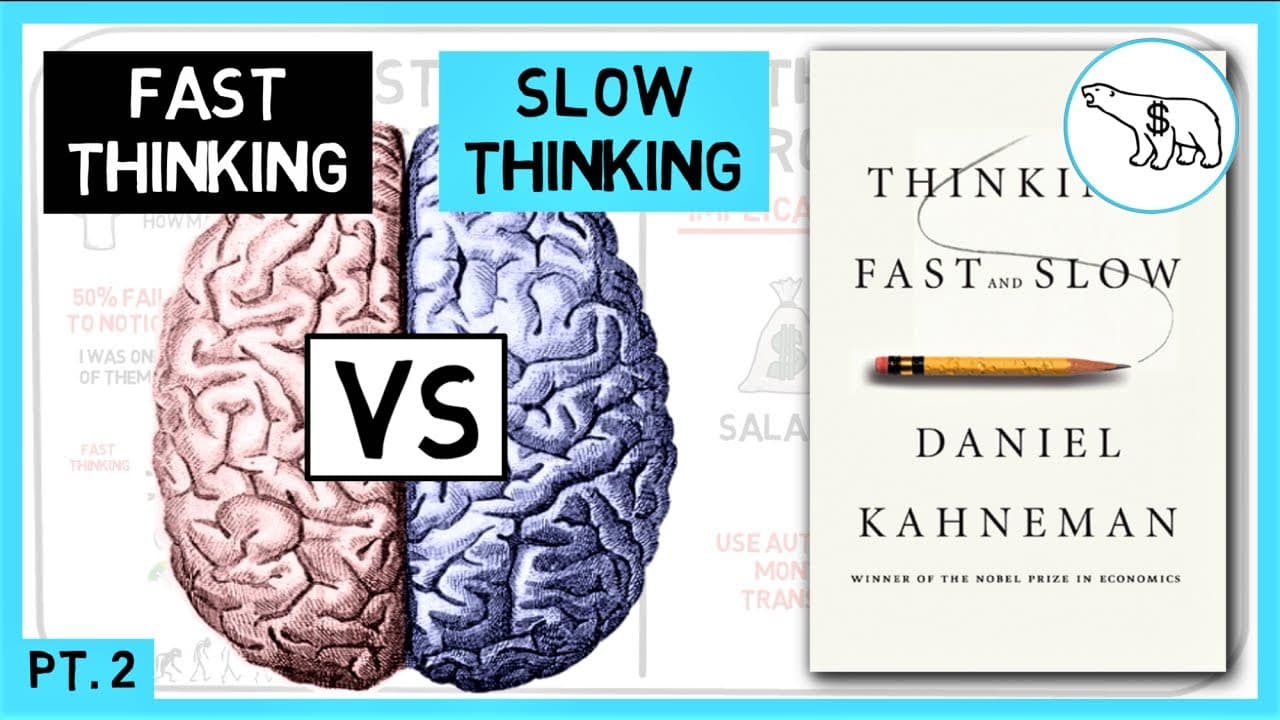
This is the second part in a series of two considering the takeaways for investing and personal finance, from Daniel Kahneman's bestseller "Thinking Fast and Slow". If you haven't checked out the first video yet, be sure to do that before you watch this. Who would have thought that it would take two whole videos to... Read More
Key Insights
- Regression to the mean is the tendency for unusually extreme outcomes to move closer to normal over time because randomness varies between periods. An apparent improvement after an arbitrary intervention does not establish that the intervention caused the change.
- Chasing outstanding mutual funds is historically presented as an unsuccessful strategy. The top 20 funds of the 1980s later returned 1.2 percentage points less annually than the S&P 500, while the top funds of the 1990s subsequently lagged by 1.3 points.
- Hindsight bias is expressed through memory distortion, perceived inevitability, and perceived foreseeability. After an outcome occurs, people may falsely remember expecting it, believe it had to happen, or conclude that they could have predicted it beforehand.
- A stock logbook is a practical defense against hindsight bias. Recording at least three reasons whenever an important investment decision is made preserves the original rationale, allowing later results to be compared with what the investor actually believed at the time.
- Overconfidence is revealed when people choose confidence intervals that are too narrow. In similar tests requiring 90 percent confidence ranges, only 1 percent of participants reportedly placed at least nine of ten correct answers inside their selected intervals.
- Sloppy investment analysis is a serious consequence of overconfidence. The narrator relied on only three data points after several successful years and experienced losses of 25 percent in two months and 35 percent after twelve months during a rising market.
- The sunk-cost fallacy is the mistake of allowing unrecoverable past spending or effort to influence future choices. Investors should assess whether holding an investment remains sensible now, rather than continuing merely because money, time, or emotional commitment has already been invested.
- Availability heuristics make events appear more frequent when examples are easier to retrieve from memory. For investors, a memorable occurrence can therefore feel more common or probable than warranted, potentially distorting judgments about risks, opportunities, and market behavior.
Install to Summarize YouTube Videos and Get Transcripts
Explore YouTube Video Summarizer or Get YouTube Transcript Extractor
Questions & Answers
Q: What is regression to the mean in investing?
Regression to the mean means that unusually extreme results tend to move closer to normal results over time as randomness changes between periods. In investing, an outstanding fund return may not persist because the original performance could have depended heavily on luck. Other explanations include increased difficulty after the fund attracts more capital or the departure of the people responsible for earlier success.
Q: Why should investors avoid chasing top-performing mutual funds?
Investors should avoid assuming that the strongest recent mutual funds will remain the strongest. The top 20 funds of the 1980s returned an annual average 1.2 percentage points below the S&P 500 during the 1990s. The top 20 funds of the 1990s then averaged 1.3 points less annually than the index during the first decade of the 21st century.
Q: What are the three levels of hindsight bias?
Hindsight bias has three described levels: memory distortion, inevitability, and foreseeability. Memory distortion causes someone to believe they held an opinion all along. Inevitability makes the outcome seem as though it had to happen. Foreseeability creates the belief that the result could have been predicted, even when the person's behavior before the event showed no such accurate expectation.
Q: How can an investment logbook reduce hindsight bias?
An investment logbook preserves what an investor believed before the outcome was known. For every important decision, the investor should write down at least three reasons for investing. If the position later produces a loss, this record prevents memory distortion from rewriting the original rationale and makes it possible to identify errors, evaluate the analysis honestly, and improve future decisions.
Q: How can investors test whether they are overconfident?
Investors can test calibration by answering factual questions with a low and high estimate that they believe has a 90 percent chance of containing the correct answer. A well-calibrated person should capture roughly nine of ten answers. Similar tests reportedly found that only 1 percent of people achieved at least nine correct intervals, suggesting that most participants selected ranges that were too narrow.
Q: Why is overconfidence dangerous when selecting stocks?
Overconfidence can persuade investors that intuition or previous success removes the need for careful research. The narrator described choosing positions from only three data points without evaluating the underlying businesses or their management. The approach produced losses of 25 percent in two months and 35 percent after twelve months, despite an upward-moving market. Investors unwilling to do the analysis may be better suited to passive index funds.
Q: What is the sunk-cost fallacy in investment decisions?
The sunk-cost fallacy occurs when unrecoverable past costs influence a decision that should depend on present conditions and future consequences. Paying for something does not create a rational reason to keep consuming it, just as money already lost on an investment does not justify holding it. Investors must accept that some losses cannot be recovered and decide whether the position still deserves capital now.
Q: How do availability heuristics affect investors?
Availability heuristics cause people to judge events as more frequent when examples come to mind easily. An event that is vivid, memorable, or easy to recall can therefore feel more common than it actually is. For investors, this mental shortcut can distort assessments of market risks and opportunities by giving disproportionate weight to memorable occurrences instead of a more balanced evaluation.
Summary & Key Takeaways
-
Regression to the mean helps explain why outstanding mutual funds often disappoint in later periods. The top 20 funds of both the 1980s and 1990s subsequently trailed the S&P 500. Strong past performance may reflect luck, greater difficulty managing newly attracted capital, or the departure of successful fund managers.
-
Hindsight bias distorts memory, makes completed events appear inevitable, and creates the illusion that outcomes were foreseeable. Investors can counter it by maintaining a stock logbook containing at least three reasons for every important decision. This written record preserves the original reasoning and makes honest evaluation of investment mistakes more practical.
-
Overconfidence, sunk costs, and availability heuristics can each undermine rational investing. Investors should conduct thorough analysis or choose passive index funds, evaluate positions using future prospects instead of unrecoverable losses, and recognize that memorable events can feel more frequent than they are simply because they are easier to recall.
Read in Other Languages (beta)
Share This Summary 📚
Summarize YouTube Videos and Get Video Transcripts with 1-Click
Try YouTube Summary with ChatGPT & Claude or YouTube Transcript Generator
Explore More Summaries from The Swedish Investor 📚





Summarize YouTube Videos and Get Video Transcripts with 1-Click
Try YouTube Summary with ChatGPT & Claude or YouTube Transcript Generator