How Fast Does Muscle Return After Time Off?
TL;DR
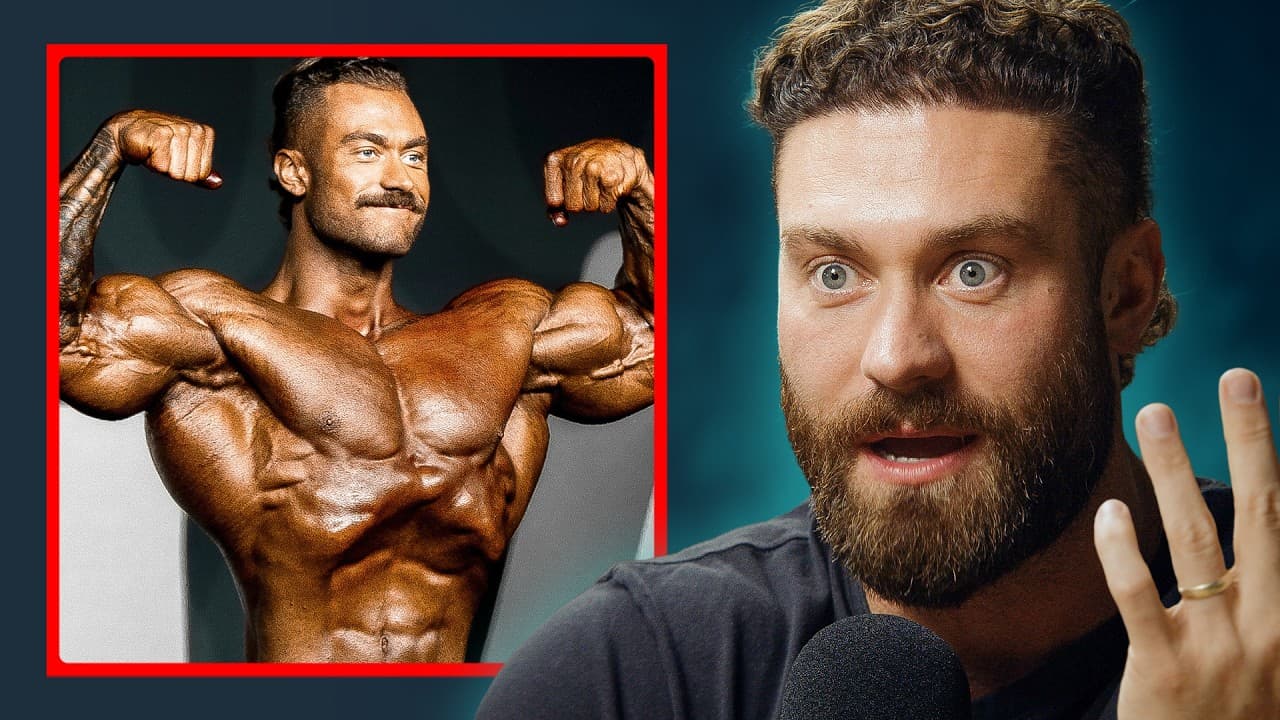
Muscle can return surprisingly quickly after a long training break, according to Chris Bumstead's experience recovering from shoulder surgery. He stopped training for about three months and lost roughly 25 pounds of muscle, yet said his physique rebounded quickly and could return within about six months through hard training, healthy eating, and TRT.
Transcript
I'm interested, and I'm sure a lot of other people are, in how quickly an Olympia level physique falls apart when you stop training. It's tough to answer because of my injury I had this year as a whole. It was holding on like real good until I had like the shoulder surgery and then I took about three months off training and in the midst of that, th... Read More
Key Insights
- Bumstead's three-month training break followed shoulder surgery, not an ordinary voluntary layoff. He initially could not lift his arm and used fat grips for extremely limited external rotator cuff exercises because holding a weight and moving through a normal range were difficult.
- Bumstead estimated that he lost about 25 pounds of muscle during his extended recovery period. The loss occurred amid surgery rehabilitation, three months away from normal training, and an 80-hour fast that he said caused approximately eight pounds of additional bodyweight loss.
- Muscle memory appeared powerful in Bumstead's personal recovery because his physique rebounded quickly after a drastic visible decline. He said muscle is harder to lose than many people assume and estimated that he could return to his desired condition within about six months if necessary.
- A 250-pound bodyweight remains maintainable for Bumstead without his former competitive drug protocol, according to his account. He attributes that possibility to eating healthily, training hard because he enjoys it, and continuing TRT, while distinguishing this condition from his former Olympia-level competitive preparation.
- Competitive longevity depends partly on the demands of the physique category, according to Bumstead. He noted that open bodybuilders often peak around age 35, while classic physique can favor a younger age because it requires less muscle and waist size can increase over time.
- Retiring at age 30 gave Bumstead greater confidence in his ability to recover from competitive bodybuilding. Doctors told him he was healthier than they expected given what he had done, but he acknowledged that some health damage occurred and refused to continue making the same sacrifices.
- Gut health became a major post-retirement priority because Bumstead reported SIBO, mold exposure, leaky gut, and heavy metals. His treatment discussion included building resilience before a killing phase, followed by rebuilding, rather than attempting every health intervention at the same time.
- Exogenous testosterone can suppress the body's natural production, Bumstead warned, potentially creating a lifelong need for replacement. He remains on a therapeutic dose and believes abruptly dropping from prolonged high exposure can severely affect the body and mind, including intense depression reported by others.
Install to Summarize YouTube Videos and Get Transcripts
Explore YouTube Video Summarizer or Get YouTube Transcript Extractor
Questions & Answers
Q: How quickly did Chris Bumstead regain muscle after stopping training?
Chris Bumstead said his physique rebounded quickly after approximately three months without normal training following shoulder surgery. He estimated that he lost about 25 pounds of muscle during the broader period but believed he could bounce back within roughly six months if necessary. His account reflects his personal experience with hard training, healthy eating, prior muscular development, and continued TRT.
Q: How much muscle did Chris Bumstead lose after shoulder surgery?
Chris Bumstead estimated that he lost about 25 pounds of muscle while recovering from shoulder surgery and spending roughly three months away from regular training. He described the resulting change in his physique as drastic. The period also included an 80-hour fast, during which he said he lost about eight pounds, so the circumstances extended beyond training cessation alone.
Q: Why did Chris Bumstead stop training for three months?
Chris Bumstead stopped normal training because shoulder surgery caused a serious loss of arm function that required gradual rehabilitation. For the first week or two, he could not lift his arm properly. He later used fat grips because he struggled to hold a weight, performing external rotator cuff work through only about a three-inch range of motion.
Q: What does Chris Bumstead's experience suggest about muscle memory?
Chris Bumstead's experience suggests that a large amount of previously developed muscle can return relatively quickly after an extended interruption. Although he estimated losing about 25 pounds of muscle and saw a drastic change in his physique, he said the muscle bounced back quickly. He therefore believes muscle is harder to lose permanently than many people realize.
Q: Can Chris Bumstead maintain a 250-pound physique after retirement?
Chris Bumstead said he can remain around 250 pounds without difficulty while eating healthily, training hard because he enjoys it, and no longer following his former performance-enhancing drug approach. He continues to use TRT, however, so he did not describe the physique as being maintained without hormonal support. He also separated maintainable size from full Olympia competition preparation.
Q: Why is Chris Bumstead still using TRT after bodybuilding?
Chris Bumstead remains on a low, therapeutic replacement dose because prolonged use of exogenous hormones suppresses natural testosterone production. He has not fully decided whether he will eventually attempt to stop. Based on what he has observed in others, he believes reducing hormone exposure gradually may avoid the severe physical and mental shock associated with dropping suddenly from very high levels.
Q: Why did Chris Bumstead retire from competitive bodybuilding at 30?
Chris Bumstead retired at 30 partly because he no longer accepted the health sacrifices required by competitive bodybuilding. He said some damage had occurred, even though doctors considered him healthier than expected given his history. Family, changing priorities, and the greater recovery potential doctors associated with being in his 30s reinforced his decision to focus on long-term health.
Q: What health problems is Chris Bumstead addressing after retirement?
Chris Bumstead said he is focusing first on gut problems, including SIBO, mold exposure, leaky gut, and heavy metals. He described a phased strategy that builds gut resilience before trying to kill harmful organisms and later rebuild the gut. His discussed regimen included minocycline at 200 milligrams daily, herbal antivirals, and several peptides under professional guidance.
Summary & Key Takeaways
-
Bumstead stopped training for about three months after shoulder surgery left him unable to lift his arm normally. His rehabilitation began with extremely limited external rotator cuff movements and fat grips because he could not hold a weight. During this period, he also completed an 80-hour fast and lost about eight pounds.
-
He estimated that the complete interruption, surgery recovery, fasting, and related circumstances cost him about 25 pounds of muscle. Although the physical change looked drastic, he said the muscle returned quickly. He believes previously developed muscle is harder to lose permanently than people realize, based on how rapidly his physique responded afterward.
-
Retirement shifted Bumstead's priorities toward health, family, and recovery from competitive bodybuilding. He remains on therapeutic replacement testosterone while considering his longer-term goals, and he warns that exogenous hormones suppress natural production. He is also addressing gut problems through a phased plan involving resilience building, treatment, and later rebuilding.
Read in Other Languages (beta)
Share This Summary 📚
Summarize YouTube Videos and Get Video Transcripts with 1-Click
Try YouTube Summary with ChatGPT & Claude or YouTube Transcript Generator
Explore More Summaries from Chris Williamson 📚

Summarize YouTube Videos and Get Video Transcripts with 1-Click
Try YouTube Summary with ChatGPT & Claude or YouTube Transcript Generator