How to Protect Your Circuit from Reverse Polarity Damage
TL;DR
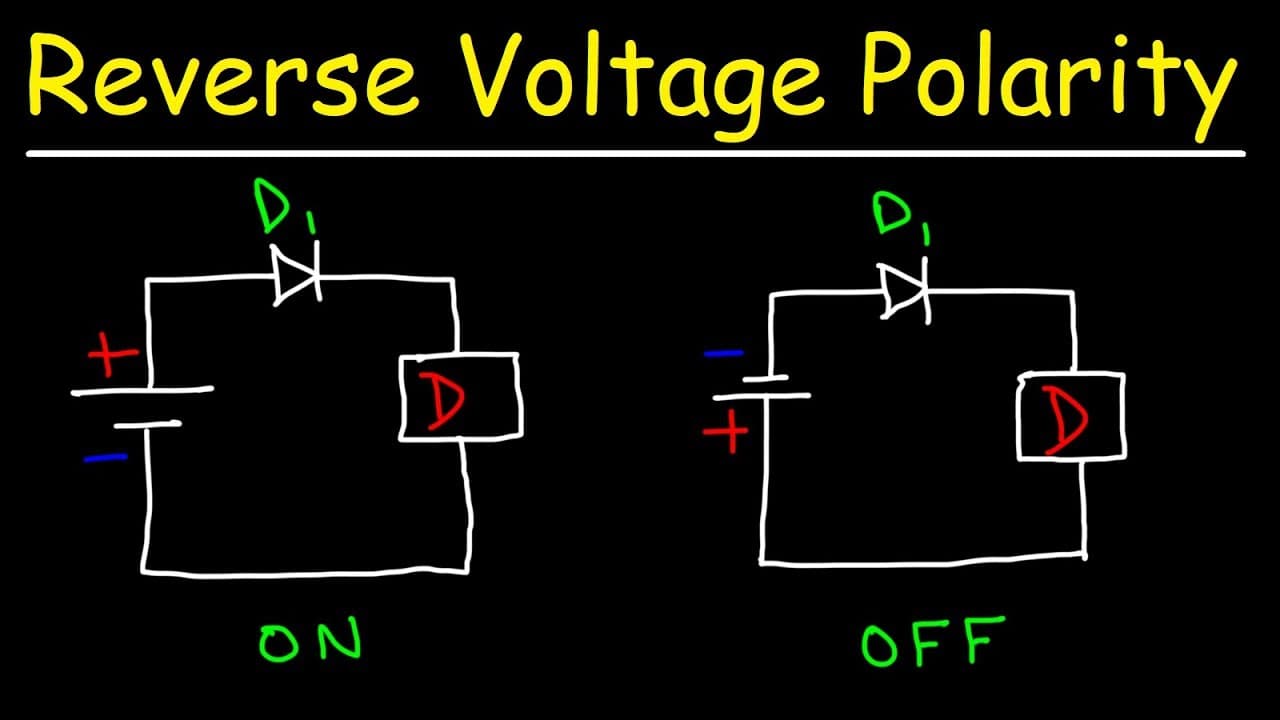
To protect your circuit from reverse polarity damage, use a diode that allows current flow in the right direction while blocking it when connected incorrectly. Alternatively, a bridge rectifier circuit allows current to flow consistently regardless of battery polarity, though it introduces a voltage drop of about 0.6 volts. Additionally, consider using a fuse for extra protection against high current surges.
Transcript
in this video we're going to talk about how you can protect your circuit from reverse polarity damage so let's say you have your battery and it's connected to some device or load resistor let's call this device d and let's say this is the correct way to connect it so in this case current is going to flow in in the clockwise direction but sometimes ... Read More
Key Insights
- 🌉 Reverse polarity damage can be prevented by using diodes or bridge rectifier circuits.
- 👻 Diodes allow current flow in one direction and block it in reverse, protecting the circuit.
- 🍵 Diodes can handle different current capacities, so choose one appropriate for the circuit's requirements.
- 😕 Adding a fuse to the circuit can further protect against high current surges.
- 🌉 The bridge rectifier circuit ensures consistent current direction regardless of battery polarity.
- ⚡ Germanium diodes have a low voltage drop of around 0.3 volts.
- ⚡ However, in a bridge rectifier circuit, the total voltage drop may be around 0.6 volts due to using two diodes.
Install to Summarize YouTube Videos and Get Transcripts
Explore YouTube Video Summarizer or Get YouTube Transcript Extractor
Questions & Answers
Q: How does a diode protect against reverse polarity damage?
A diode allows current to flow in the correct direction when connected properly, but blocks it when connected in reverse, safeguarding the circuit from damage.
Q: Can a diode burn out if the current is too high?
Yes, if the current through the diode exceeds its rated capacity, it can burn out. To prevent this, choose a diode that can handle the expected current or add a fuse to the circuit.
Q: What is the purpose of adding a fuse to the circuit?
Adding a fuse protects the diode and the circuit from high current surges. If the current exceeds a certain level, the fuse will burn out, preventing damage to the circuit.
Q: Is there a circuit design that can ensure the current direction is the same regardless of battery polarity?
Yes, the bridge rectifier circuit achieves this. By using four diodes, it ensures the current flows through the device in the same direction, even if the battery is connected in reverse.
Summary & Key Takeaways
-
Reverse polarity damage can occur when a battery is connected to a circuit in the wrong way, potentially causing circuit damage.
-
One solution to protect against reverse polarity damage is the use of a diode, which allows current to flow in the correct direction and blocks it when connected in reverse.
-
Another option is the bridge rectifier circuit, which ensures the direction of current through the device remains the same regardless of the battery's polarity.
Read in Other Languages (beta)
Share This Summary 📚
Summarize YouTube Videos and Get Video Transcripts with 1-Click
Try YouTube Summary with ChatGPT & Claude or YouTube Transcript Generator
Explore More Summaries from The Organic Chemistry Tutor 📚






Summarize YouTube Videos and Get Video Transcripts with 1-Click
Try YouTube Summary with ChatGPT & Claude or YouTube Transcript Generator