How Do Nuclear Submarines Work and Why Do They Matter?
TL;DR
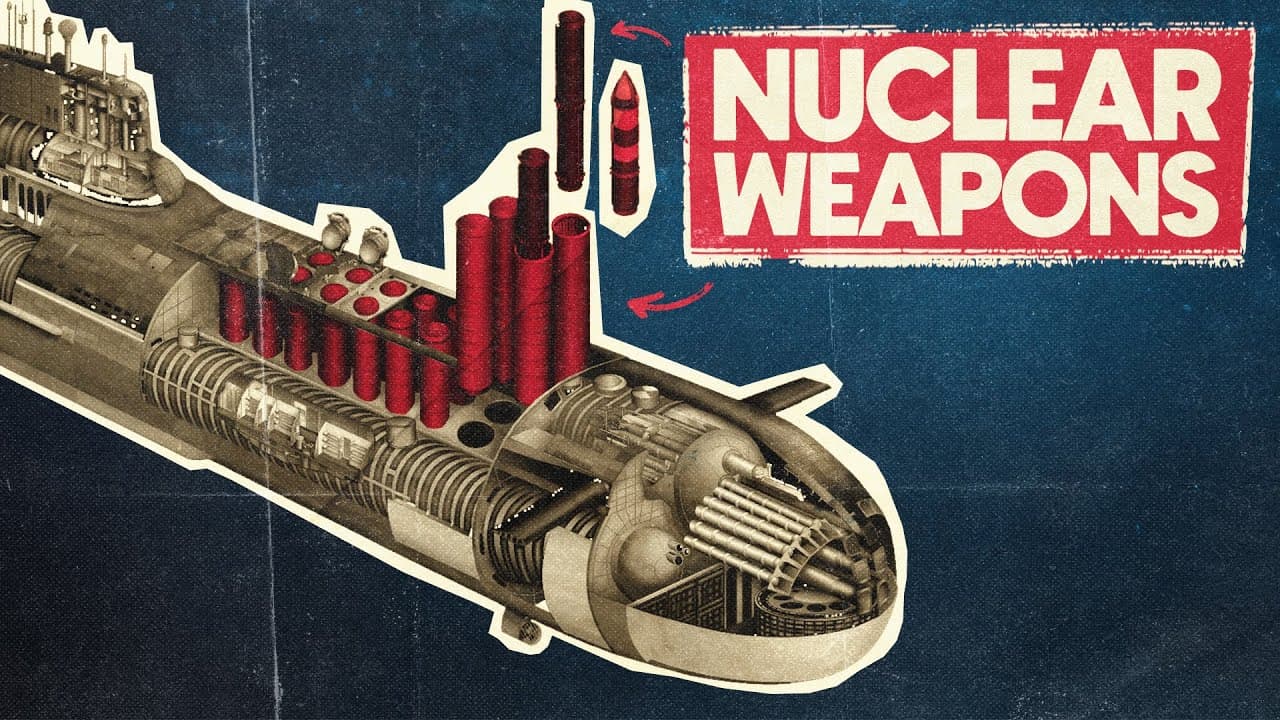
Nuclear-armed submarines are huge, stealthy vessels that can carry enough nuclear weapons to end life on the planet as we know it. Diesel-electric subs had to surface about every 48 hours for air, but nuclear power needs no air, letting modern submarines stay hidden underwater for very long periods.
Transcript
- [Announcer] Enough nuclear power to destroy the human race several times over. - I need to show you a video that is blowing my mind. You have the ocean just sitting there being nice and calm, and then this pops out. Boom! It doesn't just pop out. It pops out for a second and looks like it's just about to fall back down. And then... (laughs in awe... Read More
Key Insights
- Submarines are stealthy by design: a vessel of roughly 48,000 tons with a couple hundred humans aboard and nuclear warheads could sit right below a swimmer without anyone knowing, because not being seen is their whole purpose.
- Russia's Typhoon class submarine is so large that, lifted out of the water and placed on land, it would look like a floating building, and such subs cruise about 250 meters below the surface.
- Nuclear power plants on board give submarines basically unlimited energy to make fresh water and oxygen, so they could stay deep for decades if the humans aboard did not need to surface to eat.
- Early submarines were limited: the Turtle, built for George Washington's army, never did anything useful and sank, while the Civil War Confederate sub used a hand crank and a bomb on a 15 foot stick.
- Rudolf Diesel's engine let German submarines charge batteries and run underwater on battery power, which was far better than a hand crank, but the engine still needed air.
- Diesel-electric submarines could only stay underwater for about 48 hours before surfacing for air, which gave away their position and made them much less effective as a war tool.
- The Germans called their submarines U-boats and used them for unrestricted submarine warfare, sinking civilian boats without notice, while sonar, radar, radios and encryption made subs more capable.
- Nuclear energy changed submarines because it does not require air, which is why Hyman Rickover proposed putting a nuclear power plant inside a submarine to end the need to surface every couple of hours.
Install to Summarize YouTube Videos and Get Transcripts
Explore YouTube Video Summarizer or Get YouTube Transcript Extractor
Questions & Answers
Q: Why are submarines so hard to detect?
Submarines are built so that not being seen is their whole purpose. Navies that operate them do everything they can to keep them quiet and invisible, and even make them magnet-resistant. A huge vessel with a crew and nuclear warheads could be right below a swimmer without anyone having any idea.
Q: How big is a nuclear-armed submarine?
Some are enormous. The video describes a vessel of about 48,000 tons with a couple hundred humans aboard. Russia's Typhoon class submarine is used as an example: if it were pulled from the water and set on land, it would look like a floating building, showing how massive these machines are.
Q: How deep do these submarines travel?
The video says these large submarines cruise around the oceans about 250 meters below the surface. At that depth they stay out of sight, which supports their role as hidden platforms that could be anywhere at any time, carrying weapons used for psychological warfare, actual warfare and spying.
Q: Why do submarines need nuclear power?
Nuclear energy does not require air. Earlier engines needed to pump out exhaust and suck in air, so subs had to surface. A nuclear power plant on board gives basically unlimited energy to make fresh water and oxygen, so a submarine could stay in the depths for decades if the crew did not need to come up to eat.
Q: What was the problem with diesel-powered submarines?
The diesel engine needed air to run and to expel exhaust, so it could not run underwater. Submarines used it to charge batteries, but could only stay under for about 48 hours before surfacing for air. Surfacing gave away their position and made them far less effective, like having to flip your Battleship board around to show your opponent.
Q: Who was Hyman Rickover and what did he propose?
Hyman Rickover was a Russian-born American Navy officer in the 1950s. He realized that nuclear power makes electricity without needing air, and proposed putting a nuclear power plant inside a submarine. That idea would solve the problem of having to come up to the surface every couple of hours.
Q: What were the earliest submarines like?
Early attempts included art showing Alexander the Great in a glass barrel and Leonardo da Vinci's sketch of a mechanical fish, which he kept secret. The Dutch built the first known boat to navigate underwater. The Turtle, funded by George Washington, never did anything useful and sank, and the Confederate sub was turned by a hand crank.
Q: How did the Cold War change submarine development?
After World War I, the US, the UK and the USSR divided up German U-boats and discovered the German tech was amazing. The US and the Soviet Union, former allies now suspicious of each other, both secretly wanted to get far better at submarine technology, starting an era of secretive investment that made subs the advanced machines we know today.
Summary & Key Takeaways
-
Submarines are massive, stealthy machines that can carry nuclear warheads and remain unseen. Navies work to keep them quiet, invisible and even magnet-resistant. Many of them are out there right now, with crews living on multi-story vessels carrying giant weapons, and the video sets out to explain how this came about.
-
The history starts with ancient art of Alexander the Great in a glass barrel and Leonardo da Vinci's secret sketches. It continues through the Dutch first navigation, the American Turtle and the Confederate hand-cranked sub. None was very successful, but each laid groundwork for later designs.
-
Diesel engines let German submarines charge batteries, but they needed air and forced surfacing about every 48 hours. After the war, the US and the USSR took German technology and began a secretive Cold War race. Nuclear power, championed by Hyman Rickover, promised to remove the air problem entirely.
Read in Other Languages (beta)
Share This Summary 📚
Summarize YouTube Videos and Get Video Transcripts with 1-Click
Try YouTube Summary with ChatGPT & Claude or YouTube Transcript Generator
Explore More Summaries from Johnny Harris 📚



Summarize YouTube Videos and Get Video Transcripts with 1-Click
Try YouTube Summary with ChatGPT & Claude or YouTube Transcript Generator