How can Democrats win a Kansas Senate race in 2026?
TL;DR
Adam Hamilton has a real, though slim, chance in Kansas, challenging an incumbent. The state has shown openness to Democratic candidates by voting for abortion rights in 2022 and electing a Democratic governor, suggesting possible shifts despite Kansas history. The campaign faces Republican attacks but heresy claims are not easily effective against a megachurch pastor.
Transcript
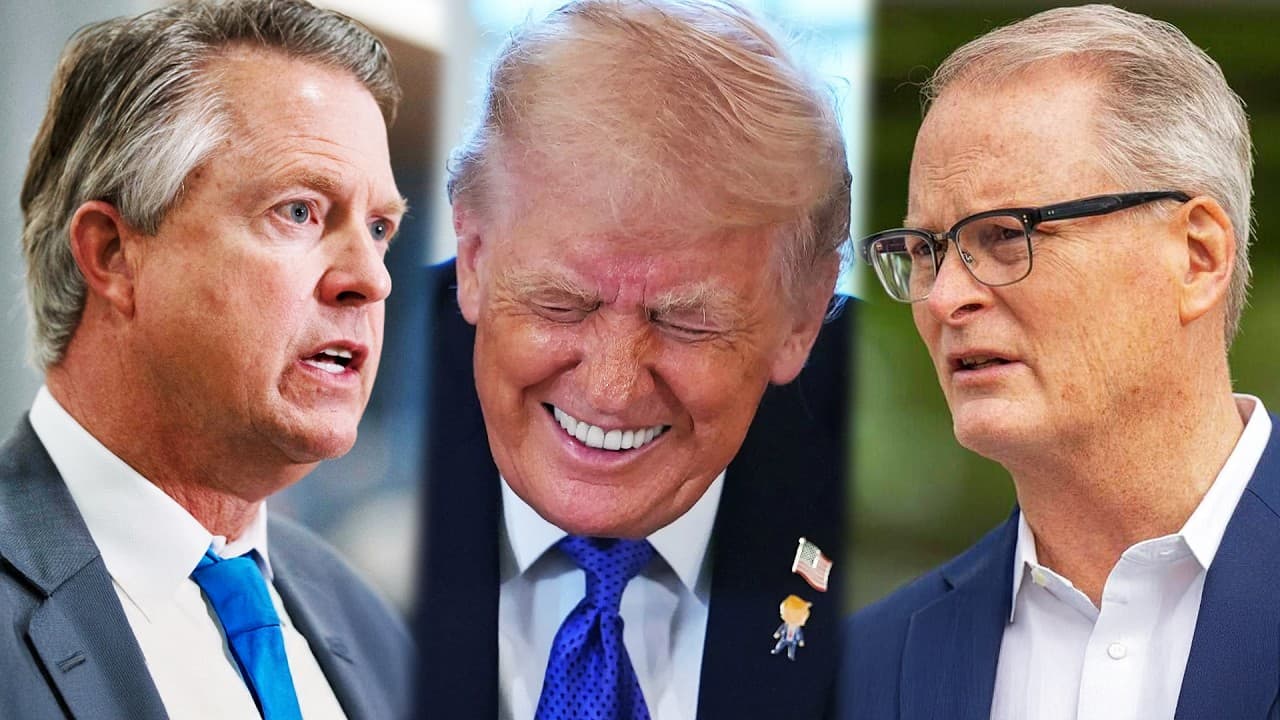
the midterm picture for Republicans right now is looking so bad that Democrats actually have a shot at winning Kansas. Kansas, folks, a Senate race over in Kansas is now in play. The Democratic nominee is Reverend Adam Hamilton. He's the founding pastor, believe it or not, of the church of the Resurrection in Leeward. And it's the largest United Me... Read More
Key Insights
- The key to Hamilton's campaign is that Kansas, while red, has shown openness to Democrats in governance and policy matters such as abortion rights.
- Hamilton’s background as a megachurch pastor complicates typical attacking lines about religious candor, potentially shielding him from standard GOP criticisms.
- Republicans have tried to use perceived religious heresy against Hamilton, but the strategy has not proven broadly effective so far.
- The political landscape in Kansas has nuanced shifts, including a Democratic governor and abortion rights vote, which can influence Senate race dynamics.
- The article highlights the juxtaposition between traditional party lines and local issue-based voting behavior in Kansas.
- Warnock and other religious-identity candidates are cited as precedent for religious candidates performing well in religious regions.
- The 17 percent victory probability cited for Hamilton indicates notable momentum potential despite historical patterns.
- The overall analysis suggests a strategic reconsideration of candidate type in religious regions, potentially aiding Democratic prospects.
Install to Summarize YouTube Videos and Get Transcripts
Explore YouTube Video Summarizer or Get YouTube Transcript Extractor
Questions & Answers
Q: A real search query question about the video (e.g. 'How to...', 'What is...', 'Why does...', 'When should...'). Question 1
Hamilton faces a difficult electoral environment in Kansas, but the discussion frames his candidacy as part of a broader trend where religiously affiliated candidates can perform well in religious regions. The answer explores how Democratic governance at the state level and policy positions such as abortion rights can create openings for Senate campaigns even in traditionally Republican states. Voter sentiment, candidate messaging, and local political dynamics all contribute to potential upside despite historic voting patterns.
Q: Question 2
The analysis notes that Kansas has not elected a Democrat to a Senate seat since 1932 and has not been competitive in 50 years, making Hamilton’s 17 percent chance notable. It argues that local factors, including the Democratic governor and abortion rights vote, could tilt the field. The discussion also considers how attacks on Hamilton’s faith might backfire or be less effective given his pastoral background and the electorate’s values.
Q: Question 3
The video discusses Republican attempts to exploit religious disagreement by labeling Hamilton as heretical, citing quotes from Ted Cruz and others. It explains that such attacks may not resonate with Kansas voters as strongly as other issues, and that political messaging in religious communities can differ from national narratives. This dynamic can influence how campaigns calibrate their attack lines.
Q: Question 4
The candidate’s background is a megachurch pastor, which can serve as a campaign strength by appealing to voters who value religious leadership. The narration suggests that opponents will try to negative frame this, but the pastor’s perceived moral authority could neutralize typical GOP criticisms. Public perception of religious leadership is presented as a potential asset.
Q: Question 5
The transcript highlights Kansas voters’ willingness to cross party lines on certain issues, such as abortion rights, which may widen Hamilton’s appeal beyond traditional Democratic bases. This underscores the importance of issue alignment with local values, rather than strict party loyalty, in Senate race outcomes within red states.
Q: Question 6
The discussion points to examples like Raphael Warnock and other religious politicians who have achieved success in religiously tuned regions, suggesting that Hamilton could mirror such trajectories. It emphasizes that religion and faith-based messaging can be leveraged in a way that resonates with local electorates when aligned with community concerns.
Q: Question 7
The analysis notes that Hamilton’s odds could be influenced by breakpoints such as the governor’s party and the electorate’s stance on social issues. It suggests monitoring shifts in Kansas political sentiment as critical to assessing Hamilton’s true electoral viability, rather than relying solely on historical voting patterns.
Q: Question 8
Ultimately, the piece argues that the Kansas race illustrates a broader possibility: religiously affiliated candidates can gain traction in red states under the right conditions. It calls for paying attention to how local values, candidate authenticity, and issue salience interact to shapeSenate race outcomes in midterm contexts.
Summary & Key Takeaways
-
Hamilton is a Democratic challenger in a traditionally Republican Kansas Senate race, currently estimated with a low but nonzero probability of victory. The race is notable for a Democratic candidate who is a megachurch pastor, a factor that complicates standard political attacks. The outlook hinges on local political shifts and how opposition lines land with voters.
-
The narrative emphasizes Kansas past voting patterns, abortion rights support, and the governor's party as signals that Democrats may outrun typical expectations. It also discusses how Republicans are attempting to weaponize religious critique against Hamilton, with limited success so far.
-
The broader takeaway is that religious candidates can find traction in religious parts of the country, suggesting possible gains for Democrats under favorable conditions in states like Kansas and similar locales.
Read in Other Languages (beta)
Share This Summary 📚
Summarize YouTube Videos and Get Video Transcripts with 1-Click
Try YouTube Summary with ChatGPT & Claude or YouTube Transcript Generator
Explore More Summaries from David Pakman Show 📚





Summarize YouTube Videos and Get Video Transcripts with 1-Click
Try YouTube Summary with ChatGPT & Claude or YouTube Transcript Generator