What Is the 5-Step System to Unlock Sleep, Recovery, and Flow?
TL;DR
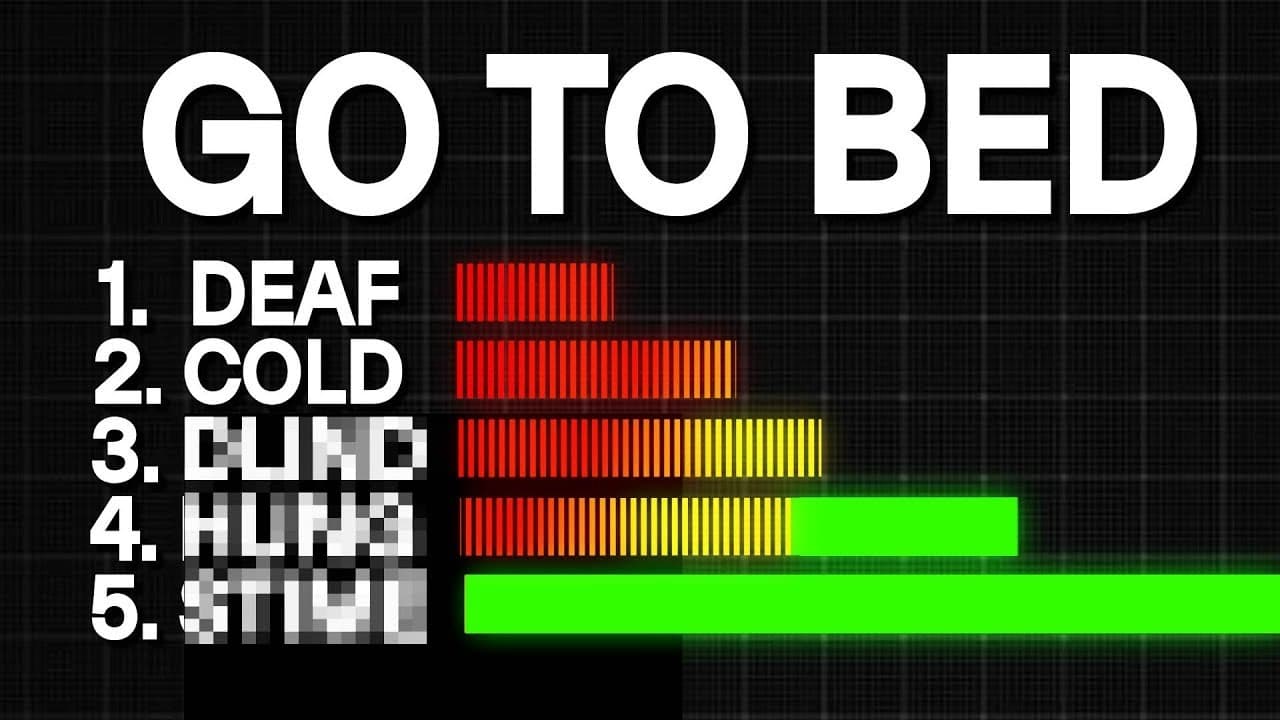
Improving sleep supports flow by giving the brain and body time to repair, rebuild, recover, replenish energy, regenerate cells, and reorganize memories. Suboptimal sleep creates an exhaustion ceiling marked by brain fog, low energy, irritability, and weaker work choices. The speaker’s experience of falling asleep seven minutes into an important interview shows the cost of chronic restriction, so read on to understand the performance effects.
Transcript
imagine if every morning you woke up with your brain supercharged for Peak Performance and flow just by changing how you sleep well the science shows that this is possible and by dialing this in you can access potential that you didn't even know was lying dormant within you now I'm randar co-founder of coo the flow research Collective we've trained... Read More
Key Insights
- Sleep is a high-performance state in which the brain and body repair, rebuild, replenish energy, regenerate tissues and nerve cells, reorganize memories, and increase learning capacity. Although conscious work has stopped, these processes make later concentration, emotional control, skilled action, and flow more attainable.
- Flow and sleep function like two sides of peak performance. Flow is described as an optimal state of consciousness for feeling and performing at one’s best, while sleep is the recovery state that rebuilds the resources needed to make that level of performance possible.
- The exhaustion ceiling is the hidden limit that inadequate sleep places on current performance. Its first-order effects include brain fog and low energy, but later consequences can influence attention, work selection, decision-making, emotional reactions, discipline, and the ability to initiate valuable conversations.
- Poor sleep can create cascading behavioral consequences throughout the day. Waking under-rested may lead to seeking quick stimulation, avoiding demanding work, and defaulting to easier tasks such as clearing an inbox, creating a chain of outcomes that appears unrelated to the original sleep deficit.
- Successful sleep can change how ordinary social interactions feel. After improving his sleep, Doris found that a previously aggravating colleague no longer seemed irritating, even though the colleague’s calls, words, and behavior had not changed. The difference was Doris’s recovered emotional state.
- Sleep is a trainable skill rather than a matter of luck. Doris shifted from merely hoping to wake refreshed toward studying sleep composition and treating rest as a capability that could be practiced, measured, and improved in support of the related skill of entering flow.
- Sleep composition includes REM, light non-REM, and deep non-REM stages, each associated with distinct patterns of brain-wave activity. The transcript identifies a goal of one to two hours of deep sleep and more than two hours of REM sleep, while emphasizing that every stage is essential.
- A sleep-first mindset requires refusing to treat sleep as compressible. Doris previously shortened rest whenever work extended into the evening, but later recognized sleep as a vital part of the work itself because it replenishes the neurochemical and physical resources that ambition and flow require.
- "flow is an optimal State of Consciousness where we feel and perform at our best" (2:40)
- "it's an optimal State of Consciousness where we repair rebuild and recover to make Peak Performance a possibility" (2:53)
- "while sleep is a timeout for your mind it's a workout for your brain and body" (3:00)
- "with suboptimal sleep you're unknowingly operating far below your true potential" (4:33)
- "successful sleep is the key to shattering this ceiling and unlocking what you're truly capable of" (4:33)
Install to Summarize YouTube Videos and Get Transcripts
Explore YouTube Video Summarizer or Get YouTube Transcript Extractor
Questions & Answers
Q: How does sleep improve flow and peak performance?
Sleep is described as the recovery side of peak performance, when the brain and body repair, rebuild, and recover. It replenishes energy, regenerates tissues and nerve cells, reorganizes memories, and increases learning capacity, preparing a person to enter flow.
Q: What is the exhaustion ceiling?
The exhaustion ceiling is the hidden limit that suboptimal sleep places on current performance. Its immediate effects include brain fog, low energy, and feeling unwell, followed by less effective choices throughout the day.
Q: What happened when the speaker worked on very little sleep?
He experienced body aches, high irritability, greater sensitivity to noise and light, caffeine abuse, and severe midday crashes. He also felt too wired to sleep, binged YouTube late at night, and repeated the cycle of waking under-rested.
Q: Why did the speaker change his approach to sleep?
Seven minutes into an interview with a key team member, his screen blurred, his head tilted down, and he fell asleep. The humiliation and fear of damaging his opportunity led to a call with his business partner, Steven Cotler, about sleep and performance.
Q: How can poor sleep affect work choices?
The transcript describes waking with brain fog and low energy, then seeking quick stimulation through a random YouTube video. Feeling too unfocused for important work can then lead to spending time clearing an inbox instead.
Q: Why is sleep described as productive?
Although conscious work stops, the brain and body remain active during sleep. Energy is replenished, cells regenerate, memories are reorganized, learning capacity increases, and the resources required for later performance are restored.
Q: How are sleep and flow connected?
Flow is defined as an optimal state of consciousness where people feel and perform at their best. Sleep is presented as the other side of that process, an optimal state for repairing, rebuilding, and recovering so peak performance becomes possible.
Q: What makes the exhaustion ceiling difficult to recognize?
Unlike a physical ceiling, its downstream effects are hard to track. Brain fog and low energy can trigger a sequence of entertainment and work decisions that appear separate even though they began with inadequate sleep.
Summary & Key Takeaways
-
Chronic sleep restriction left Rían Doris physically uncomfortable, irritable, overstimulated, dependent on caffeine, and vulnerable to severe midday crashes. After he fell asleep during an important interview, Steven Kotler helped him recognize sleep as the recovery side of peak performance, rather than an inconvenience competing with productive work.
-
The exhaustion ceiling describes the hidden performance limit created by suboptimal sleep. Its immediate effects include fatigue, brain fog, and low energy, while downstream effects can alter entertainment choices, work priorities, concentration, decisions, discipline, and relationships. Because these consequences cascade gradually, their shared cause can remain difficult to recognize.
-
A sleep-first mindset treats sleep as essential work and a trainable skill. Doris began examining REM, light non-REM, and deep non-REM sleep, with stated targets of one to two hours of deep sleep and more than two hours of REM. He also stopped treating sleep as compressible when workdays ran late.
Read in Other Languages (beta)
Share This Summary 📚
Summarize YouTube Videos and Get Video Transcripts with 1-Click
Try YouTube Summary with ChatGPT & Claude or YouTube Transcript Generator
Explore More Summaries from Rian Doris 📚

Summarize YouTube Videos and Get Video Transcripts with 1-Click
Try YouTube Summary with ChatGPT & Claude or YouTube Transcript Generator