Why Did Infectious Disease Mortality Rates Decrease?
TL;DR
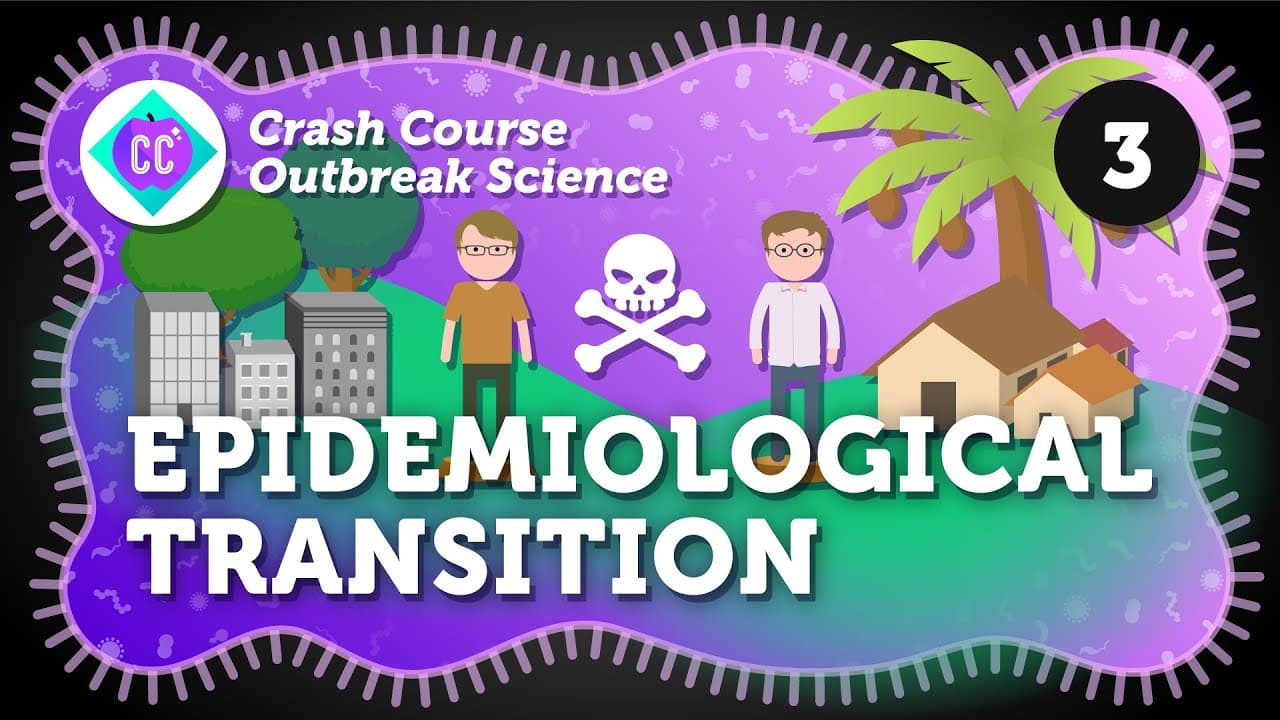
Mortality rates from infectious diseases have significantly decreased due to the theory of epidemiological transition, which describes how societal changes lead to a shift from infectious to non-communicable diseases. Improved sanitation, healthcare access, and vaccinations have played crucial roles in this transition, resulting in increased life expectancy and altered causes of death in many countries.
Transcript
in the year 1900 life in the united states was very different one in every 125 people died of infectious diseases every year it was a tragic fact of life that pneumonia and the flu regularly killed people but by 1980 that number was only about one in every three thousand we take it for granted that over time society gets better at tackling infectio... Read More
Key Insights
- ☠️ Epidemiological transition involves the shift from high mortality rates from infectious diseases to lower mortality rates from non-communicable diseases as societies evolve.
- ☠️ Improvements in sanitation, access to healthcare, and vaccinations have contributed to the decline in mortality rates.
- 🧑🏭 Differences in transition patterns exist between countries, influenced by social, economic, and environmental factors.
- ☠️ Epidemiological transition does not eliminate infectious diseases entirely but changes their impact on mortality rates.
- ✳️ Inequalities within and between countries can affect the risk of outbreaks and the vulnerability of populations.
- 🖐️ Lifestyle factors, such as smoking, exercise, and diet, play a role in the prevalence of non-communicable diseases.
- 🥶 Older populations may be more vulnerable to outbreaks due to the higher prevalence of non-communicable diseases.
Install to Summarize YouTube Videos and Get Transcripts
Explore YouTube Video Summarizer or Get YouTube Transcript Extractor
Questions & Answers
Q: What is the theory of epidemiological transition?
The theory explains how the changing social, economic, and technological factors in a country lead to a shift in the nature of diseases, causing a decline in mortality rates from infectious diseases.
Q: How did improvements in sanitation contribute to the decline in mortality rates?
Better sewer systems and trash collection reduced the spread of infectious pathogens, leading to fewer infections and lower mortality rates.
Q: What role do vaccinations play in reducing mortality rates?
Vaccinations help prevent the spread of infectious diseases and protect individuals from severe illness, leading to a decrease in mortality rates.
Q: Why do fertility rates decrease during demographic transition?
During transitions, changes in economic, cultural, and social environments influence family planning decisions, leading to a decrease in fertility rates.
Q: Why do non-communicable diseases become the leading causes of death after epidemiological transition?
Non-communicable diseases, such as heart disease and cancer, are often linked to aging and lifestyle factors, and as people live longer, the risk of developing these diseases increases.
Summary & Key Takeaways
-
Life expectancy in the United States increased from 48 to 73 years between 1900 and 1980, largely due to the significant decline in mortality rates from infectious diseases.
-
The theory of epidemiological transition suggests that as societies undergo social, economic, and technological changes, the nature of diseases also changes, leading to a shift from communicable to non-communicable diseases as the leading causes of death.
-
Factors such as improved sanitation, access to healthcare, vaccinations, and changes in lifestyles contribute to the decline in mortality rates.
Read in Other Languages (beta)
Share This Summary 📚
Summarize YouTube Videos and Get Video Transcripts with 1-Click
Try YouTube Summary with ChatGPT & Claude or YouTube Transcript Generator
Explore More Summaries from CrashCourse 📚




Summarize YouTube Videos and Get Video Transcripts with 1-Click
Try YouTube Summary with ChatGPT & Claude or YouTube Transcript Generator