How Can Organizations Defend Against AI Threats?
TL;DR
Organizations should treat ransomware as a chronic threat and combine law enforcement disruption with identity controls, human defenses, monitoring, response planning, and recovery preparation. MFA, passkeys, password rotation, and least privilege can reduce attacks that exploit stolen credentials or overprivileged AI agents, while emerging voice-based prompt injection shows that AI security failures may eventually create physical-world risks.
Transcript
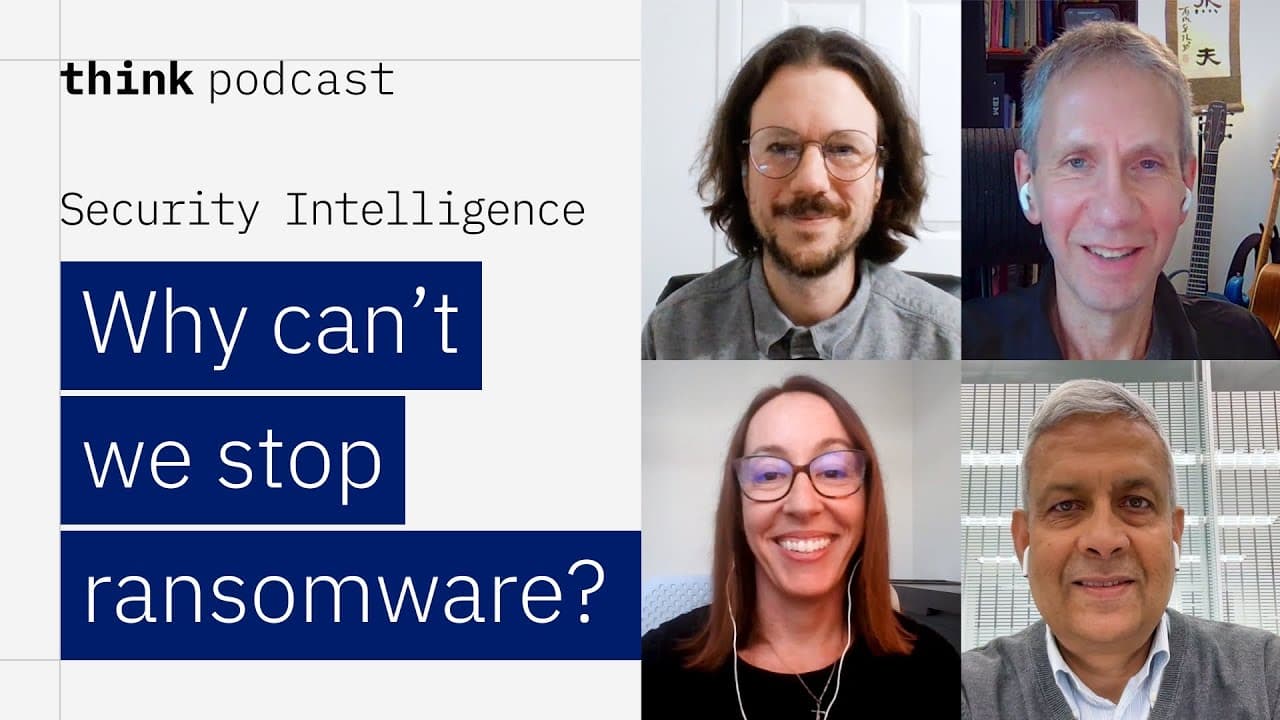
Agents are your ultimate insiders, and if they have not been governed for least privilege, then they might be overprivileged and they can actually wreck damage. All that and more on Security Intelligence. Hello and welcome to Security Intelligence, IBM's weekly cybersecurity podcast, where our expert panelists turn the biggest industry news stories... Read More
Key Insights
- Ransomware is a chronic, persistent threat rather than a problem that defenders can permanently solve. Criminal activity continues because money can be made, so organizations should expect periods of improvement and deterioration while maintaining durable defenses, response capabilities, and recovery plans.
- Law enforcement takedowns are valuable because they disrupt and slow large ransomware groups, even when they do not eliminate overall activity. Fragmentation also slows investigators, who must reconstruct relationships, identify new infrastructure, and determine whether newly named groups are reusing infrastructure from earlier operations.
- The ransomware ecosystem is resilient because it is decentralized, modular, evasive, and supported by transferable tools and knowledge. When one organization is disrupted, smaller groups can operate independently while the underlying economic incentives and technical capabilities remain available to other attackers.
- AI can lower the barrier to ransomware by helping attackers identify targets, create highly personalized messages, run attacks, deliver payment instructions, and collect proceeds. The panel anticipates that agents could eventually automate much of this kill chain, allowing even small criminal groups to operate at greater scale.
- Human defenses remain essential because many ransomware footholds begin through social engineering and phishing. Organizations need education alongside technical controls, ecosystem monitoring, collaboration, law enforcement activity, response preparation, and the ability to rebuild after an attack rather than relying on one defensive measure.
- Stolen credentials can enable extensive cloud compromise when organizations lack basic identity protections. Zestix reportedly accessed corporate clouds by finding credentials in infostealer logs, testing whether they still worked, taking available data, and selling it, without necessarily deploying the original infostealer.
- Identity security is critical because compromising a valid identity can give an attacker access that appears legitimate. The discussed safeguards include MFA, passkeys, and password rotation, all of which address the risk that exposed passwords remain sufficient for entering corporate cloud environments.
- AI agents and robots can extend cybersecurity risk beyond conventional accounts and computers. Overprivileged agents may behave like insiders, while voice-command attacks against AI-powered humanoid robots demonstrate how prompt injection could become a physical-world concern when AI, robotics, and operational technology converge.
Install to Summarize YouTube Videos and Get Transcripts
Explore YouTube Video Summarizer or Get YouTube Transcript Extractor
Questions & Answers
Q: Why does ransomware persist after law enforcement takedowns?
Ransomware persists because takedowns usually disrupt particular organizations without removing the broader ecosystem, its economic incentives, or its transferable knowledge. Large groups can fragment into smaller groups, adopt new names, establish new infrastructure, or reuse old infrastructure. The panel compares this resilience to a Hydra: removing one visible part does not eliminate the decentralized and modular system supporting continued attacks.
Q: How should organizations prepare for a ransomware attack?
Organizations should use multiple strategies because ransomware is a chronic threat rather than a single problem with a permanent solution. The panel recommends human defenses, collaboration, ecosystem monitoring, identity protection, and continued law enforcement disruption. Organizations should also know how they will respond, determine whether they can remain resilient during an incident, and prepare to rebuild after an attack.
Q: How could AI agents change ransomware operations?
AI agents could reduce the work and expertise required to conduct ransomware campaigns. An agent could identify targets, generate highly personalized emails, execute parts of the attack, send payment instructions, and handle collection. Combined with ransomware as a service, this automation could lower barriers to entry and help attackers operate with greater speed and scale across much of the kill chain.
Q: How did Zestix reportedly breach corporate cloud environments?
Zestix reportedly searched dark-web infostealer logs for corporate cloud credentials, checked whether those credentials still worked on the relevant services, entered accessible environments, took data, and sold it. The actor did not necessarily need to deploy the infostealers personally. The case shows how exposed passwords can remain dangerous when organizations do not add stronger identity controls or rotate compromised credentials.
Q: Which identity controls can reduce stolen-password attacks?
The discussion identifies MFA, passkeys, and password rotation as basic protections against attacks that depend on stolen credentials. These measures can prevent an exposed password from remaining sufficient for cloud access or can invalidate it before an attacker uses it. Their importance is highlighted by the reported compromise of corporate clouds at 50 global enterprises using credentials found in infostealer logs.
Q: Why are AI agents considered potential insider threats?
AI agents can function like insiders because they may receive legitimate access to organizational systems and data. If their permissions are not governed according to least privilege, they can become overprivileged and cause damage using access the organization itself granted. The risk combines trusted identity, broad permissions, and automated action, making agent governance an important part of identity and data security.
Q: How can voice commands create security risks for humanoid robots?
Researchers demonstrated that AI-powered humanoid robots could be hijacked using voice commands alone. The example turns prompt injection into a possible physical-world security issue because manipulated AI behavior may affect a robot rather than only producing unsafe text or software output. The scenario remains niche in the discussion, but it previews risks arising when AI and robotics are connected.
Q: What happens when AI, robotics, and operational technology converge?
The convergence can move AI security failures from digital environments into systems that act in the physical world. The demonstrated voice-command hijacking of AI-powered robots suggests that prompt injection may influence machine behavior, while overprivileged agents show how automated systems can misuse legitimate access. The discussion presents this as an emerging scenario that organizations should evaluate before such deployments become more common.
Summary & Key Takeaways
-
Ransomware remained persistent despite major law enforcement successes against criminal groups. Disruptions still matter because they slow attackers, but fragmented groups can reorganize, reuse infrastructure, transfer knowledge, and continue exploiting intact economic incentives. The panel therefore characterizes ransomware as a resilient, decentralized problem requiring several complementary defensive and investigative strategies.
-
The Zestix case demonstrates the damage one person can cause with stolen corporate credentials. The actor reportedly searched infostealer logs on the dark web, tested exposed credentials against relevant corporate cloud services, stole accessible data, and sold it. Basic identity protections could make this simple attack path significantly harder to exploit.
-
AI agents introduce another insider-risk problem because they may hold broad privileges and operate at high speed and scale. Without least-privilege governance, an agent could cause substantial damage. Researchers also demonstrated that AI-powered humanoid robots could be hijacked through voice commands, suggesting prompt injection may eventually affect physical systems and operational technology.
Read in Other Languages (beta)
Share This Summary 📚
Summarize YouTube Videos and Get Video Transcripts with 1-Click
Try YouTube Summary with ChatGPT & Claude or YouTube Transcript Generator
Explore More Summaries from IBM Technology 📚


Summarize YouTube Videos and Get Video Transcripts with 1-Click
Try YouTube Summary with ChatGPT & Claude or YouTube Transcript Generator