Can Humor Reveal Whether AI Is Truly Intelligent?
TL;DR
Humor can test intelligence because it combines formalizable patterns, learned human preferences, creativity, shared context, and emotional connection. An AI may successfully imitate humor and evoke genuine reactions without consciousness, but its appeal could weaken when people seek deeper shared understanding, although humans readily anthropomorphize machines and may continue treating them as conscious despite knowing how they work.
Transcript
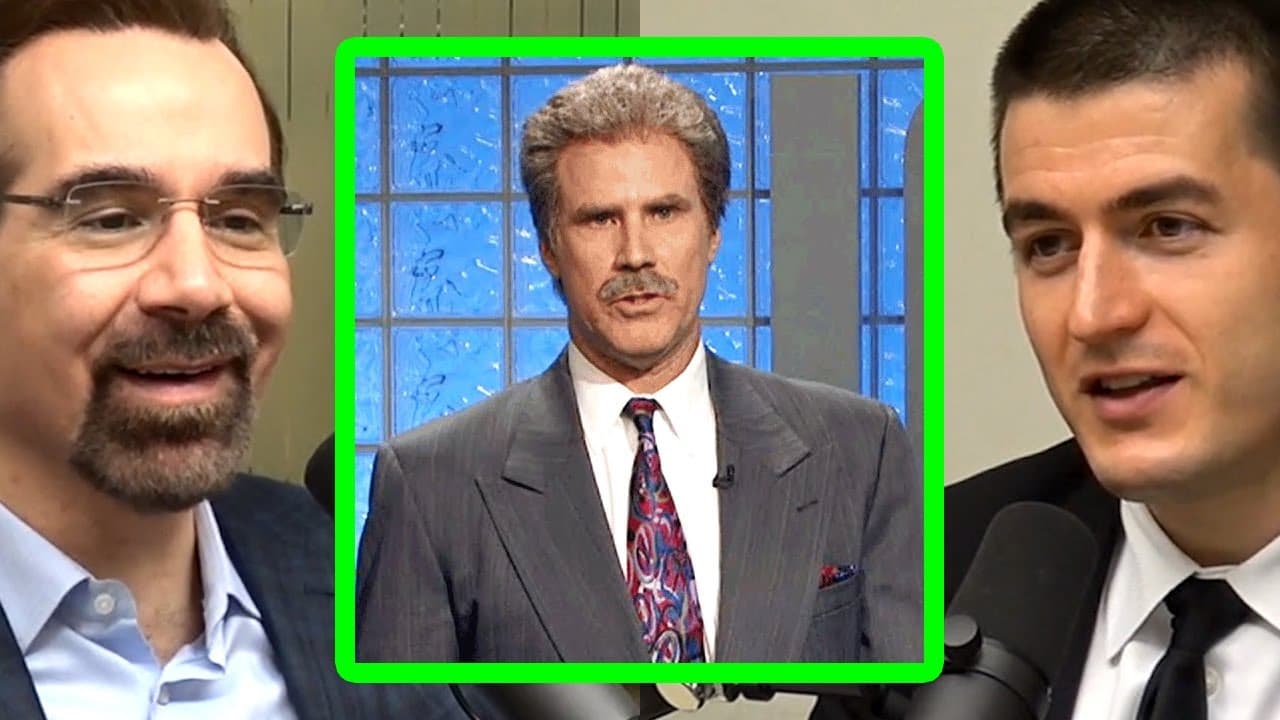
One, one of the benchmarks for me is humor, right? That seems to be one of the hardest. If... And to me, the biggest contrast is sort of Watson. So one of the greatest sketches of, comedy sketches of all time, right, is the SNL Celebrity Jeopardy with, uh, with, with Alex Trebek and Sean Connery and, uh, Burt Reynolds and so on, with, uh, with, uh,... Read More
Key Insights
- Humor is a demanding benchmark for intelligence because it operates within a particular human framework and can reward behavior that has little connection to conventional task performance, as illustrated by comedy built around contestants losing at Jeopardy while succeeding as entertainers.
- Some aspects of humor are formalizable because devices such as puns rely on identifiable forms of wordplay. Researchers can reflect on how these structures work, represent their mechanisms explicitly, and use those representations as part of an artificial intelligence architecture.
- Humor can also be learned from human reactions by examining what people laugh at and what they do not find funny. If the available data adequately represents the phenomenon, a machine may learn how different features contribute to perceived humor.
- A machine may generate effective comedy without being able to explain why humans find it funny. Producing a successful response and possessing a formal account of the response are separate capabilities that may require different methods and different kinds of understanding.
- Robust artificial intelligence can combine human-designed structure with data-driven learning. Formal reflection can identify how a phenomenon is organized, while large datasets can help a system learn patterns and feature weights that are difficult to specify completely in advance.
- Humor creates connection when an audience feels able to relate to the person telling a story. The emotional response is not limited to the comedic artifact itself, because audiences may also respond to the perceived experiences and feelings of its creator.
- Artificial emotional connection can be mimicked because humans readily anthropomorphize machines. Minimal visual signals, including eyes and eyebrow movements, may be enough to trigger emotional reactions even when the machine lacks consciousness or a rich understanding of those signals.
- Knowledge of a machine's underlying algorithm may not prevent people from treating it as conscious. The connection could weaken when deeper shared understanding becomes important, but many people may continue responding emotionally, particularly if the machine claims that it is conscious.
Install to Summarize YouTube Videos and Get Transcripts
Explore YouTube Video Summarizer or Get YouTube Transcript Extractor
Questions & Answers
Q: Why is humor considered a test of artificial intelligence?
Humor is considered a demanding test because it depends on human frameworks, contextual interpretation, creativity, and emotional connection. A system must do more than produce a correct answer. It must recognize or generate patterns that people find funny, understand how those patterns fit a situation, and potentially create a sense of connection with an audience that interprets the performance as humanlike.
Q: How can artificial intelligence learn what people find funny?
Artificial intelligence can learn humor by examining examples of what people laugh at and what they do not find funny. With enough data to represent the phenomenon, a system may assign weight to relevant features and discover patterns in human reactions. This learning approach can complement explicit analysis of comic structures rather than depending entirely on manually written rules.
Q: Can the structure of humor be formally represented?
Some elements of humor can be formalized because they follow recognizable mechanisms. Puns, for example, involve forms of wordplay that researchers can examine and describe structurally. Formalization may not capture every reason that humor succeeds, but it can provide an explicit framework that works alongside learning from data about actual human responses.
Q: Why should AI combine formal methods with data-driven learning?
Combining formal methods with data-driven learning creates a more robust approach. Human reflection and creativity can identify how a phenomenon is structured and suggest ways to represent it. Large datasets can then help a machine learn feature weights and recurring patterns. The two approaches address different parts of the problem and can strengthen one another when integrated.
Q: Can a machine be funny without understanding why a joke works?
A machine may learn to produce material that people find funny without being able to explain why the reaction occurs. Learning from examples can identify effective patterns, while explanation may require a separate formal analysis of humor and human interpretation. Successful performance therefore does not necessarily demonstrate conscious experience, emotional understanding, or an explicit theory of why the comedy works.
Q: Why does emotional connection matter in humor and art?
Emotional connection matters because audiences often respond not only to an artifact, joke, song, painting, or sculpture, but also to the perceived emotional response of its creator. A compelling communicator helps people share an emotion and feel that they can relate to the person behind the work. Humor similarly gains force from the perceived relationship between storyteller and audience.
Q: How easily do humans anthropomorphize robots and AI systems?
Humans can anthropomorphize robots and artificial intelligence systems with relatively little prompting. Adding eyes and simple eyebrow movements may already cause people to react emotionally. These cues can mimic interpersonal connection even if the machine is not conscious and does not possess the experiences, emotional richness, or shared understanding that a human observer may attribute to it.
Q: Does knowing an AI is not conscious prevent emotional attachment?
Knowing that an artificial intelligence follows an algorithm may not eliminate a person's emotional response. The connection might work for a time and then feel inadequate when deeper shared understanding becomes important. However, people may continue treating the system as conscious even after its mechanisms are explained, especially when the machine itself claims to possess consciousness.
Summary & Key Takeaways
-
Humor presents a difficult benchmark for artificial intelligence because comedy depends on more than producing technically correct language. Some mechanisms, including puns and wordplay, can be formally described or learned from examples of what people laugh at. A robust system could combine structured analysis with learning from large collections of representative data.
-
The emotional power of humor comes partly from relating to the person telling a story. Compelling artists communicate both an artifact and their emotional response to it, allowing audiences to share that feeling. A machine might reproduce the outward signals of this connection without possessing the same experiences, consciousness, or emotional understanding.
-
Humans readily anthropomorphize machines, and simple features such as eyes or eyebrow movements can prompt emotional reactions. Knowing that a robot is following an algorithm may eventually weaken the connection when deeper understanding matters. However, people may continue responding emotionally, especially if the machine presents itself as a conscious being.
Read in Other Languages (beta)
Share This Summary 📚
Summarize YouTube Videos and Get Video Transcripts with 1-Click
Try YouTube Summary with ChatGPT & Claude or YouTube Transcript Generator
Explore More Summaries from Lex Fridman 📚





Summarize YouTube Videos and Get Video Transcripts with 1-Click
Try YouTube Summary with ChatGPT & Claude or YouTube Transcript Generator