Why Did Iconic Hi-Fi Speaker Brands Decline?
TL;DR
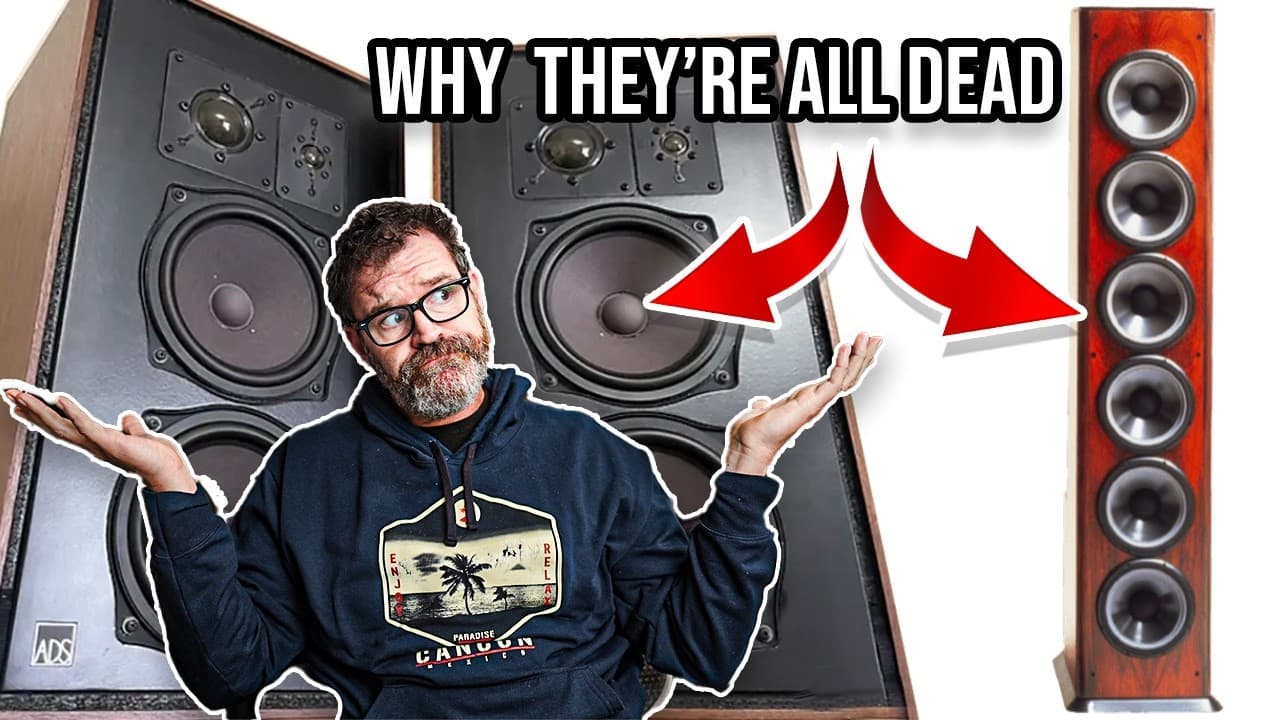
Iconic speaker brands declined when financial trouble, founder departures, mergers, and acquisitions redirected them away from innovative home audio. ADS, Infinity, and Advent survived in altered forms or under new owners, but their emphasis shifted toward car audio, mass-market equipment, or budget products, weakening the identities that had earned them loyal audiophile followings.
Transcript
companies like Advent Infiniti ads Boston Acoustics were iconic in the 80s the 90s even the early 2000s what happened to them where are they at well it's not good it's a sad story and we're going to talk about it today these companies though were founded by MIT graduates by German rocket scientists and they're all fundamentally gone now we're going... Read More
Key Insights
- ADS is an audio company rooted in German engineering and American manufacturing. Founder Godard Günter left NASA in 1974, moved to Cambridge, Massachusetts, and assembled Braun components in American-made cabinets after securing United States distribution rights for Braun hi-fi equipment.
- ADS speakers are remembered for musical sound, minimalist aesthetics, and models such as the L810, L1290, and L1590. German industrial designers contributed to the brand’s functional appearance, while its strongest reputation developed from the 1970s through the 1990s.
- ADS helped establish high-quality car audio by introducing a DC-to-DC switching power source and launching the ADS 2001 amplifier system in 1972. Car audio later became increasingly important because it offered access to a larger consumer market than specialized home audio.
- Infinity is a speaker company founded in 1968 by Arnie Nudell, John Ulrick, and Cary Christie. Its Servo-Statik 1 combined a servo-controlled woofer with electrostatic panels, establishing an early reputation for advanced engineering and ambitious high-end loudspeaker design.
- Infinity’s decline in audiophile prestige followed its acquisition by Harman International and its movement toward home theater and midrange consumer products during the 1990s. The departure of Arnie Nudell also removed a key contributor to the engineering identity that had distinguished the company.
- Advent is a company Henry Kloss founded in 1967 partly to finance affordable color projection television development. Its original loudspeaker used a two-way acoustic-suspension design and offered high performance at a lower cost than competing Acoustic Research products.
- Advent’s financial decline resulted from high labor costs, an unsuccessful factory relocation, and the loss of Henry Kloss’s leadership. The Cambridge factory closed in 1979, production moved to New Hampshire, and the company declared bankruptcy in 1981.
- Brand survival is not the same as preserving a company’s original identity. ADS, Infinity, and Advent continued through ownership changes or different product categories, but shifts toward car audio, mass-market equipment, and budget products weakened their association with innovative home hi-fi.
Install to Summarize YouTube Videos and Get Transcripts
Explore YouTube Video Summarizer or Get YouTube Transcript Extractor
Questions & Answers
Q: Why did iconic hi-fi speaker brands decline?
Iconic hi-fi brands declined through a combination of financial pressure, founder departures, acquisitions, and changes in product strategy. ADS shifted toward car audio after mergers and a sale, Infinity moved from high-end speakers toward home theater and midrange products, and Advent struggled with labor costs before bankruptcy. Their names sometimes survived, but their original engineering focus and audiophile identity did not remain intact.
Q: What happened to ADS speakers and the ADS brand?
ADS did not simply disappear through a single closure. It merged with Museatex in 1993 to form ADS Technologies and was later sold to Directed Electronics in the early 2000s. Under changing ownership, its focus moved increasingly toward car audio and electronics. The independent company known for home loudspeakers effectively ceased to exist in its original form around the early 2000s.
Q: Who founded ADS, and how did the company begin?
ADS was founded by German physicist and accomplished pianist Godard Günter, who came to the United States in 1966 to work for NASA. Dissatisfied with available high-quality audio equipment, he began importing Braun hi-fi products and secured United States distribution rights. In 1974, he left NASA, moved to Cambridge, Massachusetts, and sold Braun components in American-made cabinets under the ADS name.
Q: Why are vintage ADS speakers still sought after?
Vintage ADS speakers remain desirable because the company developed a reputation for sound quality, musicality, industrial design, and careful engineering. Models identified in the account include the L810, L1290, and L1590. The period from the 1970s through the 1990s is presented as the brand’s golden era, and surviving examples continue to attract listeners interested in their performance and minimalist appearance.
Q: How did Infinity lose its high-end audio reputation?
Infinity lost much of its high-end reputation after Harman International acquired it and redirected its focus during the 1990s. The company increasingly served the mass-market home-theater and midrange consumer segments instead of emphasizing groundbreaking audiophile products. Arnie Nudell’s departure also weakened the distinctive engineering culture behind its earlier success, while the brand’s products became more commoditized and less prestigious among audiophiles.
Q: What made early Infinity speakers innovative?
Early Infinity speakers were distinguished by advanced designs and a willingness to pursue costly, large-scale audio systems. The Servo-Statik 1 used a servo-controlled woofer with electrostatic panels for the middle and high frequencies. Later, the Reference Standard IRS series became known as some of the largest and most expensive speakers of its period, reinforcing Infinity’s reputation for ambitious engineering.
Q: Why did Advent go bankrupt?
Advent encountered serious financial difficulties by the late 1970s. High labor costs led the company to close its Cambridge, Massachusetts factory in 1979 and transfer production to New Hampshire, but the relocation did not stabilize its finances. Henry Kloss had already departed in 1977 to focus on Kloss Video Corporation, and without his leadership Advent struggled to innovate and maintain its market position before declaring bankruptcy in 1981.
Q: What happened to Advent after its bankruptcy?
After bankruptcy, Jensen Electronics acquired the Advent brand. Jensen later experienced its own financial problems, and Audiovox Corporation purchased Jensen and Advent in 2004. Under Audiovox, Advent moved away from high-quality audio toward more budget-oriented products. That change diluted the brand’s association with hi-fi performance, leaving original Advent speakers more valued by collectors and vintage enthusiasts than the later brand.
Summary & Key Takeaways
-
ADS grew from Godard Günter’s work importing Braun hi-fi equipment into an admired home and car audio company. Its speakers became known for musical sound, functional design, and engineering quality. Mergers and an eventual sale to Directed Electronics shifted attention toward car audio, effectively ending the independent home-audio company by the early 2000s.
-
Infinity began in a garage and built its reputation through ambitious technology, including the Servo-Statik 1 and Reference Standard IRS series. Following its acquisition by Harman International and the departure of Arnie Nudell, the company moved toward home theater, midrange consumer equipment, and car audio, losing much of its earlier audiophile prestige.
-
Advent used affordable speakers to support Henry Kloss’s color projection television ambitions. Products such as the original Advent loudspeaker delivered strong performance below competitors’ prices, but high labor costs, a factory move, Kloss’s departure, bankruptcy, and later acquisitions eventually transformed Advent into a budget-oriented brand valued mainly for its history.
Read in Other Languages (beta)
Share This Summary 📚
Summarize YouTube Videos and Get Video Transcripts with 1-Click
Try YouTube Summary with ChatGPT & Claude or YouTube Transcript Generator
Explore More Summaries from cheapaudioman 📚
Summarize YouTube Videos and Get Video Transcripts with 1-Click
Try YouTube Summary with ChatGPT & Claude or YouTube Transcript Generator