How Do Over-the-Counter Pain Relievers Work?
TL;DR
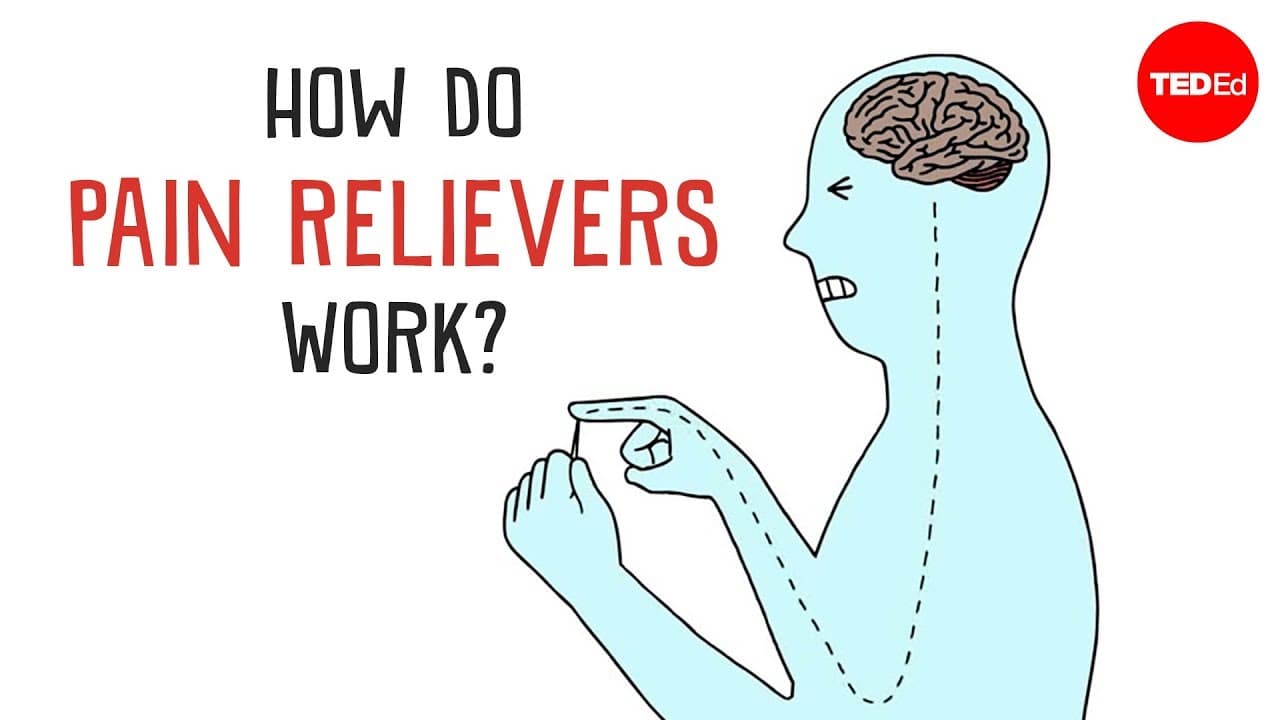
Over-the-counter pain relievers like aspirin and ibuprofen work by blocking the production of prostaglandins, chemicals that can lower your pain threshold. They do this by interfering with the enzymes COX-1 and COX-2, which convert arachidonic acid into these pain-inducing chemicals. Once in the bloodstream, these medications target painful areas, even if they can't specifically identify where the pain is.
Transcript
Translator: Ido Dekkers Reviewer: Ariana Bleau Lugo Say you're at the beach, and you get sand in your eyes. How do you know the sand is there? You obviously can't see it, but if you are a normal, healthy human, you can feel it, that sensation of extreme discomfort, also known as pain. Now, pain makes you do something, in this case, rinse your eyes ... Read More
Key Insights
- 👨🎨 Pain is a crucial early warning system that protects us from harm.
- 🧠 Nociceptors are specialized nerve cells that detect potential or ongoing damage and send signals to the brain.
- 👨🎨 Over-the-counter painkillers like aspirin and ibuprofen block the production of chemicals that lower the pain threshold.
- ❓ Painkillers, once in the bloodstream, affect painful areas and normal areas equally.
- 👨🎨 Pain is a complex phenomenon influenced by factors like attention, mood, and the brain's control over pain signals.
- 😟 Neuropathic pain can occur without external stimuli, caused by damage to the nervous system.
- 🥺 Understanding pain better can lead to improved management strategies in the future.
Install to Summarize YouTube Videos and Get Transcripts
Explore YouTube Video Summarizer or Get YouTube Transcript Extractor
Questions & Answers
Q: Why is feeling pain important?
Feeling pain is crucial because it serves as a warning system to protect us from potential harm. Without pain, we may not be aware of injuries or dangerous situations.
Q: How do nociceptors work?
Nociceptors are specialized nerve cells that detect potential damage. They send electrical signals to the brain when they are activated by stimuli that could cause harm or are causing damage.
Q: How do painkillers like aspirin and ibuprofen work?
Aspirin and ibuprofen block the production of prostaglandins, which are chemicals that lower the pain threshold. Aspirin permanently deactivates enzymes responsible for prostaglandin production, while ibuprofen temporarily inhibits their function.
Q: How do painkillers know where the pain is?
Painkillers, once in the bloodstream, are distributed throughout the body and reach painful areas just like normal ones. They do not specifically target the pain; they affect pain signals wherever they are present.
Summary & Key Takeaways
-
Pain is a vital warning system that alerts us to potential harm and helps us take necessary action.
-
Nociceptors, specialized nerve cells, detect potential or ongoing damage and send signals to the brain.
-
Over-the-counter painkillers like aspirin and ibuprofen block the production of chemicals that lower the pain threshold.
Read in Other Languages (beta)
Share This Summary 📚
Summarize YouTube Videos and Get Video Transcripts with 1-Click
Try YouTube Summary with ChatGPT & Claude or YouTube Transcript Generator
Explore More Summaries from TED-Ed 📚






Summarize YouTube Videos and Get Video Transcripts with 1-Click
Try YouTube Summary with ChatGPT & Claude or YouTube Transcript Generator