How to Build AppSec on a Limited Budget
TL;DR
Build a limited-budget application security program around free OWASP resources and a network of security champions who contribute part of their working time. Prioritize reducing vulnerabilities in deployed code, connect activities through a secure development life cycle, select projects according to organizational needs and maturity, and measure results so executives can see whether the program is improving security.
Transcript
Thank you. All right, good morning, everybody, and, uh, welcome to the session here. And, uh, I'm gonna jump right in. Um, as Madra said, I'm Chris Romeo, CEO of Security Journey. And here is kind of our plans for what we wanna talk about today. So real quick, I'm gonna talk about traditional application security programs, a quick, uh, plug for sec... Read More
Key Insights
- The primary goal of an application security program is limiting vulnerabilities in deployed code. Developer education, standardized tooling, and executive reporting support that goal, but they should remain connected to the practical outcome of reducing security weaknesses that reach deployment.
- Traditional application security programs are built from people, processes, and tools. The people include champions, developers, testers, product staff, managers, and executives. The processes include secure development, incident response, and bug bounties, while the tools cover analysis, testing, runtime protection, scanning, and software composition analysis.
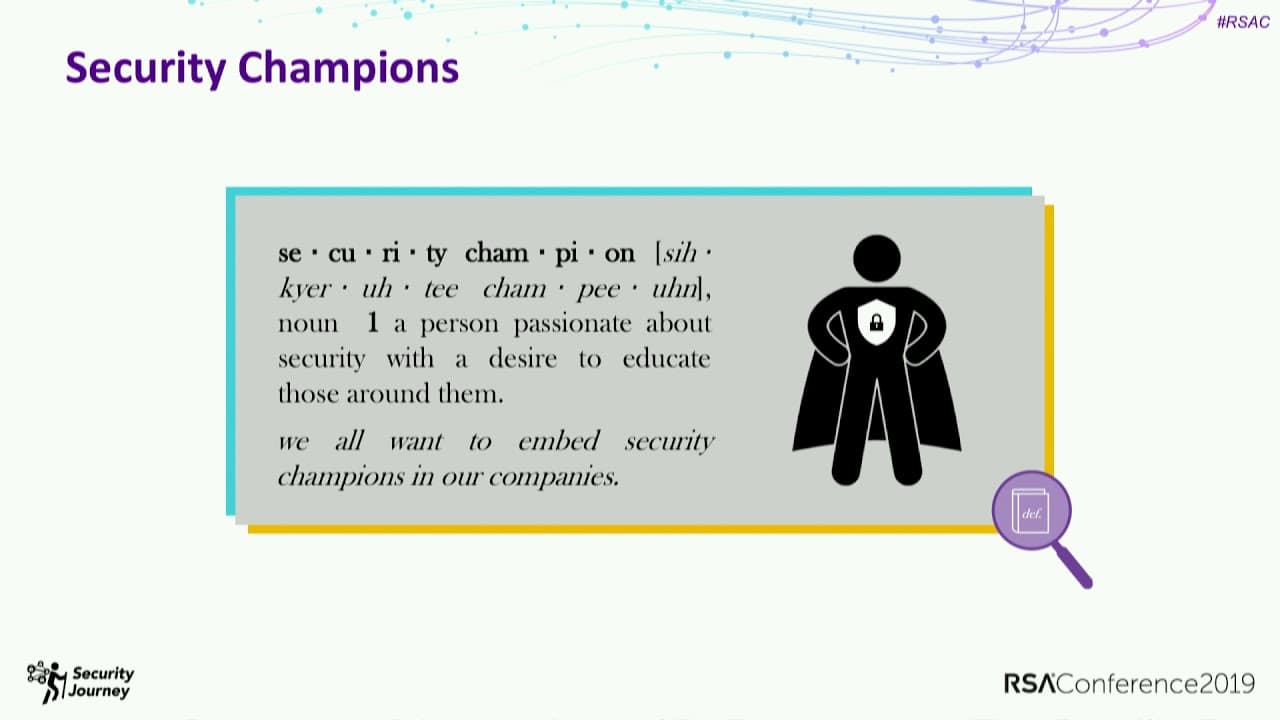
- Security champions are security-passionate employees who can extend an understaffed application security team. They retain their regular jobs while contributing a portion of their time, helping the organization introduce and sustain security activities that a central team may lack enough people to perform alone.
- The secure development life cycle is the main connecting point for activities across an application security program. It provides the process structure through which people, security practices, and technical tools can work together instead of operating as unrelated initiatives.
- OWASP is a central source of free and open-source application security resources. Its ecosystem includes documents, tools, processes, projects, and conferences, allowing organizations without large budgets to assemble meaningful capabilities and giving well-funded programs alternatives to commercial technologies.
- OWASP project maturity is an important factor when selecting dependencies for a security program. Flagship projects have generally existed for years, produced multiple releases, and attracted larger teams, which provides greater confidence that they will remain available than less mature projects.
- Open-source project continuity is never guaranteed. Even a useful OWASP project may stop receiving releases, so organizations should consider the operational risk of adoption before investing heavily in training, processes, or integrations that depend on it.
- Effective project selection starts with organizational application security needs. The presented framework groups OWASP resources into areas such as awareness, knowledge and education, plus process and measurement, then evaluates each candidate by its purpose, intended use, project risk, and required human resources.
Install to Summarize YouTube Videos and Get Transcripts
Explore YouTube Video Summarizer or Get YouTube Transcript Extractor
Questions & Answers
Q: How can a company build application security on a limited budget?
A company can center its program on free and open-source OWASP resources, then use security champions to expand the capacity of its dedicated security staff. The program should connect people, processes, and tools through a secure development life cycle. Resources should be chosen according to specific organizational problems, project maturity, continuity risk, usage requirements, and the human effort needed to operate them.
Q: What is the primary goal of an application security program?
The primary goal is to limit vulnerabilities in deployed code. Other objectives support that result: teaching developers how to build secure software, using tools to standardize the organization’s approach, and showing executives that program activities produce measurable improvement. Keeping vulnerability reduction as the central objective helps prevent tools, training, or reporting from becoming disconnected ends in themselves.
Q: What components make up a traditional application security program?
A traditional program combines people, processes, and tools. People include security champions, developers, testers, program staff, product staff, managers, and executives. Processes include the secure development life cycle, a Product Security Incident Response Team for product-focused organizations, and bug bounty activities. Tools include static, dynamic, and interactive analysis, runtime protection, vulnerability scanning, and software composition analysis.
Q: Why are security champions important for application security?
Security champions provide additional security capacity inside an organization when the central team does not have enough people. They are employees who care about security, retain their normal jobs, and contribute a portion of their time to security work. Their involvement helps drive program activities across teams and makes the remaining program elements easier to introduce, coordinate, and sustain.
Q: How does OWASP support a low-cost application security program?
OWASP supplies free and open-source resources focused on application and software security. These resources include documents, tools, processes, projects, and conferences that can be combined to address organizational security problems. They are useful to companies without large security budgets, but they can also improve larger programs when an OWASP resource fits a need better than an existing commercial technology.
Q: How should an organization evaluate an OWASP project?
An organization should examine the project’s purpose, intended usage, maturity, continuity risk, and human-resource requirements. The maturity category offers a starting point: flagship projects generally have longer histories, multiple releases, and larger supporting teams, while lab and incubator projects remain more developmental. Selection should ultimately match a defined application security need rather than being based only on popularity or cost.
Q: What risks come with using OWASP open-source projects?
The principal stated risk is that no project is guaranteed to receive another release. A project can be valuable today yet become inactive after an organization has invested time in training people and incorporating it into processes. Evaluating maturity can reduce this uncertainty, but it cannot remove it because OWASP projects are not driven by a commercial organization earning revenue from continued releases.
Q: How can application security teams demonstrate value to executives?
Teams can demonstrate value by showing whether their combined program activities improve the organization’s overall security approach, especially whether they help limit vulnerabilities in deployed code. Executive reporting should connect spending, education, processes, and standardized tooling to observable improvement and return on investment. This keeps measurement tied to the program’s primary outcome instead of merely counting the tools or activities introduced.
Summary & Key Takeaways
-
A traditional application security program combines people, processes, and tools. Its participants include security champions, developers, testers, product staff, managers, and executives. Its processes can include a secure development life cycle, a Product Security Incident Response Team, and bug bounties, while its technical capabilities include several forms of analysis, testing, scanning, and software composition analysis.
-
The primary objective of application security is to limit vulnerabilities in deployed code. Supporting goals include teaching developers to build secure software, using tools to standardize security work, and demonstrating improvement and return on investment to executives. These goals help organizations focus limited resources on outcomes instead of treating individual technologies as the program itself.
-
OWASP provides free, open-source application and software security documents, tools, processes, projects, and conferences that can support organizations with small or large budgets. Project maturity and continuity still require evaluation. Flagship projects generally have longer histories, multiple releases, and larger teams, while lab and incubator projects may carry more uncertainty about future availability.
Read in Other Languages (beta)
Share This Summary 📚
Summarize YouTube Videos and Get Video Transcripts with 1-Click
Try YouTube Summary with ChatGPT & Claude or YouTube Transcript Generator
Explore More Summaries from RSAC Cybersecurity 📚


Summarize YouTube Videos and Get Video Transcripts with 1-Click
Try YouTube Summary with ChatGPT & Claude or YouTube Transcript Generator