What Are Frances Glessner Lee's Dollhouses of Death?
TL;DR
Frances Glessner Lee's dollhouses, known as the Nutshell Studies of Unexplained Death, are intricate dioramas used to train law enforcement in forensic analysis. They highlight the significance of minute details in crime scenes rather than providing solutions, fostering observational skills critical for investigators. Her work laid the groundwork for Harvard's Department of Legal Medicine and continues to influence forensic science today.
Transcript
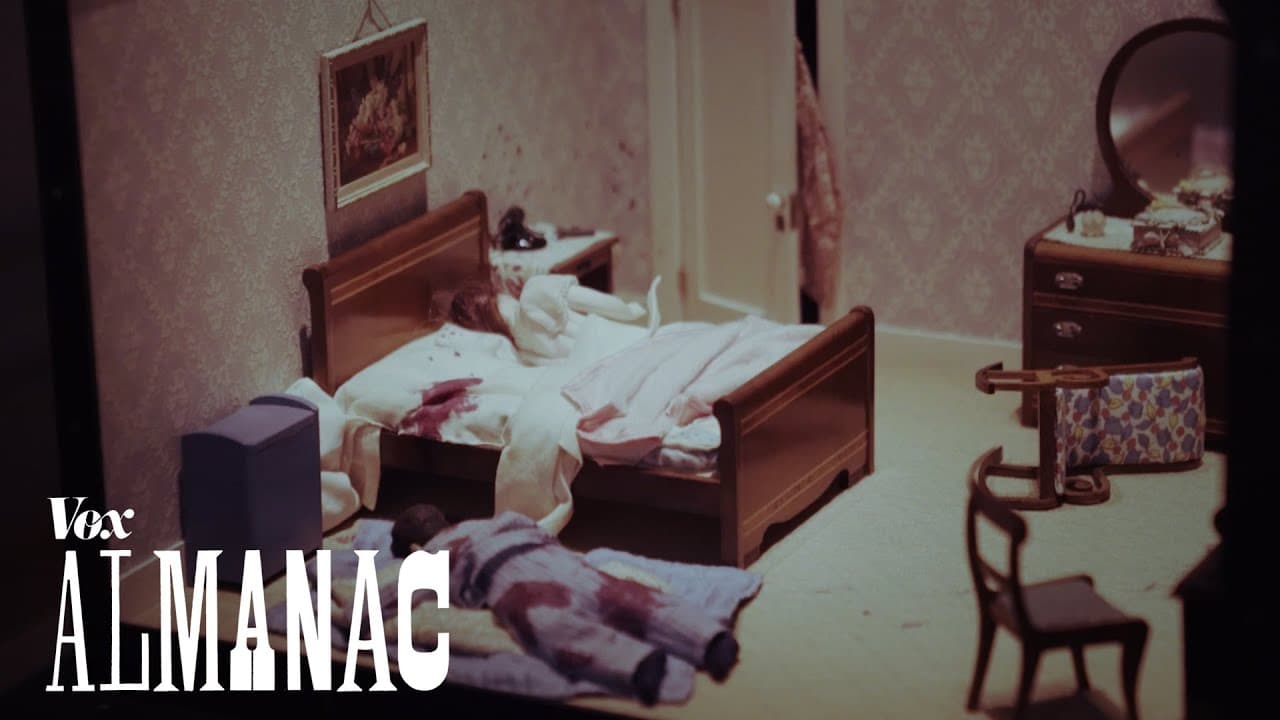
Something terrible happened in these dollhouses. Maybe a suicide. A murder. A stabbing with an adorable knife. These dollhouses are part of Frances Glessner Lee’s Nutshell Studies of Unexplained Death, which she made in the 1940s and early 50s. They’re in the Renwick Gallery of the Smithsonian American Art Museum for a reason. They’re incredibly de... Read More
Key Insights
- Frances Glessner Lee created intricate dollhouse dioramas to train law enforcement in forensic analysis, emphasizing the importance of detail observation.
- The dollhouses, known as the Nutshell Studies of Unexplained Death, are based on real crime composites and are still used for training today.
- Lee's work bridges the gap between art and science, offering a unique approach to understanding crime scenes through detailed miniatures.
- The purpose of the dioramas is not to solve the crimes depicted but to enhance observational skills and attention to detail in investigators.
- Lee was an heiress to a fortune from International Harvester and used her resources to advance the field of forensic science.
- Her work led to the establishment of Harvard’s Department of Legal Medicine, the first of its kind in the United States.
- The dollhouses contain numerous minute details, such as labeled cans and tiny household items, which serve as clues for trainees.
- Lee's legacy lies in her ability to create a training tool that is both a work of art and a practical application for crime scene investigation.
Install to Summarize YouTube Videos and Get Transcripts
Explore YouTube Video Summarizer or Get YouTube Transcript Extractor
Questions & Answers
Q: What are Frances Glessner Lee's dollhouses used for?
Frances Glessner Lee's dollhouses, known as the Nutshell Studies of Unexplained Death, are used to train law enforcement officers in forensic analysis. The purpose of these miniatures is to enhance the observational skills of investigators by focusing on minute details rather than solving the crimes depicted.
Q: How do the dollhouses bridge art and science?
The dollhouses bridge art and science by combining meticulous craftsmanship with forensic training. Each diorama is a detailed work of art that serves a practical purpose in crime scene investigation, encouraging trainees to observe and interpret subtle clues, thus merging aesthetic appreciation with scientific inquiry.
Q: What impact did Lee's work have on forensic science?
Lee's work had a profound impact on forensic science by introducing a novel method of training investigators. Her dioramas emphasized the importance of detail-oriented observation, leading to more systematic and evidence-based approaches in crime scene analysis. Her contributions also led to the establishment of Harvard’s Department of Legal Medicine.
Q: What details can be found in the dollhouses?
The dollhouses are filled with intricate details, such as labeled cans, tiny household items, and realistic crime scene elements like bloodstains and scattered objects. These details serve as crucial clues for trainees, teaching them to notice and interpret seemingly insignificant elements that could be pivotal in real-life investigations.
Q: Why are the solutions to the dioramas kept secret?
The solutions to the dioramas are kept secret to maintain their effectiveness as training tools. By not providing solutions, the focus remains on developing the trainees' ability to observe, interpret, and evaluate evidence without preconceived notions, thus enhancing their analytical skills in real-world forensic investigations.
Q: What was Frances Glessner Lee's background?
Frances Glessner Lee was an heiress to the International Harvester fortune. Despite her wealthy background, she dedicated her life to advancing forensic science by creating the Nutshell Studies of Unexplained Death. Her passion for miniatures and legal medicine led to significant contributions in the field, including the establishment of Harvard’s Department of Legal Medicine.
Q: How are the dollhouses used in training?
The dollhouses are used in training by presenting investigators with complex, detailed crime scenes in miniature form. Trainees are tasked with observing and analyzing these scenes to identify potential clues and evidence, thereby honing their skills in attention to detail and systematic investigation without the pressure of solving the crime.
Q: What is the historical significance of Lee's dioramas?
Historically, Lee's dioramas represent a pioneering approach to forensic training. They introduced a focus on meticulous observation and evidence-based analysis at a time when such methods were not widely adopted. Her work laid the groundwork for modern forensic science practices and highlighted the importance of integrating scientific rigor with investigative training.
Summary & Key Takeaways
-
Frances Glessner Lee's Nutshell Studies of Unexplained Death are detailed dollhouse dioramas used to train law enforcement in forensic analysis. These miniatures are based on real crime composites and serve to enhance observational skills, focusing on detail rather than solving the crimes.
-
The dioramas, exhibited at the Renwick Gallery, are a blend of art and science, reflecting Lee's unique approach to crime scene investigation. Her work established Harvard’s Department of Legal Medicine and continues to impact forensic science training today.
-
Lee, an heiress of International Harvester, utilized her fortune to advance forensic science. Her dollhouses contain intricate details that serve as clues for investigators, emphasizing the importance of minute observations in solving crimes.
Read in Other Languages (beta)
Share This Summary 📚
Summarize YouTube Videos and Get Video Transcripts with 1-Click
Try YouTube Summary with ChatGPT & Claude or YouTube Transcript Generator
Explore More Summaries from Vox 📚

Summarize YouTube Videos and Get Video Transcripts with 1-Click
Try YouTube Summary with ChatGPT & Claude or YouTube Transcript Generator