How Do the Circulatory and Respiratory Systems Work Together?
TL;DR
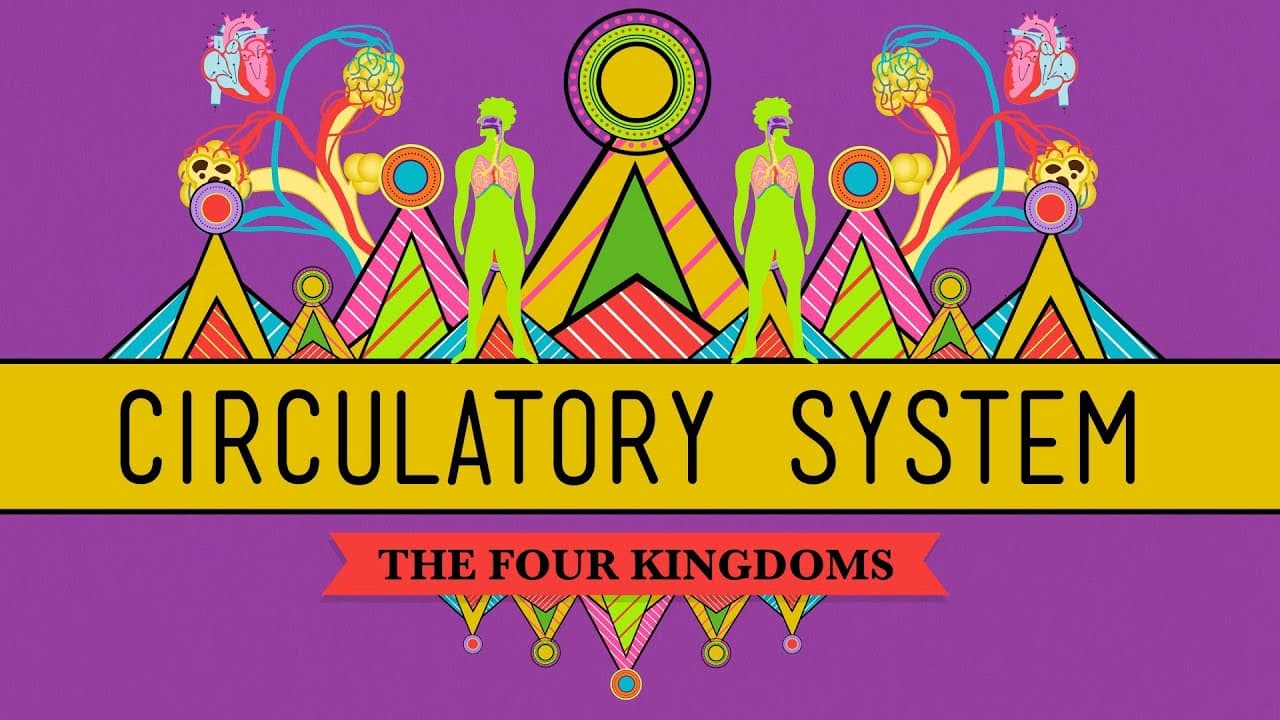
The circulatory and respiratory systems work together to deliver oxygen and remove carbon dioxide from the body. While lungs absorb oxygen via alveoli, the heart pumps oxygenated blood throughout the body and returns deoxygenated blood to the lungs for reoxygenation. This efficient system is crucial for meeting the high metabolic demands of warm-blooded animals.
Transcript
All members of the kingdom Animalia need oxygen to make energy. Oxygen is compulsory. Without oxygen, we die. But as you know, the byproduct of the process that keeps us all alive, cellular respiration, is carbon dioxide, or CO2, and it doesn't do our bodies a bit of good, so not only do we need to take in the oxygen, we also have to get rid of the... Read More
Key Insights
- Animals require oxygen for energy production, and the respiratory and circulatory systems facilitate oxygen intake and CO2 removal.
- Different animals have varied respiratory mechanisms: mammals use lungs, fish use gills, and some amphibians can respire through their skin.
- The lungs have a large surface area due to alveoli, allowing efficient oxygen absorption and CO2 expulsion.
- The diaphragm assists in lung function by creating pressure changes that enable breathing.
- The circulatory system operates like a pump, moving oxygenated blood from the lungs to the body and returning deoxygenated blood back to the lungs.
- A four-chambered heart in mammals supports efficient circulation, vital for maintaining high metabolic rates in warm-blooded animals.
- Endotherms have high metabolic demands and require constant oxygen supply, while ectotherms have lower oxygen needs due to slower metabolisms.
- Heart chamber complexity correlates with animal complexity; fish have two chambers, amphibians/reptiles have three, and mammals/birds have four.
Install to Summarize YouTube Videos and Get Transcripts
Explore YouTube Video Summarizer or Get YouTube Transcript Extractor
Questions & Answers
Q: How do the respiratory and circulatory systems work together?
The respiratory system brings in oxygen through the lungs, where it is absorbed by the blood in the alveoli. The circulatory system then transports this oxygenated blood from the lungs to the rest of the body, delivering oxygen to cells and picking up carbon dioxide, which is then carried back to the lungs for expulsion.
Q: Why can't larger animals rely on simple diffusion for oxygen intake?
Larger animals cannot rely on simple diffusion due to their size and metabolic demands. Simple diffusion is too slow and inefficient for large animals that require significant amounts of oxygen to maintain their high metabolic rates. Therefore, they have evolved complex respiratory systems, like lungs, to actively intake and distribute oxygen efficiently.
Q: What role does the diaphragm play in breathing?
The diaphragm is a muscle located beneath the lungs. During inhalation, it contracts and flattens, increasing the volume of the thoracic cavity and reducing pressure inside the lungs, allowing air to flow in. During exhalation, it relaxes, decreasing lung volume and increasing pressure, pushing air out. This pressure change mechanism facilitates breathing.
Q: How does the heart contribute to the circulatory system?
The heart acts as a pump in the circulatory system, moving blood throughout the body. It has four chambers: two atria and two ventricles. The left side of the heart pumps oxygenated blood from the lungs to the body, while the right side returns deoxygenated blood from the body to the lungs for reoxygenation, maintaining continuous circulation.
Q: What is the significance of a four-chambered heart in mammals?
A four-chambered heart in mammals allows for the separation of oxygenated and deoxygenated blood, enhancing the efficiency of oxygen delivery and carbon dioxide removal. This separation supports high metabolic rates and endothermy, enabling mammals to maintain stable internal temperatures and meet the energy demands required for complex activities and environments.
Q: How do endotherms and ectotherms differ in their oxygen needs?
Endotherms, or warm-blooded animals, maintain constant internal temperatures and have high metabolic rates, requiring continuous oxygen supply for energy production. Ectotherms, or cold-blooded animals, have slower metabolisms and are less dependent on external temperatures, thus needing less oxygen. Their circulatory systems can be less efficient due to lower oxygen demands.
Q: How do lungs maximize oxygen absorption?
Lungs maximize oxygen absorption through their structure, which includes a vast network of alveoli. These tiny sacs increase the surface area available for gas exchange. The alveoli are surrounded by capillaries, allowing efficient transfer of oxygen into the blood and carbon dioxide out of it, making the lungs highly effective at absorbing large amounts of oxygen quickly.
Q: What adaptations allow fish to extract oxygen from water?
Fish extract oxygen from water using gills, which are composed of thin filaments with a large surface area. Water flows over the gill filaments, and dissolved oxygen diffuses into the blood while carbon dioxide diffuses out. This countercurrent exchange system allows fish to efficiently extract oxygen from the water, even when oxygen levels are low.
Summary & Key Takeaways
-
The video explores how the respiratory and circulatory systems work together to supply oxygen and remove carbon dioxide from the body. It discusses the anatomy and function of lungs, the role of the diaphragm, and the heart's role in circulation.
-
Different respiratory adaptations are highlighted, including lungs in mammals, gills in fish, and skin respiration in amphibians. The importance of oxygen for energy production and the efficiency of a four-chambered heart in supporting high metabolism is explained.
-
The differences between endotherms and ectotherms are discussed, emphasizing the varying oxygen needs based on metabolic rates. The video concludes with a tease about the digestive system's role in powering these processes.
-
(Content reviewed on 2026-08-27.)
Read in Other Languages (beta)
Share This Summary 📚
Summarize YouTube Videos and Get Video Transcripts with 1-Click
Try YouTube Summary with ChatGPT & Claude or YouTube Transcript Generator
Explore More Summaries from CrashCourse 📚



Summarize YouTube Videos and Get Video Transcripts with 1-Click
Try YouTube Summary with ChatGPT & Claude or YouTube Transcript Generator