How was Ulleungdo airport carved from a mountain?
TL;DR
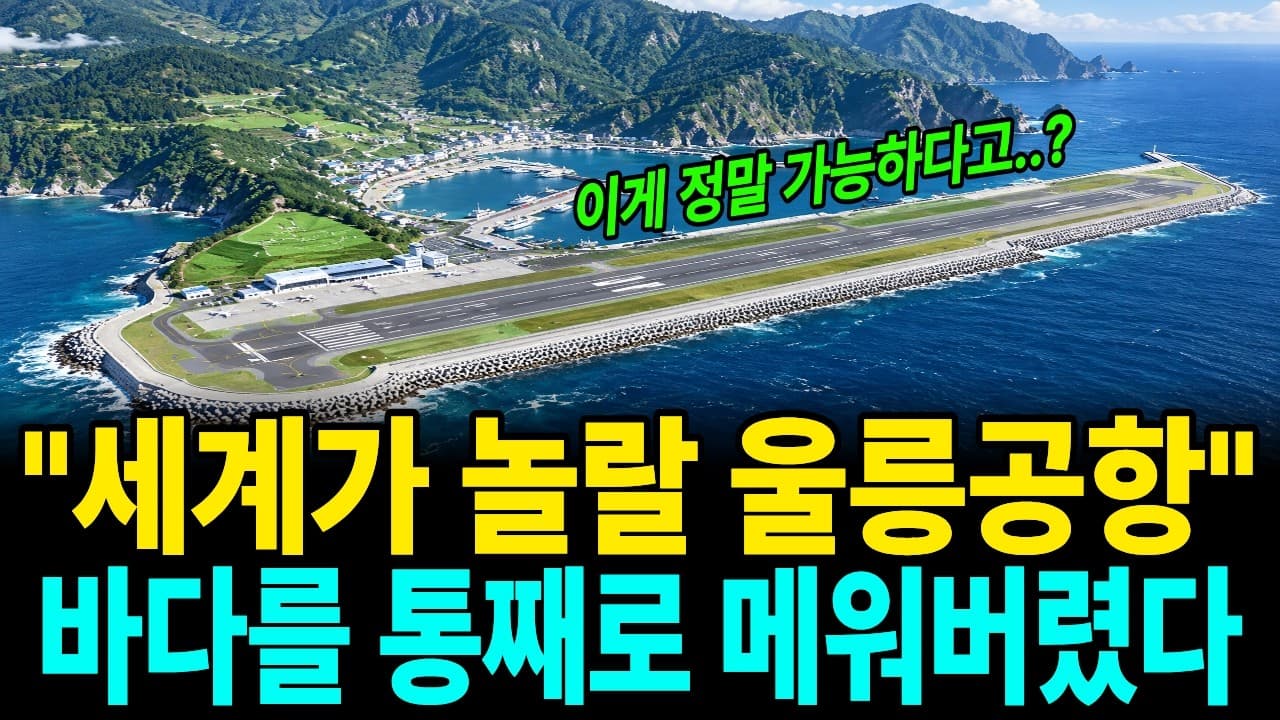
Ulleungdo airport was created by cutting Gadubong peak and using the rock to fill the adjacent sea to create a 1,200 meter runway. The project faced extreme sea conditions and high costs, and it required careful sequencing to avoid washing away dumped material. It aims to provide a reliable air link to the island despite harsh weather and cancellations at sea.
Transcript
It was six hours by boat. If you leave Pohang in the morning, you don't see the island's shadow until the afternoon . Until now, the only way to Ulleungdo was by sea. But now, an air route to the island is being built. Once it opens, it will be just an hour from Seoul. However, it's a volcanic island, so there wasn't a single flat spot for ... Read More
Key Insights
- Ulleungdo airport is an engineered land reclamation project that converts a mountain into usable runway space by moving rock to the sea.
- The site uses on site crushing and sorting to allocate rock sizes for sea floor, reclamation, and runway leveling, minimizing waste.
- The plan requires cutting Gadubong from 198 meters to 23 meters, creating substantial space for a new runway and terminal on former sea.
- Historical weather events and peak wave heights dictated construction sequencing and safety measures to prevent material washout.
- The project uses long distance transport of large caissons and on site installation to anchor and stabilize the runway area.
- The recovery of the excavation rock into the sea reduces the need for external fill and highlights a closed loop approach.
- A runway safety area and EMAS installation are contemplated to meet improved airport standards and safety.
- The overall project timeline has been extended by weather related delays and supply constraints, pushing completion toward late 2027 or 2028.
Install to Summarize YouTube Videos and Get Transcripts
Explore YouTube Video Summarizer or Get YouTube Transcript Extractor
Questions & Answers
Q: How does Ulleungdo airport create land for the runway without existing flat terrain?
The project removes Gadubong peak, excavating 9.12 million cubic meters of rock, and uses the material to fill adjacent sea areas to create a flat runway zone. This mountain cutting and sea reclamation approach makes the island’s coast usable for aviation infrastructure where natural flat land did not exist.
Q: Why was Gadubong mountain chosen for removal?
Gadubong sits at the southern tip of Ulleungdo and juts into the sea, making it the only location on the island where excavated rock can be moved directly into the adjacent sea. Its topography provided the most efficient path to create the necessary flat space and minimize transportation needs.
Q: What measures were used to prevent erosion or washout during construction?
On site crushing facilities sort rock by size and specific plans use different materials for sea floor, reclamation, and runway leveling. The project also faced wintered delays and high waves, with careful sequencing to ensure that dumped material would not be washed away by the East Sea’s waves.
Q: How deep is the water being filled for the runway area?
The sea to be filled averages 23 meters in depth, with maximum depths around 31 meters. Fill volumes total approximately 8.27 million cubic meters, creating the necessary depth and space for the runway and facilities while accommodating natural wave action.
Q: What challenges did weather and typhoons pose to the project?
Typhoon Maysak in 2020 demonstrated the sea’s power with waves up to 19.5 meters and damaged breakwaters when tetrapods were displaced. This underscored the need for robust sea defenses and sequencing that avoids destabilizing the reclamation during extreme sea states.
Q: What is the scale of the concrete caissons used in the project?
The largest caissons are about 28 meters tall and weigh roughly 16,400 tons, making them among the heaviest production units used domestically. They are built in Pohang and towed to Ulleungdo at sea speeds to anchor the reclamation and stabilise the runway area.
Q: What is the target completion and opening timeline?
As of the latest update, the project is at about 80 percent completion as of mid 2026, with an aim to complete by late 2027 and open in the first half of 2028. This timeline reflects ongoing construction, testing, and safety enhancements to meet aviation standards.
Q: What economic impact is expected from the airport on Ulleungdo?
The airport is designed to provide a reliable air link to the island, reducing the dependency on sea routes that have frequent cancellations. It aims to stabilize travel, improve access for residents and visitors, and support local services, while the broader economic impact will depend on ongoing passenger demand and operations planning.
Summary & Key Takeaways
-
The project removes Gadubong peak and repurposes the material to reclaim sea space for a 1,200 meter runway and associated facilities.
-
Construction faced weather, wave, and logistical challenges, leading to a phased approach and on site crushing to separate materials for sea floor, reclamation, and runway leveling.
-
The airport is planned as a sea reclamation and mountain cutting endeavor with an emphasis on safety, long term resilience, and improved accessibility for Ulleungdo.
Read in Other Languages (beta)
Share This Summary 📚
Summarize YouTube Videos and Get Video Transcripts with 1-Click
Try YouTube Summary with ChatGPT & Claude or YouTube Transcript Generator
Explore More Summaries from 얄궂은 경제학 📚






Summarize YouTube Videos and Get Video Transcripts with 1-Click
Try YouTube Summary with ChatGPT & Claude or YouTube Transcript Generator