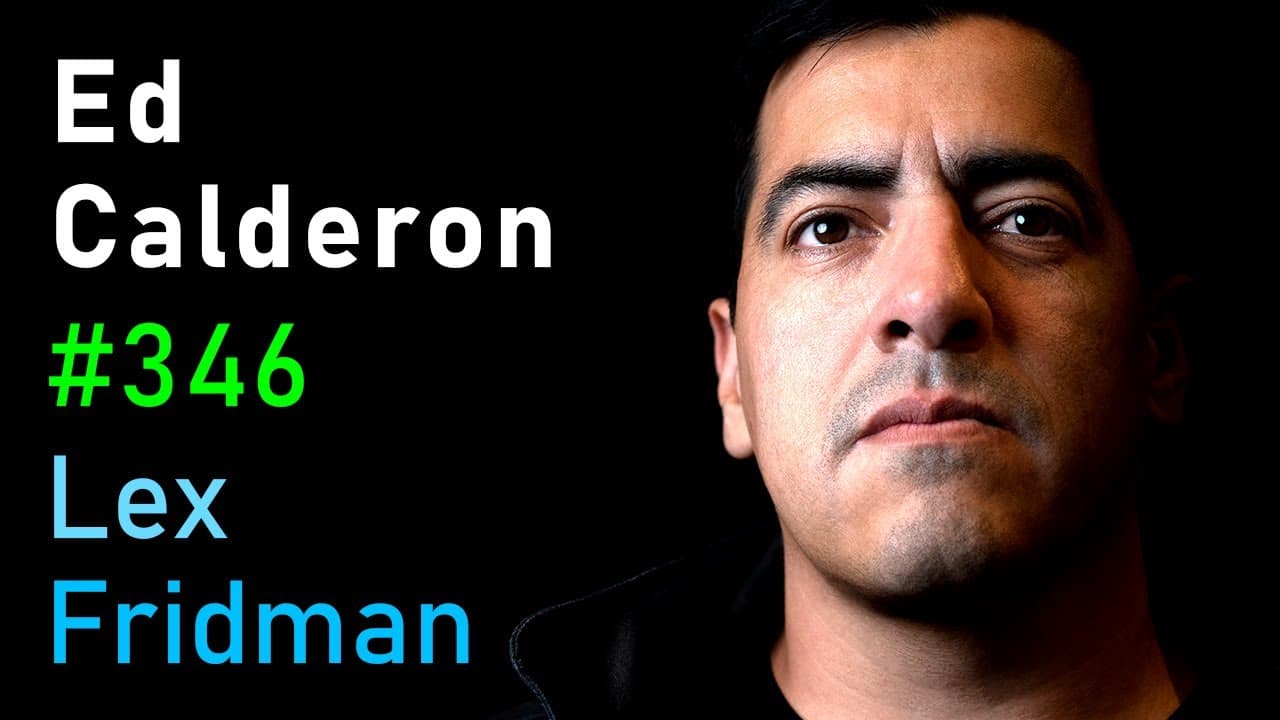
Ed Calderon: Mexican Drug Cartels | Lex Fridman Podcast #346
TL;DR
Anyone can be corrupted, according to a Mexican counter-narcotics specialist who learned that even people who pass FBI background checks and polygraphs can end up on the take. Corruption seeps in through families, financial need, health crises, or threats to one's life, and in Mexico it operates as a systemic, cultural norm that erodes public trust in both government and criminals.
Transcript
- When it's quiet, that's when it hits you. I think that's what a lot of people experience when they come back from a conflict zone. You know... Everything that was life and death, everything that mattered, all the noise, all the chaos, all the people that are around you that would die for you, kill for you, you would kill for them. All these milli... Read More
Key Insights
- Anyone can be corrupted regardless of how incorruptible they appear, because small changes accumulate around a person: wheels get greased, money is placed in front of them, or their life gets threatened, and sometimes the payment for corruption is simply being allowed to continue living.
- Corruption in Mexico is systemic and cultural rather than individual, showing up in everyday acts like greasing a school director's palm to secure a preferred class time, which is why many Mexicans nod in recognition when this is described.
- Trust is never really guaranteed because people and the dynamics of relationships change over time, so reading someone's past and past experiences becomes the main way to judge whether they can be trusted.
- A person's visible failures and how they wear them are telling signs of trustworthiness, and former criminals who realized that life could not be sustained can be more trustworthy than law enforcement officers wearing a convincing mask.
- Some people are born with a predatory instinct and spend their whole lives practicing how to hide it, so understanding someone's background, childhood, parents, and origin reveals something essential about who they are.
- Both nature and nurture shape people: biology can determine whether someone has the machine to empathize deeply or one that gets a dopamine rush from manipulating and controlling other humans, on top of early-life trauma.
- The 'mordida' or bite is the slang term for bribing a Tijuana cop, where a driver folds money into their paperwork during a traffic stop, a practice so widespread that it feeds public distrust of the police.
- Tijuana as an environment produces a specific kind of person whose baseline normal differs greatly from most, exemplified by skateboarders learning to pop padlocks with a hydraulic lift to break into cartel-owned backyard pools.
Install to Summarize YouTube Videos and Get Transcripts
Explore YouTube Video Summarizer or Get YouTube Transcript Extractor
Questions & Answers
Q: What does investigating Mexican drug cartels teach about human nature?
The central lesson is that anybody can be got and anybody can be corrupted. Even people who present as incorruptible, pass FBI background checks, security measures, and polygraph tests, can later turn out to be on the take. Corruption arrives through small changes: wheels get greased, money appears, or a person's life gets threatened, and sometimes the payment for corruption is just being allowed to keep living.
Q: Why is corruption so widespread in Mexico?
Corruption in Mexico is systemic and cultural rather than a matter of individual bad actors. Calderon describes it as a culture of corruption where everyday acts, like greasing the wheels with a school director to get a child into the morning session, are so common that people nod in recognition. Because those in charge and the government operate this way, people trust neither the authorities nor the criminals and cartels, so distrust becomes baked into the culture.
Q: Can you tell if a person can be trusted, and how long does it take?
Calderon believes trust is never really guaranteed, even in personal friendships, because people change and relationship dynamics shift. Rather than a fixed amount of talking time, he studies a person's character, past, and past experiences. He watches for masks or personas people create for themselves, sometimes so convincing the person is unaware they are wearing one, and treats visible failures as telling signs of whether a story or experience can be trusted.
Q: What is the 'mordida' or bite in Tijuana?
The mordida, meaning bite, is the slang term for bribing a police officer in Tijuana. When someone is stopped for a traffic violation, the officer asks for paperwork, and instead of receiving a formal ticket the driver asks whether they can pay the ticket right there, then folds money inside the paperwork and hands it to the cop. It is a systemic practice that many people engage in, which in turn feeds public distrust of the police.
Q: How does someone become corrupted even if they start out incorruptible?
Corruption forms like a crack in a wall of integrity that seeps in over time. According to Calderon, a person who is very strong and hard to get right now can still be reached through their families or through need. Mexico's instability creates financial and health pressures, and threats to a person's life add another lever. So even those who pass every security measure can eventually be compromised through vulnerabilities in their circumstances.
Q: Why can former criminals be more trustworthy than law enforcement?
Calderon says he has met former criminals he would trust with his life, not because they are reformed, but because they figured out that criminal life could not be lived long enough to continue on. Meanwhile, he has met law enforcement people he would not trust with his car keys, because the persona they adopted over the years became such a good mask that they sometimes do not even know they are wearing it. Trustworthiness depends on character, not job title.
Q: What role do nature and nurture play in whether someone becomes predatory?
Calderon argues both nature and nurture matter. Some people are born with a predatory instinct and spend their whole lives practicing how to hide it. Biology also determines whether someone has the machine to empathize deeply with others, or one that gets a dopamine rush from manipulating or controlling humans. Combined with early-life trauma and upbringing, these predispositions can flourish more in the right environment, so understanding someone's background, childhood, and parents reveals something about who they are.
Q: How does growing up in Tijuana shape a person?
Calderon calls himself a survivor and says the Tijuana environment itself produces a specific kind of person whose baseline normal is very different from most. He recalls skateboarding as a kid and breaking into a cartel-owned backyard pool, learning from local burglars how to pop open padlocks with a small vehicle hydraulic lift. Later, people from other parts of Mexico were struck by that skill, illustrating how the city creates trajectories and abilities not available elsewhere.
Summary
In this Lex Friedman podcast, security specialist Ed Calderon discusses his experience in counter narcotics investigating the Mexican drug cartel and its insights into human nature. He talks about the corruption and distrust that permeates Mexican society, as well as the role of violence and the complexities of cartel operations. Calderon also shares personal stories and observations from his time in the field.
Questions & Answers
Q: What does your experience in counter narcotics investigating the Mexican drug cartel teach you about human nature?
Calderon explains that his experience has shown him that anyone can be corruptible, regardless of their initial intentions or perceived integrity. He highlights the training and profiling techniques used in his field, which he learned from older individuals who were already corrupted. Trust becomes extremely difficult, as even those who seem incorruptible can succumb to temptation or threats.
Q: Is there a culture of corruption in Mexico that makes it difficult to trust individuals?
Calderon states that Mexico does indeed have a culture of corruption deeply ingrained in its society. He gives an example of how bribes are commonly used to get children into desired school time slots. The lack of trust between the people and the government creates a systemic and cultural acceptance of corruption. This lack of trust also extends to criminality, making it challenging to identify trustworthy individuals.
Q: Can we determine if someone can be trusted?
Calderon shares that trust is not guaranteed and can change over time due to various factors. He believes that character and past experiences are essential in determining trustworthiness. He emphasizes that actions and failures can reveal a person's integrity. Calderon mentions encountering reformed criminals who have changed their ways and earned his trust, while also encountering law enforcement officials who he wouldn't trust despite their position.
Q: What factors contribute to corruption in Mexico?
According to Calderon, corruption in Mexico can stem from financial needs, health issues, and a culture of instability. He mentions that crack can form in one's integrity, allowing corruption to seep in gradually. Calderon also highlights the lack of trust between the people and the government, which contributes to the acceptance and practice of corruption as a means to get things done.
Q: How do cartels gain power and control over local areas?
Calderon explains that cartels take advantage of Mexico's young population who lack opportunities by providing them with employment and purpose within their organizations. Cartels infiltrate family businesses and leverage them for drug trafficking and other illegal activities. Over time, they become deeply rooted in local economies, constructing infrastructure and presenting themselves as benefactors through various forms of social support.
Q: What role does violence play in cartel operations?
Calderon acknowledges that violence is extreme in cartel operations, with an escalation of revenge killings and disregard for previous rules such as avoiding harm to children and women. He mentions the influence of these operations on extremist acts, pointing out that some ISIS videos were inspired by the graphic executions and torture videos disseminated by Mexican cartel groups on social media. Violence has become an exportable form of terror, added Calderon.
...10 more questions and answers...
Takeaway
Calderon's insights into the Mexican drug cartel and its impact on society highlight the deep-rooted corruption and violence that are part of the system. Trust becomes a rare commodity, and individuals can be easily corrupted by external factors. Understanding the complexities of human nature is crucial in combating corruption and creating a more just society.
Summary & Key Takeaways
-
Ed Calderon, a security specialist in counter-narcotics and organized crime investigation in northern Mexico, explains that his experience taught him anyone can be corrupted. Training came from older, sometimes already-corrupted colleagues, so the operating principle was to trust no one, since even people who pass rigorous vetting can turn.
-
Corruption seeps in through cracks in a person's integrity via family, financial need, health, or life-threatening pressure. Calderon frames Mexican corruption as systemic and cultural, illustrated by bribing a school director or paying the 'mordida' to a traffic cop, which fuels deep public distrust of government and criminals alike.
-
Judging trustworthiness relies on reading someone's past, character, and visible failures, since people wear masks they may not know they wear. Both nature and nurture matter, and environments like Tijuana produce a distinct kind of survivor whose sense of normal is far removed from most people's.
Read in Other Languages (beta)
Share This Summary 📚
Summarize YouTube Videos and Get Video Transcripts with 1-Click
Try YouTube Summary with ChatGPT & Claude or YouTube Transcript Generator
Explore More Summaries from Lex Fridman Podcast 📚



Summarize YouTube Videos and Get Video Transcripts with 1-Click
Try YouTube Summary with ChatGPT & Claude or YouTube Transcript Generator