Is SST a Good Choice for Deploying Next.js Applications?
TL;DR
SST is a viable choice for deploying Next.js applications, offering extensive customization and control over AWS resources, but it requires a deeper understanding of AWS infrastructure. In contrast, Vercel provides seamless integration and immediate support for new Next.js features, making it ideal for ease of use and swift deployments. Choose SST for flexibility or Vercel for simplicity, depending on your needs.
Transcript
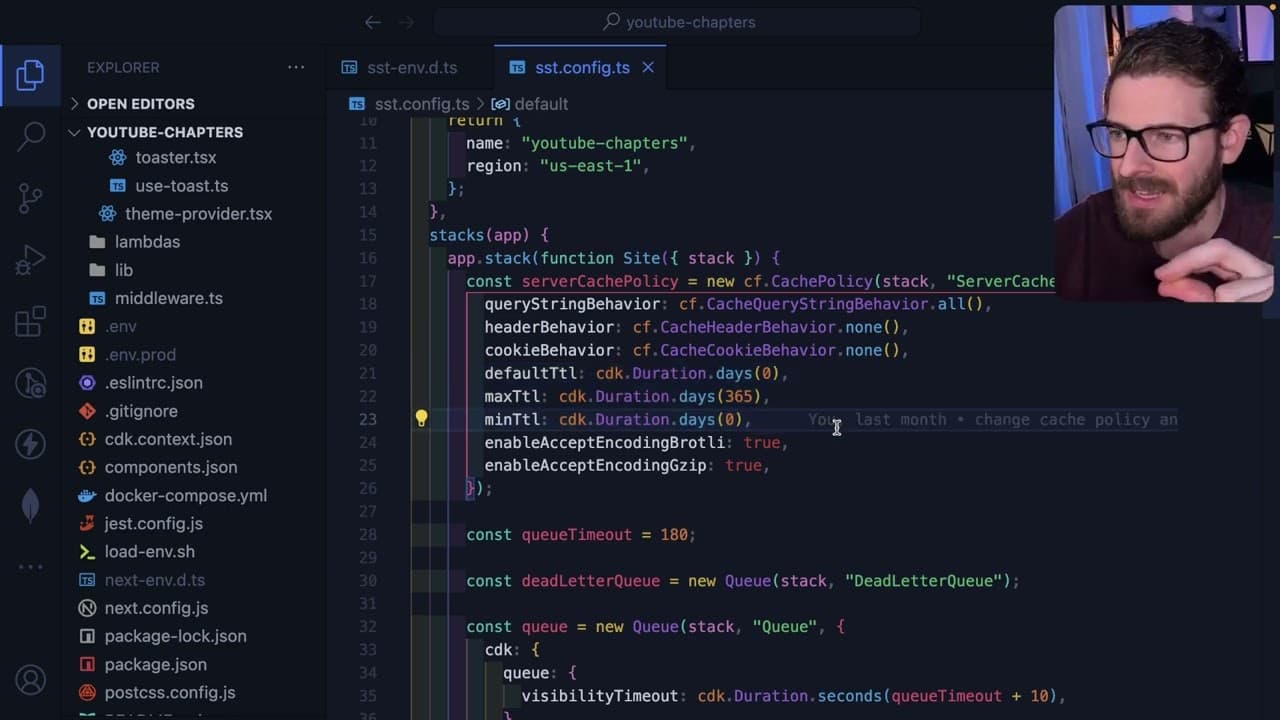
all right so as you all know I like using SST to deploy my nextjs applications I have this icon generator AI deployed with SST I have this YouTube chapters generator application deploy with SST and I deploy this hackathon website using SST so I kind of wanted to talk about the prosen cons of using SST over versel when you are deploying your nextjs ... Read More
Key Insights
- 👶 Vercel provides seamless integrations and immediate support for new Next.js features, prioritizing user experience and deployment speed.
- 👻 SST allows extensive customization and control over AWS resources but requires a significant investment in understanding AWS infrastructure.
- 🈸 Middleware execution differences can significantly impact the performance and functionality of Next.js applications when deployed on SST versus Vercel.
- 😘 Pricing for Vercel, while low upfront, can escalate with traffic; SST provides a potentially more economical solution for low-demand apps but requires management of AWS costs.
- 👤 Users prefer Vercel for its straightforward deployment process, while developers experienced with AWS might prefer the granular control offered by SST.
- 🈸 Understanding caching behaviors is essential, as it influences application performance on both platforms.
- 👤 The user experience with AWS's interface can be challenging compared to Vercel's user-friendly design, which may affect deployment preferences.
Install to Summarize YouTube Videos and Get Transcripts
Explore YouTube Video Summarizer or Get YouTube Transcript Extractor
Questions & Answers
Q: What are the main advantages of using Vercel over SST for Next.js deployments?
Vercel offers first-class support for Next.js features since it's developed by the same company. This means users can easily access the latest updates and optimizations made for Next.js applications. Additionally, Vercel's deployment process is fully automated and streamlined, which is advantageous for developers looking for an easy and quick setup without manual configurations or pipeline maintenance.
Q: How does middleware functionality differ between SST and Vercel?
In Vercel, middleware runs on the edge, allowing it to execute globally before hitting cached responses, ensuring that operations like authentication are performed consistently across all requests. In contrast, with SST, middleware executes only before server functions and does not run for cached requests, possibly impacting performance and user experience when relying on middleware for critical functionalities.
Q: What are some challenges associated with using SST for deployment?
While SST provides powerful configuration options and control over AWS infrastructure, it comes with a steep learning curve due to the extensive services available on AWS. Developers need to invest time in understanding how to use AWS CDK and setting up their infrastructure as code, which can be overwhelming, especially for those new to cloud services.
Q: How do pricing models differ between Vercel and SST for Next.js applications?
Vercel charges a flat monthly fee for their Pro Plan, with additional costs based on bandwidth and compute usage, making it potentially more expensive for high-traffic applications. SST operates on a usage-based billing model through AWS, allowing for more flexibility, especially for low-traffic applications, as costs only incur from the services and resources utilized.
Q: Can I use SST if I do not want to learn AWS services?
While SST does require some familiarity with AWS services and structure, those who prefer a simpler, less hands-on deployment strategy may find Vercel more suitable. SST gives developers more control and customization options, but at the cost of added complexity in managing the underlying AWS services.
Q: What features does Vercel offer that enhance developer experience?
Vercel features a clean and intuitive UI that simplifies the deployment process for developers. It automatically deploys applications upon detecting changes in the Git repository, offers URL previews for pull requests, and has optimizations in place to ensure fast deployment times, making it user-friendly especially for teams collaborating on projects.
Summary & Key Takeaways
-
This analysis discusses the advantages and disadvantages of using SST compared to Vercel for deploying Next.js applications, emphasizing support and features availability.
-
It highlights the potential performance differences in middleware execution and caching behaviors when using SST and Vercel, outlining situations where each might excel.
-
The content also dives into deployment processes, pricing strategies, and the overall user experience associated with using SST and Vercel.
Read in Other Languages (beta)
Share This Summary 📚
Summarize YouTube Videos and Get Video Transcripts with 1-Click
Try YouTube Summary with ChatGPT & Claude or YouTube Transcript Generator
Explore More Summaries from Web Dev Cody 📚
Summarize YouTube Videos and Get Video Transcripts with 1-Click
Try YouTube Summary with ChatGPT & Claude or YouTube Transcript Generator