Does Eating Breakfast Help with Weight Loss?
TL;DR
Research shows that eating breakfast does not significantly aid in weight loss and may even contribute to weight gain. Many studies supporting breakfast's benefits have flaws, often failing to account for factors like lifestyle differences. Ultimately, the decision to eat breakfast should depend on personal preference, as it can still provide essential nutrients for those who choose to have it.
Transcript
Grape Nuts was one of the first American cereal brands. It claimed it could “steady a man’s nerves” and “clear his brain.” It could keep you cool in the summer. It was food for muscles. For “the warding off of disease.” And for “men of brains.” It was the “most scientific brain and nerve food in existence.” These ads might seem ancient, but in conn... Read More
Key Insights
- Grape Nuts and other early cereals marketed themselves with exaggerated health claims, linking breakfast to improved health and weight loss.
- The belief that breakfast aids weight loss is rooted in flawed studies that often don't account for variables like socioeconomic status and exercise habits.
- Randomized controlled trials, the gold standard of research, show no evidence that breakfast aids in weight loss, and may even lead to weight gain.
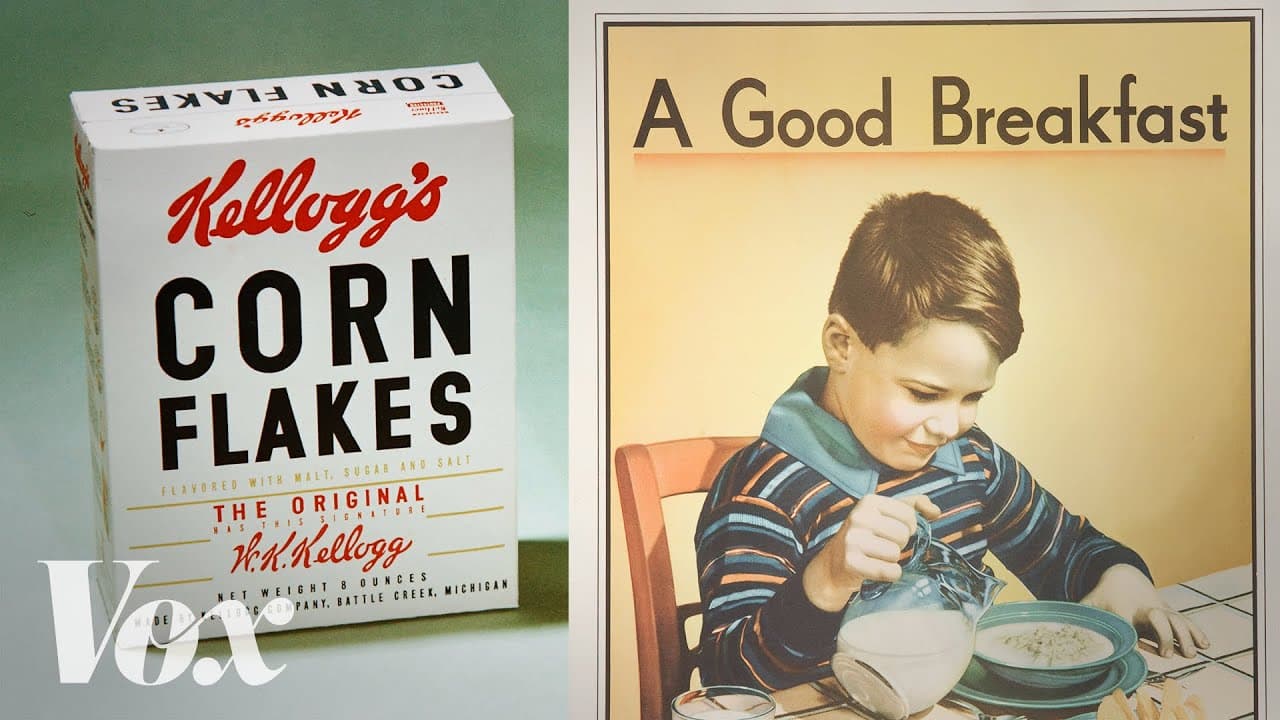
- The Kellogg brothers played a significant role in popularizing breakfast cereals and the notion of breakfast as the most important meal.
- Many studies cited in cereal advertisements are funded by the cereal companies themselves, raising questions about their objectivity.
- Despite the lack of evidence supporting breakfast as a weight-loss strategy, breakfast can still be a valuable source of nutrients for some individuals.
- The persistence of breakfast myths is largely due to historical marketing efforts and the financial interests of cereal companies.
- Ultimately, whether or not to eat breakfast should be a personal choice, as the best science suggests it doesn't significantly impact weight management.
Install to Summarize YouTube Videos and Get Transcripts
Explore YouTube Video Summarizer or Get YouTube Transcript Extractor
Questions & Answers
Q: What role did Grape Nuts play in the history of breakfast cereals?
Grape Nuts was one of the first American cereal brands, claiming to improve health by steadying nerves and clearing the brain. It linked breakfast to health benefits, setting a precedent for how cereals have been marketed ever since, with exaggerated claims about their health impacts.
Q: Why is the belief that breakfast aids weight loss considered a myth?
The belief that breakfast aids weight loss is considered a myth because many studies supporting this idea are flawed. They often don't account for differences like socioeconomic status and exercise habits, and randomized controlled trials show no evidence that breakfast helps with weight loss, sometimes even causing weight gain.
Q: How did the Kellogg brothers influence the breakfast cereal industry?
The Kellogg brothers significantly influenced the breakfast cereal industry. John Harvey Kellogg invented corn flakes as part of a bland diet to curb indulgence, and his brother Will Keith Kellogg commercialized it. Their efforts helped establish breakfast cereals as a staple and promoted the idea that breakfast is the most important meal.
Q: What is the issue with studies funded by cereal companies?
Studies funded by cereal companies often have biased outcomes that support the narrative that breakfast is crucial for health. This raises questions about their objectivity, as these studies may be designed or interpreted in ways that favor the financial interests of the cereal companies rather than providing unbiased scientific evidence.
Q: What is the conclusion of rigorous studies on breakfast and weight loss?
Rigorous studies, such as randomized controlled trials, conclude that there is no significant evidence supporting breakfast as a weight-loss strategy. In fact, some studies show that eating breakfast might lead to weight gain. Therefore, the decision to eat breakfast should be based on personal preference rather than weight management goals.
Q: Why is breakfast still considered valuable despite lacking weight-loss benefits?
Breakfast is still considered valuable by some because it can be an opportunity to consume essential nutrients and vitamins. While it may not aid weight loss, it can provide a nutritious start to the day for individuals who prefer to eat in the morning, contributing to overall dietary balance.
Q: How has historical marketing influenced the perception of breakfast?
Historical marketing by cereal companies has heavily influenced the perception of breakfast as crucial for health. Early exaggerated health claims by brands like Grape Nuts and efforts by the Kellogg brothers have ingrained the idea of breakfast as the most important meal, despite lacking scientific backing, due to the financial interests of these companies.
Q: What should be the basis for deciding whether to eat breakfast?
The decision to eat breakfast should be based on personal preference and individual lifestyle rather than weight management goals. The best available science suggests that breakfast doesn't significantly impact weight, so individuals can choose to eat or skip it based on what works best for their dietary and nutritional needs.
Summary & Key Takeaways
-
Cereal companies have long promoted the idea that breakfast is crucial for health and weight loss, but research shows this is largely a myth. Early cereals like Grape Nuts made exaggerated health claims, and modern studies often funded by cereal companies continue this narrative despite lacking evidence.
-
The Kellogg brothers were instrumental in establishing breakfast cereals as a staple, with John Harvey Kellogg inventing corn flakes as part of a bland diet to curb indulgence. His brother, Will Keith, commercialized it, popularizing the notion that breakfast is the most important meal.
-
Although breakfast is often touted as a weight-loss strategy, rigorous studies indicate no significant benefit. The decision to eat breakfast should be based on personal preference, as it doesn't inherently aid weight management, though it can be a good time to consume essential nutrients.
Read in Other Languages (beta)
Share This Summary 📚
Summarize YouTube Videos and Get Video Transcripts with 1-Click
Try YouTube Summary with ChatGPT & Claude or YouTube Transcript Generator
Explore More Summaries from Vox 📚



Summarize YouTube Videos and Get Video Transcripts with 1-Click
Try YouTube Summary with ChatGPT & Claude or YouTube Transcript Generator