How to Text Women and Turn Interest Into Dates
TL;DR
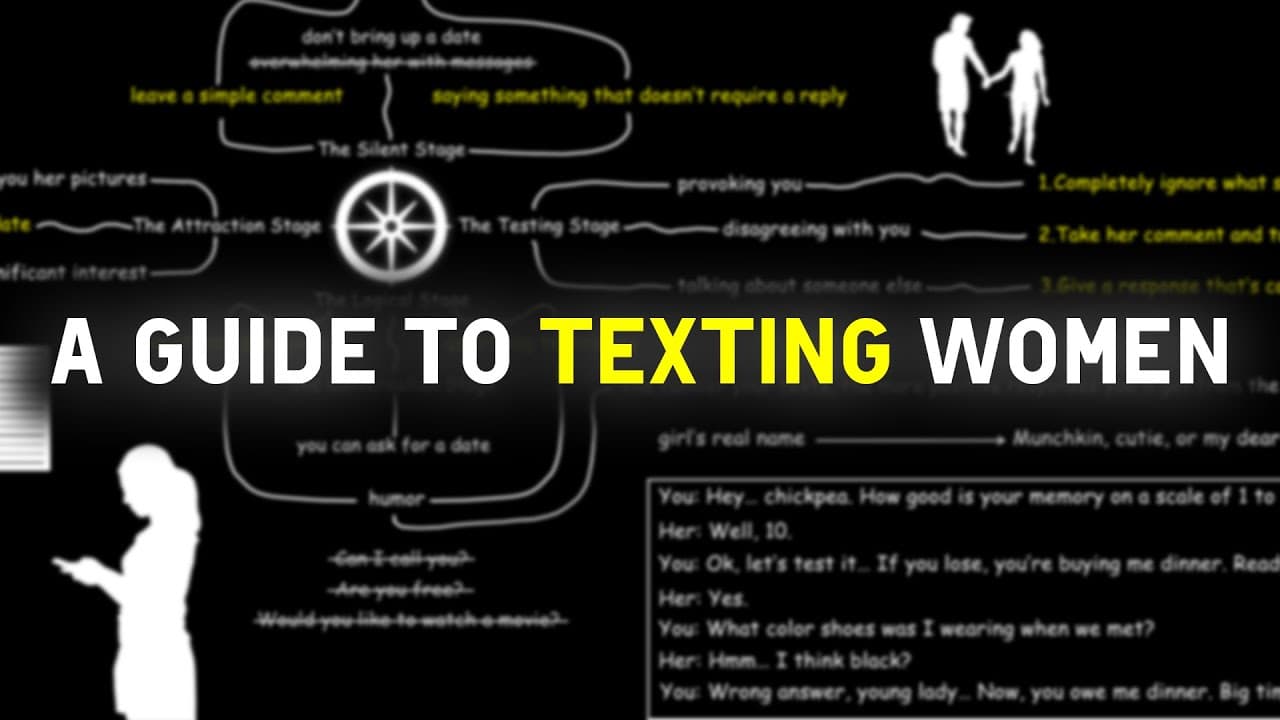
Use texting primarily to arrange an in-person date, and adapt each message to the other person’s current level of engagement. Keep messages brief, purposeful, humorous, and emotionally engaging, while avoiding repeated follow-ups, dull questions, or premature invitations. When clear interest appears, suggest meeting instead of extending the conversation indefinitely.
Transcript
this video will serve as your texting Bible it doesn't matter what your skills are or which goal you're talking to in this video I will explain everything you need to know about texting in detail and if you ever feel confused or face any issues with texting come back to this video and you'll 100% find the solution to your problem the first thing yo... Read More
Key Insights
- Texting is presented as a tool for arranging an in-person date, not as a substitute for meeting. The recommended approach gives each message a purpose, such as creating a positive emotional response, advancing the conversation, or proposing a specific opportunity to meet.
- The silence stage is marked by missing, delayed, brief, or disengaged replies. The recommended response is to avoid repeated messages and date requests, then use an occasional simple comment or story reaction that does not pressure the recipient to answer.
- The testing stage is described as criticism, disagreement, provocation, or references to other men. The suggested responses are to ignore the remark, turn it into a joke, or answer playfully with something unrelated while allowing attraction and rapport to develop further.
- The conversation stage is marked by a natural exchange that may include voice messages. The advice permits suggesting a date at this point and recommends using humor, emotional questions, and qualification techniques to make the interaction more engaging than a routine factual exchange.
- The attraction stage is marked by strong interest, personal pictures, positive reactions to pictures, or hints about meeting. The recommended action is to propose a date promptly because continuing to chat without acting may weaken momentum or shift the relationship toward friendship.
- Humor, mystery, and excitement are presented as the main ingredients of engaging messages. The transcript contrasts playful prompts and teasing challenges with direct but dull questions such as asking whether someone is free, can call, or wants to watch a movie.
- Playful nicknames and challenges are suggested as ways to create a lighter tone. One example turns a memory question about shoe color into a joking dinner wager, followed by a phone call that continues the playful disagreement regardless of the answer.
- Message discipline is defined by brevity, purpose, and independence from the reply. The advice recommends making first contact within 48 hours of receiving a number, avoiding constant texting, continuing with normal responsibilities, and responding when time permits instead of waiting anxiously.
Install to Summarize YouTube Videos and Get Transcripts
Explore YouTube Video Summarizer or Get YouTube Transcript Extractor
Questions & Answers
Q: What is the main purpose of texting someone you want to date?
The main purpose presented in the transcript is to move toward meeting in person rather than maintaining an endless digital conversation. Messages should either create a positive emotional response or help arrange a date. The advice treats texting as a bridge between initial contact and a real meeting, so continued chatting without progress is considered an inefficient use of time and attention.
Q: How can you identify the four stages of a texting conversation?
The four stages are silence, testing, conversation, and attraction, and they do not necessarily occur in a fixed order. Silence involves missing, slow, brief, or uninterested replies. Testing includes disagreement, criticism, provocation, or discussion of other men. Conversation means the exchange flows naturally, possibly with voice messages. Attraction includes personal pictures, positive reactions, strong interest, or hints about meeting.
Q: What should you text when someone leaves you on read?
When someone leaves you on read or responds with little interest, the transcript recommends avoiding repeated messages, pressure, and date invitations. A simple comment or reaction to a story can maintain contact without demanding a response. The goal is to avoid appearing needy while leaving space for engagement to recover. If no reply comes, the advice is not to overwhelm the person with further messages.
Q: How should you respond to teasing, disagreement, or criticism over text?
The transcript categorizes teasing, disagreement, criticism, provocation, and references to other men as part of the testing stage. It suggests three possible responses: ignore the remark, transform it into a joke, or reply with something playfully unrelated. The recommended tone is calm and humorous rather than defensive. It also advises against proposing a date during this stage because attraction is still developing.
Q: When should you ask a woman on a date through text?
A date can be proposed when the conversation flows naturally, and it should be proposed promptly when clear attraction appears. Signs described in the transcript include sending personal pictures, reacting positively to your pictures, showing significant interest, or hinting at meeting. Asking during silence is discouraged, while delaying after strong attraction appears is presented as a risk because momentum may fade or become platonic.
Q: How can humor make a text conversation more engaging?
Humor is presented as a way to create positive emotion and distinguish a message from routine questions. The transcript recommends playful nicknames, teasing challenges, surprising statements, and light wagers. Its detailed example asks someone to remember the color of the sender’s shoes, turns the answer into a joking dinner obligation, and then continues the playful disagreement through a phone call.
Q: What kinds of text messages should be avoided when dating?
The transcript advises avoiding constant messages, boring questions, attempts to impress, and requests that make rejection unusually easy. Examples include abruptly asking whether someone is free, whether you can call, or whether she wants to watch a movie. It also discourages asking for a date after disengaged replies. Messages should remain brief and serve a clear purpose rather than filling time without advancing the interaction.
Q: How soon should you send the first text after getting her number?
The transcript recommends sending the first message within 48 hours of receiving her number. After initiating contact, it advises against mentally waiting for a reply or allowing the conversation to dominate the day. Continue with normal responsibilities and respond when an opportunity arises. This approach is meant to keep communication purposeful, prevent constant texting, and reduce behavior that could appear overly dependent on receiving an immediate answer.
Summary & Key Takeaways
-
The central recommendation is to treat texting as a bridge to an in-person date rather than an end in itself. The approach prioritizes local, realistic connections and argues that digital communication reflects real-world social ability. Messages should therefore move the interaction forward instead of creating an endless conversation with no practical outcome.
-
The framework divides texting interactions into four flexible stages: silence, testing, conversation, and attraction. Silence calls for patience and low-pressure contact, while testing calls for calm or humorous replies. Natural conversation supports deeper questions and possible invitations. Clear attraction creates urgency to suggest a date before interest fades or becomes platonic.
-
Effective messages are described as short, purposeful, humorous, mysterious, and emotionally stimulating. The advice discourages boring requests, constant texting, attempts to impress, and anxious waiting for replies. It recommends sending an initial message within 48 hours of receiving a number, continuing daily life, and responding when a suitable opportunity appears.
Read in Other Languages (beta)
Share This Summary 📚
Summarize YouTube Videos and Get Video Transcripts with 1-Click
Try YouTube Summary with ChatGPT & Claude or YouTube Transcript Generator
Explore More Summaries from The Dark Needle 📚


Summarize YouTube Videos and Get Video Transcripts with 1-Click
Try YouTube Summary with ChatGPT & Claude or YouTube Transcript Generator