How Does Digify Protect and Control Shared Files?
TL;DR
Digify protects confidential files by restricting copying, printing, downloading, and screenshots while letting senders monitor access, revoke files, or make them self-destruct. Founder Augustine Lim says winning the RSA Conference Innovation Sandbox helped the startup attract users, improve its product through feedback, and gain credibility when approaching venture capital firms.
Transcript
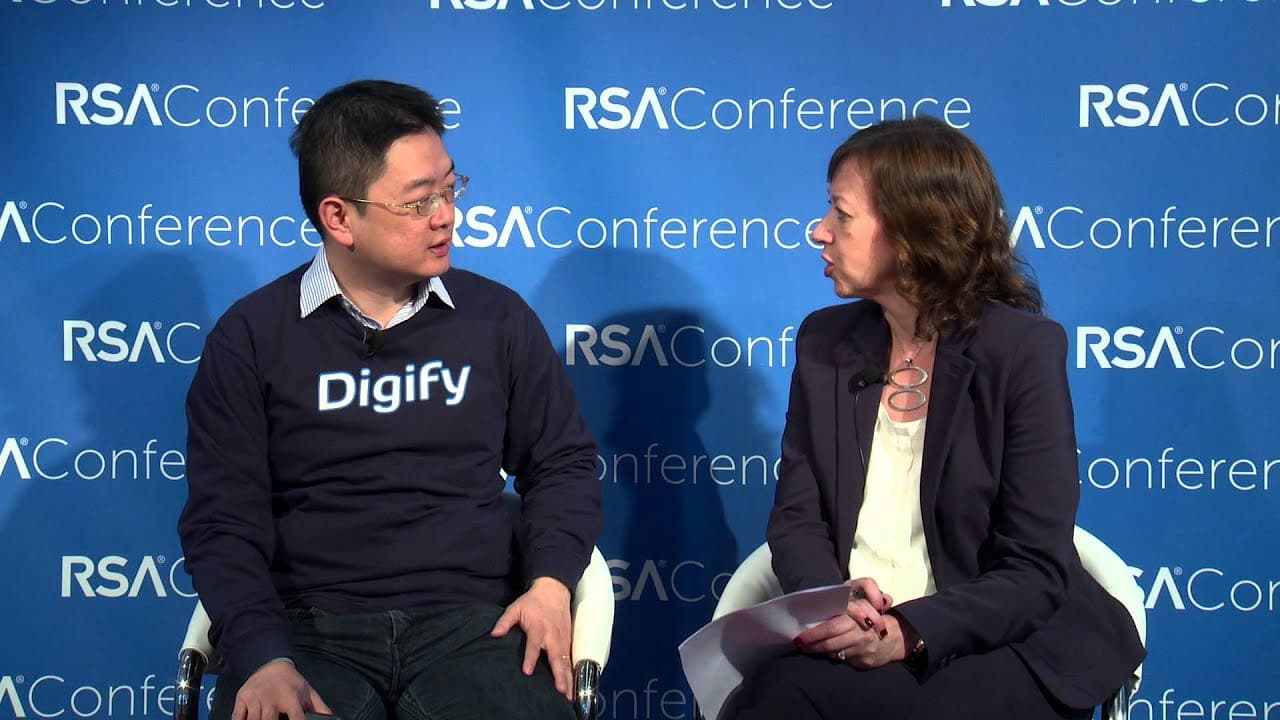
Uh, good afternoon, everybody. My name's Linda Gray. I'm the General Manager of RSA Conference, and I'm here today with Augustine Lim, who is the CEO and founder of Digify. Uh, Digify won our Innovation Sandbox contest in, um, Singapore last year at RSA Conference Asia Pacific in Japan 2014. Yeah. So I'm here today just to ask you a few questions, ... Read More
Key Insights
- Digify is designed to preserve control over important files after they are sent. It lets senders identify who is viewing information, withdraw access at any time, or configure the information to self-destruct instead of leaving recipients with unrestricted possession.
- Digify protects shared information by preventing recipients from copying, printing, downloading, or taking screenshots. These controls are intended to balance security with convenience, allowing people to share confidential material without immediately surrendering every practical means of controlling its subsequent use.
- The Innovation Sandbox competition gave Digify a platform for launching its product. Augustine Lim described the contest as prestigious for security startups and said its timing matched the company’s need to introduce Digify to the market and attract attention from relevant audiences.
- The three-minute competition presentation required Digify to communicate an entire startup proposition under strict time constraints. The team centered its pitch on simplicity, control, and security, then devoted one minute to a screenshot demonstration that showed how sent files could remain manageable.
- Winning the Innovation Sandbox helped Digify open conversations with venture capital firms. Lim said the award encouraged investors to take another look at the startup, making the competition valuable not only for product exposure but also for the company’s continuing fundraising efforts.
- User feedback contributed to Digify’s product improvements after the competition. Once the product entered the market and more people joined the platform, the company gathered responses and refined its approach to showing users how secure file sharing could remain convenient.
- Security innovation is necessary because internet scale multiplies the impact of emerging threats. Lim contrasted a physical robbery affecting one train with an online attack capable of obtaining many credit cards worldwide, illustrating why the industry continually needs new defensive solutions.
- Nondisclosure agreements can be reinforced with technical file controls. Digify allows confidential materials to be marked, protected, monitored, and withdrawn after a project finishes, giving organizations a practical enforcement mechanism for intellectual property, designs, images, and other sensitive information.
Install to Summarize YouTube Videos and Get Transcripts
Explore YouTube Video Summarizer or Get YouTube Transcript Extractor
Questions & Answers
Q: How does Digify protect confidential shared files?
Digify protects confidential files by applying copy controls that prevent recipients from copying, printing, downloading, or taking screenshots of the information. It also allows the sender to know who is viewing a file, revoke access after sending it, or configure the file to self-destruct. These capabilities are intended to preserve control while keeping file sharing simple and convenient.
Q: What problem does Digify solve for file senders?
Digify addresses the loss of control that normally happens as soon as an important file is sent. Without such controls, the sender may not know who is viewing the information and may have no easy way to retrieve it. Digify gives the sender visibility into access and options to withdraw or automatically destroy the shared information.
Q: Why did Digify enter the Innovation Sandbox competition?
Digify entered the Innovation Sandbox because Augustine Lim viewed it as a prestigious competition for security startups and the company needed a platform for its launch. The timing aligned with Digify’s plans, and the team hoped to qualify. Becoming a finalist, and later the winner, provided recognition and an opportunity to introduce the product to the security market.
Q: How did Digify prepare its three-minute startup presentation?
Digify prepared for the three-minute limit by identifying the essential qualities it needed to communicate: simplicity, control, and security. The team chose a screenshot demonstration to show how users could control files after sending them. Although the demonstration occupied one minute of the available time, Lim believed that clear practical illustration justified the time it consumed.
Q: What happened to Digify after winning Innovation Sandbox?
After winning the Innovation Sandbox, Digify released its product into the market, brought more users onto the platform, and gathered feedback that supported product improvements. The company focused on demonstrating a balance between security and convenience. The award also strengthened its fundraising efforts because mentioning the win encouraged venture capital firms to give the startup additional consideration.
Q: How can Digify help enforce a nondisclosure agreement?
Digify can add practical controls to files shared under a nondisclosure agreement by marking information as confidential, restricting copying and redistribution, tracking who views it, and allowing access to be revoked when a project ends. Lim argued that these capabilities provide a more tangible way to enforce confidentiality than relying only on a signed agreement after files have already been distributed.
Q: What types of information do people share through Digify?
Users share confidential files through Digify, including documents covered by nondisclosure agreements, intellectual property, designs, and images. These materials may require protection from screenshots or continued access after a project is complete. Digify supports those needs by restricting common copying methods and giving the original sender continuing control over access to the information.
Q: Why are security innovation competitions important?
Security innovation competitions are important because new threats continue to emerge and the internet can multiply their reach. Lim explained that a physical robbery might affect one train, while an online attack could obtain many credit cards around the world through a single target. Innovation Sandbox provides a platform for bringing new security solutions to the market.
Summary & Key Takeaways
-
Digify founder Augustine Lim entered the RSA Conference Innovation Sandbox because it offered a prestigious platform for launching a security startup. The company became a finalist and ultimately won the Asia Pacific and Japan competition in 2014, giving Digify greater visibility among users, investors, and members of the security industry.
-
Preparing the competition presentation required Digify to compress its startup story into three minutes. The team focused on three qualities: simplicity, control, and security. A screenshot demonstration consumed one minute but clearly showed how users could retain control of files after sending them, making the limited presentation time worthwhile.
-
Digify addresses the loss of control that normally occurs after confidential information is sent. It copy-protects files, identifies who views them, supports revocation and self-destruction, and is used for materials covered by nondisclosure agreements, intellectual property, designs, and images that owners want protected from screenshots.
Read in Other Languages (beta)
Share This Summary 📚
Summarize YouTube Videos and Get Video Transcripts with 1-Click
Try YouTube Summary with ChatGPT & Claude or YouTube Transcript Generator
Explore More Summaries from RSAC Cybersecurity 📚

Summarize YouTube Videos and Get Video Transcripts with 1-Click
Try YouTube Summary with ChatGPT & Claude or YouTube Transcript Generator