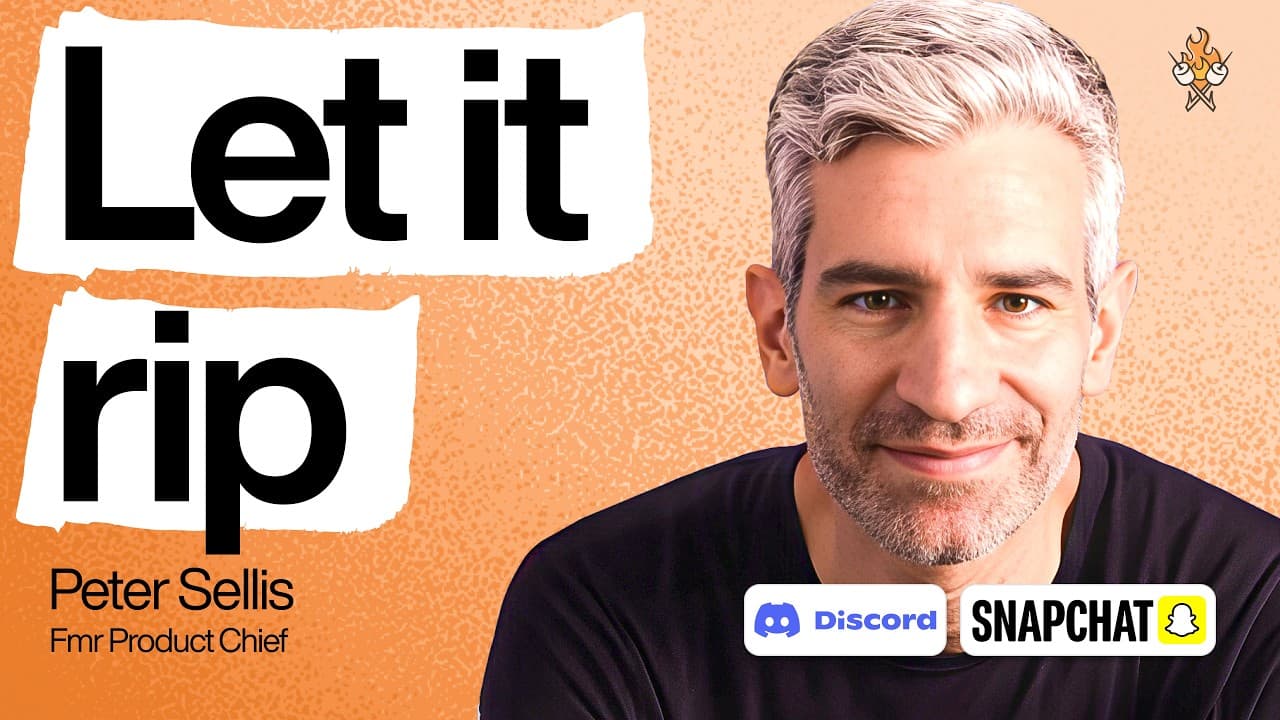
How to design fast autonomous product teams
TL;DR
Autonomous teams with a clear mission accelerate decision making and reduce collaboration drag. Leaders should distill vision into simple, repeatable phrases and empower cross functional teams to own decisions that founders would make later. The bigger payoff comes from aligning culture and structure to enable rapid, high quality product choices
Transcript
I asked you, what are some counterintuitive lessons that you've learned that go against common startup wisdom? >> I'm no longer beholden to any corporate comms team right now, so I can let it rip a little bit. >> You like to design teams like a terrorist organization. A good terrorist organization essentially has two things. One is it [music] has t... Read More
Key Insights
- The key to fast decisions is autonomy; give ownership to the right people so decisions can be made without waiting for higher ups.
- A strong, shared mission acts like an ideology that guides everyday work and keeps teams aligned across functions.
- Clear accountability boundaries prevent bottlenecks by identifying who has final say on critical bets.
- Coordination costs rise with collaboration; reducing unnecessary handoffs speeds up execution.
- Founders often would want decisions to be made earlier; empower teams to act with founder level judgment.
- Territory analogy helps explain how structure and culture enable rapid, independent action while maintaining coherence.
- Great PMs are rare and often exit the role to become founders or executives, suggesting a cleansing effect at the top levels.
- Growth is driven by the core product and disciplined restraint, not by chasing new features endlessly.
Install to Summarize YouTube Videos and Get Transcripts
Explore YouTube Video Summarizer or Get YouTube Transcript Extractor
Questions & Answers
Q: How can a product team be designed like a terrorist organization for fast decision making
Designing teams like a terrorist organization means creating a strong, clear mission that everyone understands and a precise organizational structure that defines who can make which decisions. This setup reduces coordination overhead and speeds up execution by granting autonomy to the right people while ensuring accountability through defined decision rights. The approach centers on efficiency, focus, and a shared purpose.
Q: What is the practical impact of autonomy in product teams
Autonomy allows capable individuals to own decisions without waiting on slower approval chains, which speeds up iterations and reduces bottlenecks. It requires clear boundaries and decision rights, so team members know when to escalate and when to act independently. Autonomy also helps teams reflect founder intent in real time, keeping products aligned with core goals.
Q: Why do founders want decisions made earlier in product development
Founders often possess a deep understanding of the product vision and market goals. When decisions are moved up front, teams can align quickly with that vision, accelerate learning, and prevent drift. Early decisions reduce wasted effort on features or directions that do not support the overarching strategy, enabling faster, more coherent growth.
Q: What role does a shared mission play in product teams
A shared mission acts as an organizing principle that guides daily work and aligns cross functional efforts. It provides a language for decision making, helps prioritize bets, and reduces miscommunication. When the mission is clear, teams can operate with less friction and maintain cohesion even as responsibilities shift.
Q: How should a product leader translate founder vision into day to day work
A product leader should distill the founder’s vision into simple, repeatable phrases and concrete roles. They create a vocabulary that captures strategic priorities and translates them into actions, roadmaps, and metrics. This enables teams to execute consistently, while still allowing autonomy and fast decision making.
Q: What is the critique of the PM role according to the discussion
The discussion suggests that many product managers are not adding value and may even hinder progress. It highlights the importance of high quality PMs who can execute founder level decisions, and notes that the industry tends to see a disproportionate churn where top PMs leave for other leadership roles.
Q: How does Snap’s experience illustrate product growth dynamics
The conversation references Snap and Discord experiences to illustrate that growth is not guaranteed by user numbers alone. Product organization, decision rights, and the ability to push back on ideas influence growth trajectories. A strong core product strategy can unlock meaningful scale beyond initial adoption.
Q: What does the discussion say about fixing product management culture
The discussion advocates for ruthlessly evaluating who should own decisions and how to reduce unnecessary collaboration. It suggests that banning slow processes and empowering the right people with clear accountability can fix many cultural issues, leading to faster, more aligned product development. It also notes PM as a profession under evaluation at times.
Summary & Key Takeaways
-
A clear ideological goal and a well defined organizational structure help high growth teams move faster without excessive collaboration overhead. The host emphasizes reducing coordination costs by granting autonomy to capable contributors while maintaining a strong shared purpose.
-
Leading product teams requires translating founder vision into actionable guidance and a language that can be repeated across the organization, enabling faster decisions and consistent execution at scale.
-
The discussion contrasts experiences at Snap and Discord to illustrate how structure and culture influence a product's growth trajectory, underlining that growth often hinges on core product decisions and disciplined prioritization.
Read in Other Languages (beta)
Share This Summary 📚
Summarize YouTube Videos and Get Video Transcripts with 1-Click
Try YouTube Summary with ChatGPT & Claude or YouTube Transcript Generator
Explore More Summaries from Lenny's Podcast 📚





Summarize YouTube Videos and Get Video Transcripts with 1-Click
Try YouTube Summary with ChatGPT & Claude or YouTube Transcript Generator