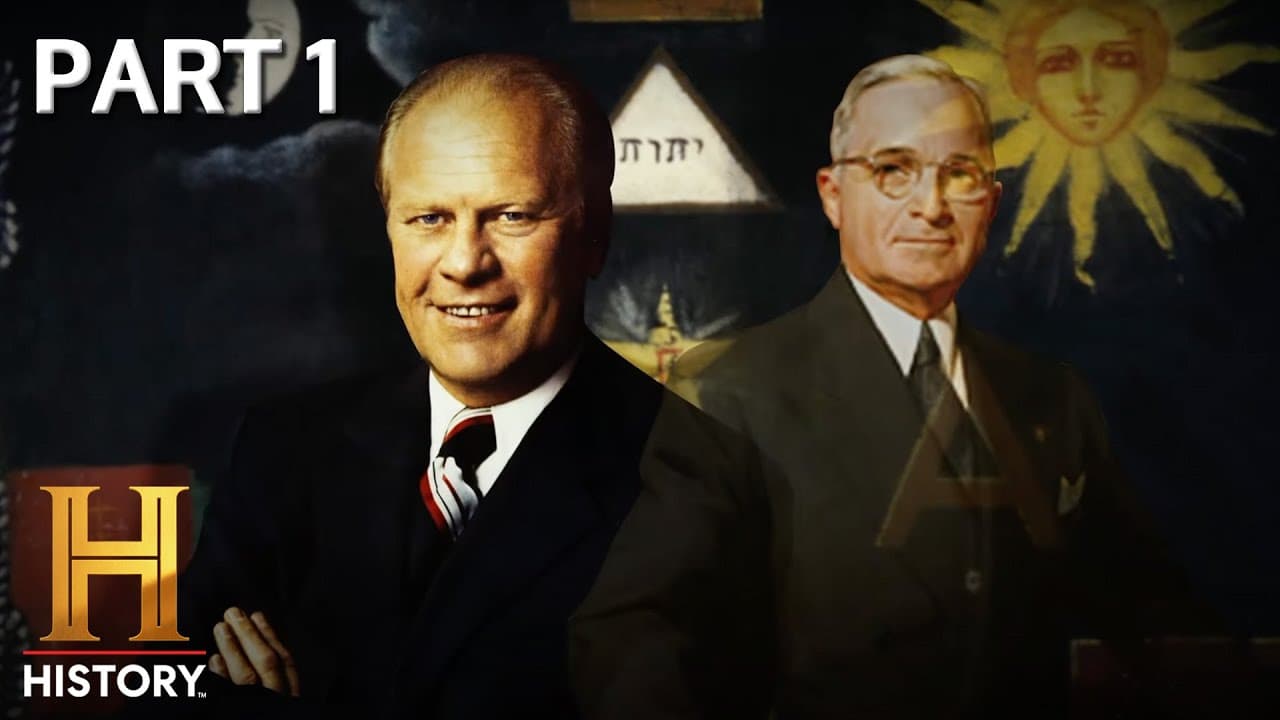
How Did Freemasonry Shape Early America? America's Book of Secrets: The Most Elite Society in the World, Part 1 | History
TL;DR
Freemasonry shaped early America by spreading Enlightenment ideals, cultivating trusted networks, and connecting influential figures including George Washington and Benjamin Franklin. The program says 33 of Washington's 74 generals were Freemasons and links a Masonic lodge at the Green Dragon Tavern to revolutionary activity. Read on to distinguish the fraternity's documented influence from disputed claims about a new world order.
Transcript
it is America's most private organization with mysterious meetings held behind closed doors and a membership that includes the most powerful men in America and the world but behind this Elite Brotherhood are secrets secrets so outrageous their agenda boils down to we want to rule the world let's create a whole new world order so controversial when ... Read More
Key Insights
- Freemasonry is described as the world's largest, oldest, and best-known gentleman's fraternity, although its beginnings are shrouded in mystery. The program distinguishes mythological connections to King Solomon's Temple and ancient Egypt from a clearer origin among seventeenth-century intellectual and civic discussion groups.
- Masonic building symbolism represents personal development as well as physical construction. The compass symbolizes drawing and expanding a controlled boundary through knowledge and light, while the square represents wisdom and the letter G stands for the grand architect of the universe.
- Freemasonry promoted Enlightenment principles by encouraging the study of seven liberal arts and sciences. Grammar, rhetoric, and logic were intended to develop reasoned thinking and communication, supporting the fraternity's stated goal of producing free-thinking people capable of resisting tyranny over the mind.
- Secrecy functioned as a test of personal trust within colonial lodges. Members met in woodland cabins, barns, tavern rooms, and other protected places, and the ability to safeguard a handshake or password was treated as evidence that a man's word could be trusted.
- The Green Dragon Tavern connected Masonic and revolutionary networks in Boston. St. Andrew's Lodge owned the tavern, Paul Revere served as lodge master, and the Sons of Liberty also met there before the Boston Tea Party of December 16, 1773.
- Masonic membership was prominent within George Washington's military network. The transcript states that 33 of Washington's 74 generals, or 46 percent, were Freemasons, and says Washington encouraged generals to join because he believed membership made them more trustworthy.
- Freemasons were represented among America's founding political figures, but not every founder belonged to the fraternity. The program states that nine of the 56 Declaration of Independence signers and one-third of the Constitution signers were Freemasons.
- Benjamin Franklin advanced rapidly within Freemasonry and published its first Masonic book in the United States. The work was a copy of James Anderson's constitutions, whose concepts are described as repeatedly resembling ideas found in the Declaration of Independence and the United States Constitution.
- "today there are an estimated 6 million Freemasons worldwide" (3:29)
- "Freemasonry is the world's largest oldest and best known gentleman's fraternity" (4:19)
- "the clearest and plainest origin point for masonry can be found within the Reformation in the 1600s" (5:07)
- "masonry traveled to America on British troop ships" (6:09)
Install to Summarize YouTube Videos and Get Transcripts
Explore YouTube Video Summarizer or Get YouTube Transcript Extractor
Questions & Answers
Q: What is Freemasonry according to America's Book of Secrets?
The program describes Freemasonry as the world's largest, oldest, and best-known gentleman's fraternity. Its building symbols represent the development of an inner temple through knowledge, wisdom, reason, and self-control.
Q: Where did modern Freemasonry originate?
Its precise origins are described as mysterious, with mythological connections to King Solomon's Temple and symbolic associations with ancient Egypt. The clearest origin presented is the Reformation in the 1600s, when academics, merchants, intellectuals, politicians, and clergy met privately to discuss civics, religion, social issues, and science.
Q: How did Freemasonry reach the American colonies?
The program says Masonry traveled to America on British troop ships. Publicly proclaimed lodges appeared in the second decade of the 1700s, and modern Freemasonry's influence emerged in the colonies by the mid-18th century.
Q: How did Freemasonry promote Enlightenment ideals?
Freemasons were encouraged to study seven liberal arts and sciences. Grammar, rhetoric, and logic were intended to develop reasoned thinking and communication, supporting the goal of producing free-thinking people who could resist tyranny over the mind.
Q: What do the square, compass, and letter G mean in Freemasonry?
The compass represents boundaries and self-control, with its circle expanding through knowledge and light. The square symbolizes wisdom, while the letter G stands for the grand architect of the universe.
Q: Why did colonial Freemasons meet in secret?
Colonial Freemasons met in woodland cabins, country barns, rooms above taverns, and other places where they believed their secrets were safe. Keeping a handshake or password private was treated as evidence that a man's word could be trusted.
Q: How influential were Freemasons during the American Revolution?
The program says 33 of George Washington's 74 generals, or 46 percent, were Freemasons, and that Washington encouraged generals to join because he considered members more trustworthy. It also states that nine of the 56 Declaration of Independence signers and one-third of the Constitution signers were Freemasons.
Q: Was Freemasonry connected to the Boston Tea Party?
The program connects the fraternity to the Green Dragon Tavern, which St. Andrew's Lodge purchased in the 1760s. Paul Revere served as lodge master, the Sons of Liberty met there, and lodge minutes reportedly noted insufficient attendance while members participated in the destruction of taxed tea on December 16, 1773.
Summary & Key Takeaways
-
Freemasonry is presented as an old and highly private fraternity whose precise origins remain uncertain. Its traditions connect building tools and architecture with personal development, wisdom, knowledge, and self-control. The program traces its clearest modern beginnings to groups formed during the Reformation that discussed religion, science, civics, and social issues privately.
-
The fraternity reached the American colonies aboard British troop ships and became influential during the eighteenth-century Enlightenment. Members studied grammar, rhetoric, logic, and other liberal arts and sciences. Secret handshakes and passwords served as tests of trust, while lodges provided protected places where members could exchange ideas beyond ordinary public scrutiny.
-
The program links Freemasons with revolutionary activity through the Green Dragon Tavern, the Boston Tea Party, George Washington's command network, and Benjamin Franklin's leadership. It also compares James Anderson's 1723 Masonic constitutions with ideas later expressed in foundational American documents, while leaving allegations of a secret global agenda unresolved.
Read in Other Languages (beta)
Share This Summary 📚
Summarize YouTube Videos and Get Video Transcripts with 1-Click
Try YouTube Summary with ChatGPT & Claude or YouTube Transcript Generator
Explore More Summaries from HISTORY 📚


Summarize YouTube Videos and Get Video Transcripts with 1-Click
Try YouTube Summary with ChatGPT & Claude or YouTube Transcript Generator