What Impact Did the 1995 Hubble Deep Field Photo Have?
TL;DR
The 1995 Hubble Deep Field photo drastically changed our understanding of the universe by revealing galaxies as they existed over 12 billion years ago, shortly after the Big Bang. It confirmed the bottom-up theory of galaxy formation and set a new standard for sharing astronomical data, fostering collaboration and accelerating research in cosmology.
Transcript
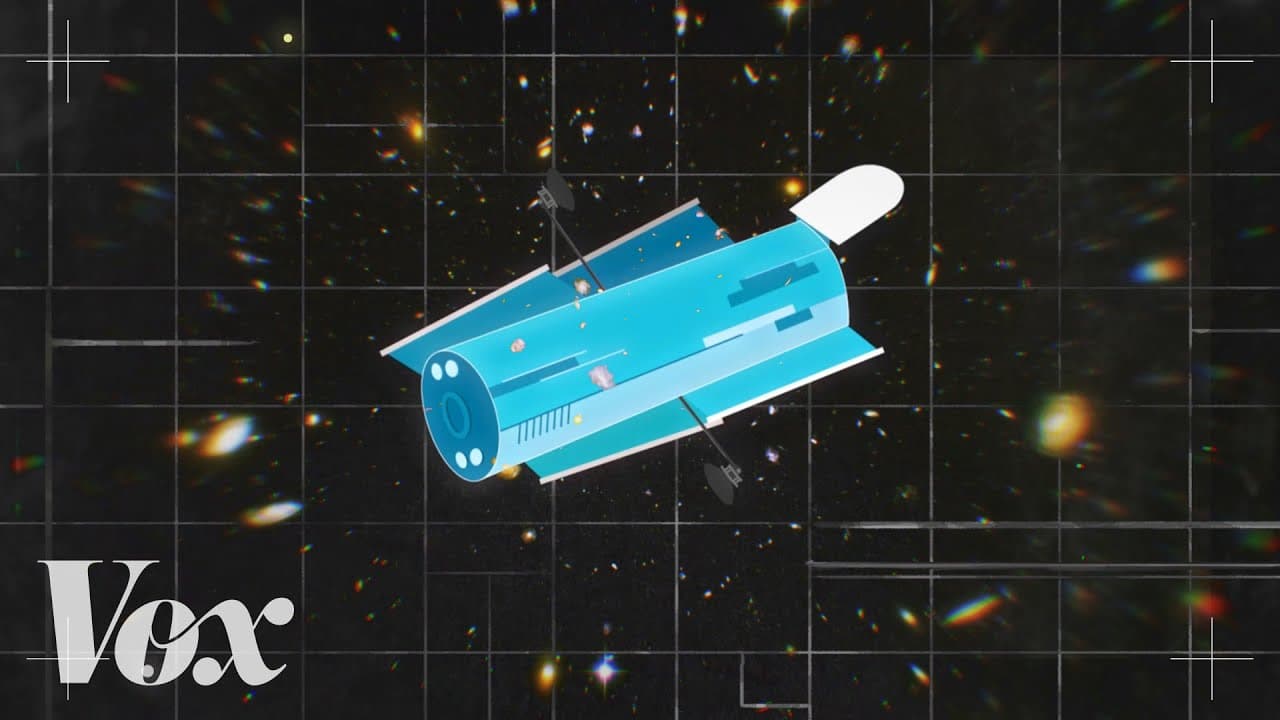
Since the Hubble Space Telescope went into orbit back in April 1990, it has sent back a ton of incredible photos. Each has its own story, but one of Hubble’s greatest images is this one, from 1995. This is a snapshot of nearly the entire history of the universe - and the first of its kind. The Hubble Deep Field is an unusual image that came from an... Read More
Key Insights
- The Hubble Deep Field image, captured in 1995, provided a snapshot of nearly the entire history of the universe, showcasing galaxies as they appeared billions of years ago.
- Robert Williams, director of the Hubble Science Institute, initiated the Deep Field project by pointing the telescope at a seemingly empty region of the sky.
- The project faced skepticism due to prior issues with Hubble's main mirror, which had produced blurry images until a corrective module was installed.
- The Deep Field image revealed galaxies at various stages of evolution, some appearing as they did just 1.5 billion years after the Big Bang.
- The data from the Deep Field helped confirm the bottom-up theory of galaxy formation, showing early galaxies as small and irregular.
- Williams' decision to publicly release the Deep Field data set a new precedent in astronomy, encouraging open sharing of research data.
- Hubble's Deep Field observations have been instrumental in estimating the total number of galaxies and tracking star formation history.
- Subsequent servicing missions have enhanced Hubble's capabilities, allowing for even deeper observations and further public data releases.
Install to Summarize YouTube Videos and Get Transcripts
Explore YouTube Video Summarizer or Get YouTube Transcript Extractor
Questions & Answers
Q: What was the significance of the Hubble Deep Field image?
The Hubble Deep Field image was significant because it provided a detailed view of the universe as it appeared billions of years ago. Captured in 1995, it revealed galaxies at various evolutionary stages, some from just 1.5 billion years after the Big Bang. This image reshaped our understanding of cosmic history and galaxy formation.
Q: How did Robert Williams contribute to the Hubble Deep Field project?
Robert Williams, as the director of the Hubble Science Institute, played a pivotal role in the Deep Field project. He decided to point the telescope at a seemingly empty part of the sky, despite skepticism, to capture a core sample of the universe. His leadership and decision to release the data publicly were crucial to the project's success.
Q: What challenges did the Hubble team face before capturing the Deep Field image?
Before capturing the Deep Field image, the Hubble team faced challenges due to a flaw in the telescope's main mirror, which produced blurry images. This issue led to public criticism and skepticism about the project's feasibility. However, a corrective module was installed, allowing the telescope to capture sharp, detailed images, including the Deep Field.
Q: Why was the decision to release the Deep Field data significant?
The decision to release the Deep Field data was significant because it marked a cultural shift in astronomy towards open data sharing. Previously, researchers often kept data private until fully analyzed. By releasing the data immediately, Robert Williams and his team encouraged collaboration and accelerated scientific discoveries, setting a new standard in the field.
Q: What did the Hubble Deep Field reveal about galaxy formation?
The Hubble Deep Field revealed crucial insights into galaxy formation, supporting the bottom-up theory. It showed that early galaxies were small and irregular, evolving over time into larger structures. This observation helped scientists understand the processes involved in galaxy evolution and the universe's development from its early stages.
Q: How did the Hubble Deep Field impact estimates of the total number of galaxies?
The Hubble Deep Field significantly impacted estimates of the total number of galaxies by providing a detailed view of a small, seemingly empty sky region. The image revealed numerous galaxies, suggesting that the universe contains far more galaxies than previously thought. This finding has been instrumental in refining our understanding of the universe's vastness.
Q: What advancements have been made in deep field observations since 1995?
Since 1995, advancements in deep field observations have been made through servicing missions that enhanced Hubble's capabilities with more advanced cameras. These upgrades have allowed for even deeper observations, capturing images of galaxies at earlier stages in their evolution. The data from these observations continue to be released publicly, furthering scientific research.
Q: How did the Hubble Deep Field change the culture of astronomy?
The Hubble Deep Field changed the culture of astronomy by promoting open data sharing. Previously, astronomers often kept data private, but the immediate release of the Deep Field data encouraged collaboration and transparency. This shift has led to more rapid scientific advancements and has become a common practice in the field, enhancing collective understanding.
Summary & Key Takeaways
-
The Hubble Deep Field image, captured in 1995, provided a groundbreaking view of the universe's history, revealing galaxies as they appeared billions of years ago. Initiated by Robert Williams, the project involved pointing the telescope at a seemingly empty patch of sky, leading to unprecedented discoveries.
-
Despite initial skepticism due to Hubble's previous technical issues, the Deep Field project succeeded in capturing a detailed image of distant galaxies. This observation confirmed theories about galaxy formation and set a new standard for data sharing in the scientific community.
-
The data from the Hubble Deep Field has been crucial in understanding the universe's evolution, helping to estimate the total number of galaxies and track star formation over time. The project's success paved the way for further deep field observations and public data releases.
Read in Other Languages (beta)
Share This Summary 📚
Summarize YouTube Videos and Get Video Transcripts with 1-Click
Try YouTube Summary with ChatGPT & Claude or YouTube Transcript Generator
Explore More Summaries from Vox 📚



Summarize YouTube Videos and Get Video Transcripts with 1-Click
Try YouTube Summary with ChatGPT & Claude or YouTube Transcript Generator