Is the CIA Behind the Protests and Unrest in Iran?

TL;DR
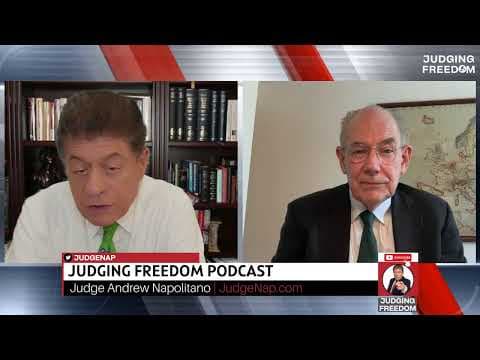
Larry Johnson argues that the unrest in Iran was supported by a covert effort involving the CIA and Mossad, Kurdish and Baluchi elements, and opposition groups such as the NCRI. He says reports portraying Iran as near collapse were propaganda, and he contends that the United States lacks a practical military option capable of forcing regime change.
Transcript
Undeclared wars are commonplace. Tragically, our government engages in preemptive war, otherwise known as aggression, with no complaints from the American people. Sadly, we have become accustomed to living with the illegitimate use of force by government. To develop a truly [music] free society, the issue of initiating force must be understood and ... Read More
Key Insights
- Johnson's central claim is that the Iranian demonstrations were supported by a covert operation involving the CIA and Mossad. He presents the timing of the unrest, which began on December 28, as connected to discussions between Donald Trump and Benjamin Netanyahu.
- The CIA's alleged role is described as relying partly on long-standing relationships with Kurdish elements near the northwestern border where Iran and Iraq meet. Johnson also identifies Baluchi elements in eastern Iran and domestic opponents of the Islamic Republic as potential participants.
- The NCRI is identified by Johnson as a front group associated with the MEK, also called the Mujahedin-e Khalq. He says the NCRI became a primary source for numerous press reports about developments inside Iran and used that position to shape the public narrative.
- The collapse narrative is described as propaganda claiming that Iran was coming apart and that the ayatollah might flee to Moscow, as Bashar al-Assad allegedly had. Johnson argues that these reports created a misleading impression that the Islamic Republic was on the cusp of failure.
- United States military intervention is portrayed as incapable of defeating Iran's political system. Johnson says Washington could not take meaningful military action immediately or within the following two to three weeks that would successfully produce the regime change sought by foreign planners.
- Washington's control over Venezuela is disputed by Johnson through the State Department's warning that Americans should leave because conditions were dangerous. He reasons that such a warning indicates credible threats and demonstrates that the United States cannot control events or protect Americans on the ground.
- Venezuela's oil is presented as an implausible justification for intervention because Johnson says the country produces only 2% of OPEC output. He also states that producing 50 million barrels would require 71 days and represent less than one-half of 1% of global oil during that period.
- Trump's understanding of presidential power is characterized as unconstrained by international law after he says only his morality and mind can stop him. Johnson compares that position to Thomas Hobbes and rule by monarchs, while the host contrasts it with natural law, the Constitution, and the Declaration of Independence.
Install to Summarize YouTube Videos and Get Transcripts
Explore YouTube Video Summarizer or Get YouTube Transcript Extractor
Questions & Answers
Q: Is the CIA behind the protests and unrest in Iran?
Larry Johnson says yes, characterizing the unrest as a covert operation involving the CIA and Mossad. He claims the operation drew upon Kurdish elements near Iran's northwestern border, Baluchi elements in the east, domestic opponents of the Islamic Republic, and the NCRI. His argument is presented as an assessment in the interview, not as evidence independently demonstrated within the transcript.
Q: When did the Iranian demonstrations discussed by Larry Johnson begin?
Johnson says the demonstrations began on December 28, one day before an anticipated meeting between Benjamin Netanyahu and Donald Trump at Mar-a-Lago. He argues that Iran and a proposed covert operation were on their agenda. The transcript presents this timing as support for his interpretation, although it does not provide documents or direct testimony confirming what the two leaders discussed.
Q: What groups does Larry Johnson connect to the unrest in Iran?
Johnson connects several groups to the unrest. He mentions Kurdish elements near the northwestern border shared by Iran and Iraq, Baluchi elements in the far east, Iranians who oppose the Islamic Republic, and the MEK. He also discusses the NCRI, which he describes as a front group associated with the MEK and a major source of press reporting about the protests.
Q: What role does the NCRI allegedly play in reports about Iran?
Johnson says the NCRI served as a primary source for many press reports describing events on the ground in Iran. He accuses it of distributing disinformation and propaganda intended to portray the Islamic Republic as close to collapse. According to him, this messaging included claims that the ayatollah was preparing to flee to Moscow and that the government was coming apart.
Q: Can the United States force regime change in Iran through military action?
Johnson argues that the United States has no military option available immediately, or within the next two to three weeks, that could defeat Iran's political system. He rejects the expectation that threatened intervention would automatically create regime change. The transcript ends while he is expanding this argument, so it does not include his complete explanation of why such an operation would fail.
Q: Why does Larry Johnson say the United States does not control Venezuela?
Johnson points to a State Department warning advising Americans to leave Venezuela because armed militias and other dangers remained. He reasons that Washington would not issue such an alert if it controlled conditions on the ground. He says Venezuela's government, army, intelligence services, and armed militias remained intact, while the United States had only succeeded in kidnapping Nicolás Maduro.
Q: Why does Larry Johnson reject oil as a sound reason for intervention in Venezuela?
Johnson says Venezuela accounts for only 2% of total OPEC production and produces thick crude that is difficult to extract. He states that delivering 50 million barrels would take 71 days and that this production would amount to less than one-half of 1% of global oil. He therefore argues that it would not materially change the world oil price.
Q: How does the interview criticize Donald Trump's view of presidential power?
Trump says that his morality and his own mind are the only checks on his power on the world stage, adding that he does not need international law. Johnson compares this outlook to Thomas Hobbes and an era when strong rulers made the rules. The host and Johnson contrast it with natural law and constitutional limits on government authority.
Summary & Key Takeaways
-
Larry Johnson claims the unrest that began on December 28 was connected to covert planning involving the CIA and Mossad. He links the timing to Benjamin Netanyahu's anticipated meeting with Donald Trump and says Kurdish and Baluchi elements, Iranian opponents of the Islamic Republic, and the MEK-associated NCRI contributed to the campaign.
-
Johnson describes the NCRI as a major source for press reports about events inside Iran. He argues that the organization spread propaganda portraying the Islamic Republic as close to collapse and suggesting that the ayatollah might flee to Moscow. In his account, this narrative overstated the government's vulnerability and encouraged foreign intervention.
-
The discussion also addresses Venezuela and Trump's view of presidential power. Johnson argues that Washington does not control conditions inside Venezuela, citing a warning for Americans to leave. He disputes the economic logic of pursuing Venezuelan oil and criticizes Trump's statement that his morality and mind are the principal restraints on his international actions.
Read in Other Languages (beta)
Share This Summary 📚
Summarize YouTube Videos and Get Video Transcripts with 1-Click
Try YouTube Summary with ChatGPT & Claude or YouTube Transcript Generator
Explore More Summaries from Judge Napolitano - Judging Freedom 📚
![[SPECIAL] Ryan Dawson : The Epstein Client List! thumbnail](/_next/image?url=https%3A%2F%2Fi.ytimg.com%2Fvi%2FGdcxDmhskAI%2Fhqdefault.jpg&w=750&q=75)
Summarize YouTube Videos and Get Video Transcripts with 1-Click
Try YouTube Summary with ChatGPT & Claude or YouTube Transcript Generator