Peter Attia on The Best Exercises for Longevity
TL;DR
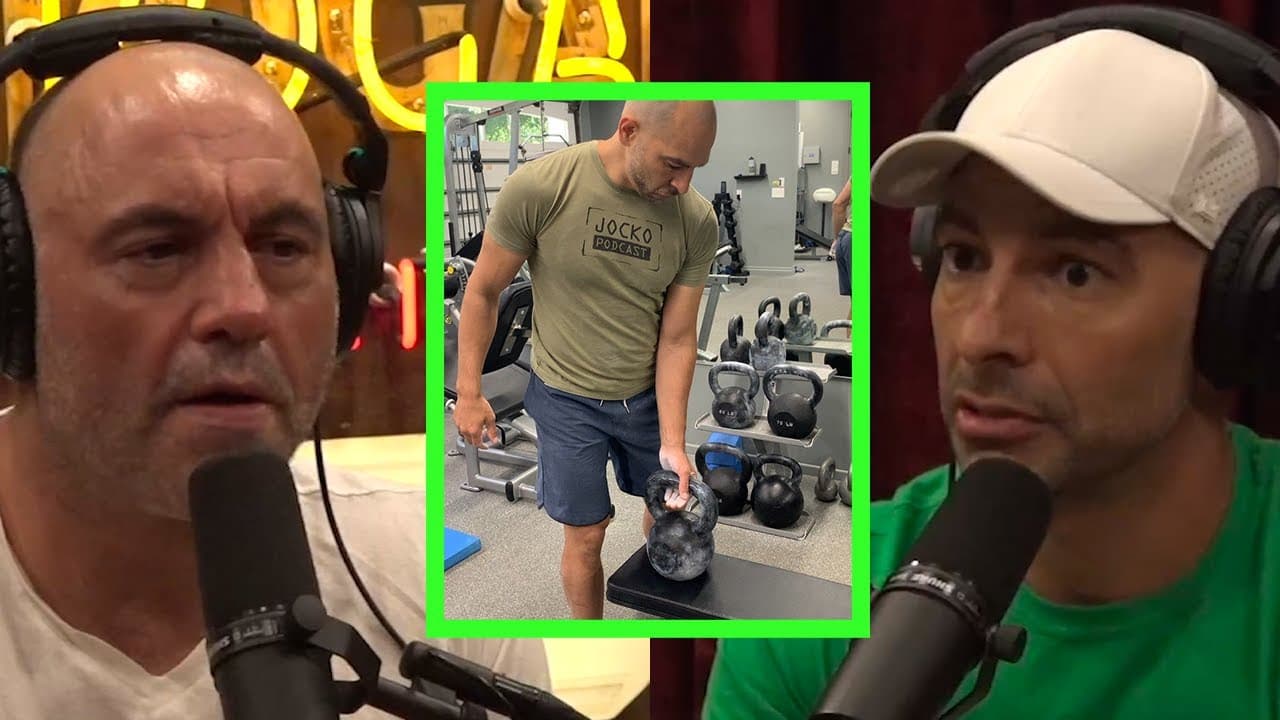
Peter Attia says the best exercise program for longevity combines cardiorespiratory fitness, strength and muscle mass rather than emphasizing only one area. He cites a five-fold reduction in all-cause mortality when comparing elite cardiorespiratory fitness with below-average fitness, while high strength is associated with about a three-fold reduction compared with low strength. Read on for his specific Zone 2, VO2 max and strength-testing framework.
Transcript
The Joe Rogan Experience I think exercise is the single most important longevity drug we have Bar None like if you if you were if you said like I want to go deep down the rabbit hole of living longer what do I need to do it's it's like a super well crafted exercise program that is geared towards strength muscle mass and cardiorespiratory Fitness so... Read More
Key Insights
- Three qualities work together: Attia does not present longevity training as a choice between cardiovascular exercise and lifting. His framework deliberately targets cardiorespiratory fitness, strength and muscle mass. This combined focus matters because each quality describes a different part of physical capacity, while strength and cardiorespiratory fitness have their own mortality comparisons in the discussion.
- Elite fitness has a definition: The word elite is tied to a measurable threshold rather than used as a vague compliment. Attia defines an elite VO2 max as placement in the top 2.5 percent of the population. He compares that group with people whose cardiorespiratory fitness is below average when describing the five-fold reduction in all-cause mortality.
- The mortality comparison is striking: Smoking and diabetes can double or triple mortality risk, depending on the period being examined. Attia says the reduction associated with high cardiorespiratory fitness is larger than those increases. He uses this contrast to explain why exercise receives such a central position in his approach to living longer.
- Strength outranks its common proxy: Muscle mass remains part of Attia’s overall exercise framework, but he identifies strength as the more important metric. Muscle mass is useful partly because it can act as a proxy for strength. When strength itself can be assessed, he says that is the characteristic that matters in the data he discusses.
- Simple tests can measure strength: The strength assessment does not depend exclusively on maximal barbell performance. Attia names grip strength, dead hangs, air squats, quadriceps strength and five chair repetitions as examples. These accessible tasks allow people to be stratified by performance, and the contrast between the highest and lowest performers is associated with roughly a three-fold difference in all-cause mortality.
- Strength returns remain unresolved: Attia does not claim that unlimited strength produces unlimited longevity benefit. He says the available strength data in this discussion have only been parsed into high and low categories. Because intermediate and extreme levels were not separated, those data cannot show where diminishing returns might begin for strength.
- Average fitness captures major gains: The largest improvement does not require immediately reaching the elite category. According to Attia, moving from not fit at all to average fitness delivers three of the five-fold mortality difference he describes. This makes the first stages of conditioning especially consequential, even though he personally sets standards above average.
- Targets account for age and gender: Attia’s practice uses a chart organizing VO2 max data by age and gender. For a 52-year-old male, his example target is the elite VO2 max of a 42-year-old male. He describes this as aiming to be a decade younger and elite, then applies a similar approach to strength metrics.
- Zone 2 has a threshold: Attia defines Zone 2 physiologically as the highest aerobic output a person can maintain while keeping lactate below two millimole. The purpose of these sessions is to build an aerobic base. Consistent output is important, which is why he considers stationary equipment convenient for this work.
- Stationary bikes simplify tracking: A stationary bike helps keep effort steady, unlike road cycling where output can vary. Wattage also gives the person an understandable measure of work. Attia says the exact modality matters less than consistency, so treadmills, stair climbers and other forms of cardiovascular exercise can also support Zone 2 training.
- Four sessions form the base: Attia presents four 45-minute Zone 2 sessions, totaling at least three hours each week, as the apparent minimum effective dose. He also allows a gentler entry point for someone who is severely deconditioned. That person can start with three 30-minute sessions and still expect to see benefit.
- VO2 work adds intensity: Alongside the aerobic base, Attia recommends one VO2 max session per week. His described 4x4 workout uses four minutes at the highest sustainable output, followed by four minutes of recovery, for five sets. An air bike can be used, and involving both the upper and lower body may permit higher absolute wattage.
Install to Summarize YouTube Videos and Get Transcripts
Explore YouTube Video Summarizer or Get YouTube Transcript Extractor
Questions & Answers
Q: What are Peter Attia’s best exercises for longevity?
Peter Attia recommends a program that develops cardiorespiratory fitness, strength and muscle mass together. For the aerobic base, he favors Zone 2 work and says a stationary bike is convenient because effort and wattage can remain steady. He adds one weekly VO2 max workout using the 4x4 protocol. Strength exercise is selected individually from performance on tests such as grip strength, dead hangs, air squats, quadriceps strength and five chair repetitions.
Q: How much Zone 2 exercise does Peter Attia recommend?
Attia recommends at least three hours of Zone 2 exercise per week. He organizes that amount as four sessions lasting 45 minutes each and describes it as the apparent minimum effective dose. Zone 2 builds the aerobic base while keeping lactate below two millimole at the highest sustainable aerobic output. If someone is severely deconditioned, he says three 30-minute sessions can be an appropriate starting point that still produces benefit.
Q: How does Peter Attia define Zone 2 training?
Attia defines Zone 2 as the highest level of aerobic output a person can generate while keeping lactate below two millimole. The goal is to maintain a steady effort that develops an aerobic base. He finds a stationary bike especially practical because the resistance can stay consistent and wattage is easy to understand. He also says the activity itself matters less than consistency, so a treadmill, stair climber or another cardiovascular activity can be used.
Q: What is Peter Attia’s 4x4 VO2 max protocol?
Attia’s described 4x4 protocol begins with four minutes at the highest output a person can sustain for that interval. That effort is followed by four minutes of recovery, and he says to complete five sets. He recommends doing this VO2 max training once per week in addition to the Zone 2 base. An air bike is one option because it uses the upper and lower body and can support a higher absolute wattage.
Q: Why does Peter Attia prioritize cardiorespiratory fitness?
Attia says an elite VO2 max is associated with a five-fold reduction in all-cause mortality compared with below-average cardiorespiratory fitness. In this discussion, elite means the top 2.5 percent of the population. He contrasts that association with smoking and diabetes, which can double or triple mortality risk depending on the time frame. The size of the comparison is why cardiorespiratory training is a central part of his longevity program.
Q: Is strength or muscle mass more important for longevity?
Attia says strength is more important than muscle mass in the data he discusses. Muscle mass is still useful, but it often functions as a proxy for the strength that matters more directly. Comparing high strength with low strength is associated with about a three-fold reduction in all-cause mortality. This is why his approach assesses actual performance through simple strength tasks instead of relying only on the amount of muscle a person has.
Q: Which strength tests does Peter Attia use?
Attia mentions grip strength, dead-hang duration, air-squat performance, quadriceps strength and the speed of completing five chair repetitions. These are relatively simple assessments rather than tests based only on maximum squats or deadlifts. The results help stratify people from lower to higher performers, whose mortality outcomes differ substantially in the data he describes. Individual strength exercises can then be prescribed according to the person’s age, gender and specific test performance.
Q: Does longevity exercise have diminishing returns?
Attia says the cardiorespiratory data show diminishing returns across five fitness categories, which are not equal in size. Moving from completely unfit to average fitness delivers most of the benefit, specifically three of the five-fold difference he cites. The strength data cannot answer the same question because they have only been divided into high and low groups. He therefore does not claim that becoming extremely strong adds no benefit, only that the discussed evidence does not locate a point of diminishing returns.
Summary
This video discusses the importance of exercise for longevity and dives into the specific benefits of different types of exercise. The speaker emphasizes that a well-crafted exercise program that focuses on strength, muscle mass, and cardiorespiratory fitness is crucial for living longer. The data presented show that high cardiorespiratory fitness has a significant impact on reducing the risk of death, even more so than smoking or diabetes. Additionally, the speaker highlights the importance of strength and muscle mass, stating that strength is actually more important than muscle mass when it comes to reducing the risk of death. The video also touches on the point of diminishing returns in terms of exercise, where there may be a limit to how much additional strength can benefit overall health. Specific exercise recommendations and protocols for both cardiorespiratory fitness and strength training are discussed as well.
Questions & Answers
Q: Why is exercise considered the single most important longevity drug?
Exercise is considered the most important longevity drug because it has a significant impact on reducing the risk of death. High cardiorespiratory fitness, which can be achieved through exercise, has been shown to reduce the risk of death by a much larger margin compared to risk factors such as smoking or diabetes. Having a very high cardiorespiratory fitness level, such as an elite VO2 max, can lead to a five-fold reduction in all-cause mortality.
Q: Is strength or muscle mass more important when it comes to reducing the risk of death?
While muscle mass is often used as a proxy for strength, recent data suggest that strength is actually more important than muscle mass in terms of reducing the risk of death. High strength has been found to have a three-fold reduction in all-cause mortality compared to low strength. The specific tests used to measure strength include grip strength, dead hang duration, quad strength, and the ability to quickly do five reps up and down from a chair.
Q: Is there a point of diminishing returns in terms of exercise?
When it comes to cardiorespiratory fitness, there is a point of diminishing returns. Elite cardiorespiratory fitness, which represents the top 2.5 percent of the population, provides a significant reduction in all-cause mortality. However, most of the benefit is gained by going from being unfit to average fitness. The specific point of diminishing returns has not been determined yet, as the data have only been analyzed based on high to low fitness levels.
Q: What exercises are recommended for achieving high cardiorespiratory fitness?
To achieve high cardiorespiratory fitness, a base training of zone two exercises is recommended. Zone two represents the highest level of aerobic output that can be sustained while keeping lactate below two millimoles. A stationary bike is often the easiest way to do this since it allows for steady-state training. The recommended training protocol includes at least three hours per week of zone two exercises, with four 45-minute sessions. Additionally, one session per week of high-intensity VO2 max training, using the 4x4 protocol of four minutes of high output followed by four minutes of recovery, is beneficial.
Q: Should an air bike or a regular bike be used for cardiovascular training?
The choice of bike doesn't matter as much as consistency when it comes to cardiorespiratory training. Most people find that they can achieve a higher output on an air bike in terms of absolute wattage because it involves both the upper and lower body. However, any kind of cardiovascular activity, such as a treadmill or stair climber, can be used as long as the intensity and duration requirements are met.
Q: What is the recommended strength training program?
The recommended strength training program varies depending on the individual. A set of 10 exercises normalized to body weight and gender is used to assess strength. For example, one test is the dead hang, where males are expected to hold for two minutes and females for a minute and a half at the age of 40. The duration criteria are adjusted based on age. The specific exercises and program will depend on personal factors and test results.
Takeaways
Exercise, especially a well-crafted program that focuses on strength, muscle mass, and cardiorespiratory fitness, is crucial for longevity. High cardiorespiratory fitness has a significant impact on reducing the risk of death, even more so than risk factors like smoking or diabetes. Strength is also important, with high strength levels contributing to a reduction in all-cause mortality. While there may be a point of diminishing returns for cardiorespiratory fitness, the main benefit is gained by going from being unfit to average fitness. Specific exercise recommendations and protocols, such as zone two training for cardiorespiratory fitness and personalized strength training programs, can help individuals achieve optimal results.
Summary & Key Takeaways
-
Exercise as a longevity drug: On The Joe Rogan Experience, Peter Attia calls exercise the single most important longevity drug available. He says a well-crafted program should develop strength, muscle mass and cardiorespiratory fitness together, rather than treating one quality as sufficient. His practice spent the previous 12 months refining its understanding of exercise and how to individualize it. The resulting framework focuses on measurable fitness characteristics that are associated with substantial differences in all-cause mortality.
-
Cardiorespiratory fitness changes risk: Attia contrasts fitness with smoking and diabetes, which can double or triple the risk of death depending on the time frame. He says very high cardiorespiratory fitness has an even larger association in the opposite direction. An elite VO2 max, defined here as the top 2.5 percent of the population, is associated with a five-fold reduction in all-cause mortality compared with below-average fitness. He emphasizes that this comparison covers death from any cause.
-
Strength matters beyond muscle mass: Attia says newer data indicate that strength is more important than muscle mass, although muscle mass is often used as a proxy for strength. Comparing people with high and low strength produces about a three-fold difference in all-cause mortality. The relevant assessments are not limited to heavy squats or deadlifts. They include grip strength, dead-hang duration, air squats, quadriceps strength and the speed of completing five repetitions of standing up from and sitting down on a chair.
-
Fitness gains show diminishing returns: The strength data discussed only divide participants into high and low groups, so Attia says they do not reveal whether becoming extremely strong eventually stops adding benefit. Cardiorespiratory data do show diminishing returns across five fitness categories of unequal size. Most of the benefit comes from moving from completely unfit to average fitness, which provides three of the stated five-fold difference. Even so, Attia sets higher targets for himself and his patients using age-specific and gender-specific charts.
-
Building the weekly program: Attia begins with Zone 2, defined as the highest aerobic output that keeps lactate below two millimole. He recommends at least three weekly hours, commonly arranged as four 45-minute sessions, with one weekly VO2 max workout using the 4x4 protocol. A stationary bike makes steady output and wattage easy to track, though an air bike, treadmill, stair climber or other cardiovascular activity can work. A severely deconditioned person may begin with three 30-minute sessions, while strength programming depends on individual test results.
Read in Other Languages (beta)
Share This Summary 📚
Summarize YouTube Videos and Get Video Transcripts with 1-Click
Try YouTube Summary with ChatGPT & Claude or YouTube Transcript Generator
Explore More Summaries from PowerfulJRE 📚





Summarize YouTube Videos and Get Video Transcripts with 1-Click
Try YouTube Summary with ChatGPT & Claude or YouTube Transcript Generator