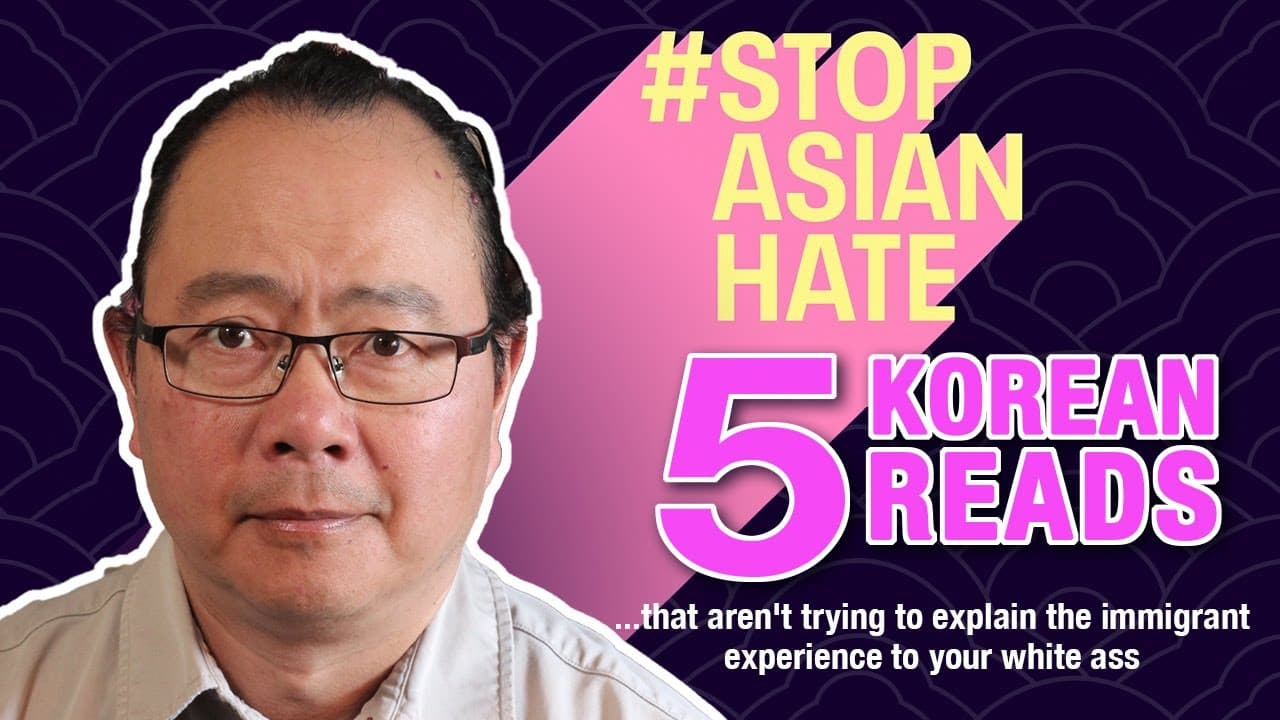
Which Korean-Authored Books Are Worth Reading?
TL;DR
Read Korean-authored books because they are compelling, enjoyable works, not merely as lessons about race or identity. The recommended selections span a darkly funny coming-of-age novel, a cynical disaster-tourism satire, a colorful graphic novel, a melancholic story about Laotian orphans, and an inventive poetry collection built around a multilingual fictional dialect.
Transcript
for a while there i was able to bask in a lot of korean success you have jay caspian kang's profile of stephen young not to mention his gq cover shot and profile you have vulture doing a piece on yoon's co-star yun yu jung you have alan s kim's crying video going viral as he accepts the critics choice award for best young actor and all of this in s... Read More
Key Insights
- Korean-authored literature does not need to explain Korean identity or racialized experience to justify being read. The recommended books are presented as strong, enjoyable works whose authors happen to be Korean, freeing them from the expectation that they must function as educational material for white readers.
- Prescriptive anti-racist reading lists can place additional responsibility on literary works. Books selected to teach racial awareness may begin to feel like compulsory high school assignments or diversity medicine, even when increased attention helps authors reach readers and earn money from renewed interest.
- Asian American identity provides collective power while concealing major differences among communities. The narrator finds the label useful for describing shared exposure to racism, yet also questions its breadth and expresses a desire to center Korean identity when Asian people are frequently treated as interchangeable.
- Pizza Girl centers an eighteen-year-old pregnant delivery driver who becomes secretly infatuated with a suburban mother ordering pickle-topped pizzas. Jean Kyoung Frazier emphasizes the protagonist's nihilism, numbness, excess, and desire to sabotage her life rather than constructing a conventional lesson about immigrant identity.
- The Disaster Tourist satirizes workplace harassment, voluntourism, corporate power, and commercialized catastrophe. Yun Ko-eun follows Yona Kim, an employee of a disaster-travel company, as being left behind on an island gives her a disturbing view behind the industry's carefully manufactured luxury experiences.
- Seconds combines a chef, a restaurant, magic mushrooms, and the possibility of do-overs within an Alice in Wonderland-like story. Bryan Lee O'Malley's vivid illustrations and Technicolor palette initially contrast with the graphic novel's darker themes, but the visual style and narrative ultimately work together.
- Run Me to Earth follows three Laotian orphans operating from an abandoned farmhouse converted into a makeshift hospital. They ride motorbikes around unexploded ordnance to retrieve supplies and patients before separation sends them across the world, creating scenes the narrator remembers with unusual sensory clarity.
- Dance Dance Revolution builds its poetry around a desert guide who speaks an invented mixture of Korean, English, Spanish, and Ebonics. Cathy Park Hong uses playful slang alongside poetic meter and convention, producing language that the narrator finds energetic, inventive, and enjoyable to read.
Install to Summarize YouTube Videos and Get Transcripts
Explore YouTube Video Summarizer or Get YouTube Transcript Extractor
Questions & Answers
Q: Why avoid treating Korean-authored books as anti-racist homework?
Treating Korean-authored literature as anti-racist homework can make books feel like medicine for guilty readers rather than creative works meant to be enjoyed. The narrator values diversified reading and wants authors to benefit financially, but objects to burdening every recommended book with explaining Asian identity, immigration, or racism. A book can deserve attention because its characters, language, artwork, or story are compelling.
Q: What books are recommended by Korean authors?
The five recommendations are Jean Kyoung Frazier's Pizza Girl, Yun Ko-eun's The Disaster Tourist translated by Lizzie Buehler, Bryan Lee O'Malley's graphic novel Seconds, Paul Yoon's Run Me to Earth, and Cathy Park Hong's poetry collection Dance Dance Revolution. The list deliberately crosses genres and prioritizes books the narrator genuinely enjoyed rather than works chosen mainly to educate readers about Korean identity.
Q: What is Pizza Girl about?
Pizza Girl follows an eighteen-year-old pregnant pizza delivery driver who secretly becomes infatuated with a middle-aged suburban stay-at-home mother who orders pickles on pizza for her young son. The protagonist lives with her mother and supportive white boyfriend, but sneaks into her deceased father's shed to drink beer and watch infomercials. Her voice combines nihilism, intense fascination, emotional numbness, and self-destructive impulses.
Q: What is The Disaster Tourist about?
The Disaster Tourist follows Yona Kim, who works for a company called Jungle that sells luxury trips to recently devastated locations. Tourists stay in comfortable bungalows and perform charitable activities near communities affected by disasters. After Yona is accidentally abandoned on an island by her tour group, she sees behind the operation's polished surface. The novel satirizes corporate industry, workplace harassment, voluntourism, and manufactured altruism.
Q: Why is Seconds recommended as a graphic novel?
Seconds is recommended for its combination of an imaginative premise and striking visual execution. Its story involves a chef, her restaurant, magic mushrooms, and the possibility of correcting past choices through do-overs. The Alice in Wonderland-like narrative is illustrated with a vivid, Technicolor palette. Although the bright artwork can seem opposed to the darker themes, the narrator believes those elements come together beautifully.
Q: What makes Run Me to Earth memorable?
Run Me to Earth remains memorable because Paul Yoon's economical prose creates scenes with exceptional sensory force. The story follows three orphans in Laos who work from an abandoned farmhouse converted into a makeshift hospital, traveling by motorbike around unexploded ordnance to collect supplies and patients. Their eventual separation and movement across the globe produce melancholic and sometimes abruptly violent moments that stayed vivid for the narrator.
Q: How does Dance Dance Revolution use language?
Dance Dance Revolution features a desert guide speaking an invented dialect that mixes Korean, English, Spanish, and Ebonics. Cathy Park Hong combines this playful vocabulary and slang with poetic conventions such as meter. One memorable passage describes elaborate bathrooms at a false Russian hotel in the desert, showing how the collection uses imaginative language, absurd detail, and formal structure to make the poetry enjoyable.
Q: How does the narrator describe Asian American identity?
The narrator sees Asian American identity as both politically useful and personally incomplete. The broad label can unite people facing related racism, especially when attackers treat Korean, Chinese, Vietnamese, and other Asian people as interchangeable. At the same time, it combines communities from the Far East, Southeast Asia, and the Indian subcontinent. The narrator therefore values collective identification while still wanting to center Korean identity.
Summary & Key Takeaways
-
The Atlanta spa shooting abruptly shifted public discussion from celebrated Korean cultural success to anti-Asian violence, misogyny, fetishization, and the conditional belonging experienced by Asian Americans. Although broad Asian identity can create collective political power, the narrator also wants room to center Korean identity rather than treating every Asian person as interchangeable.
-
Prescriptive racial reading lists can turn literature into educational medicine for guilty readers. Although such lists diversify reading and financially support authors, they can also burden books with the responsibility of explaining identity. The narrator instead recommends Korean-authored works that deserve attention primarily because their stories, language, characters, and artwork are genuinely enjoyable.
-
The five recommendations are Pizza Girl, The Disaster Tourist, Seconds, Run Me to Earth, and Dance Dance Revolution. Together they cover fiction, translated satire, a graphic novel, literary prose, and poetry. Their subjects include self-destruction, exploitative tourism, magical do-overs, displaced Laotian orphans, and a guide speaking an invented multilingual dialect.
Read in Other Languages (beta)
Share This Summary 📚
Summarize YouTube Videos and Get Video Transcripts with 1-Click
Try YouTube Summary with ChatGPT & Claude or YouTube Transcript Generator
Explore More Summaries from ThePoptimist 📚



Summarize YouTube Videos and Get Video Transcripts with 1-Click
Try YouTube Summary with ChatGPT & Claude or YouTube Transcript Generator